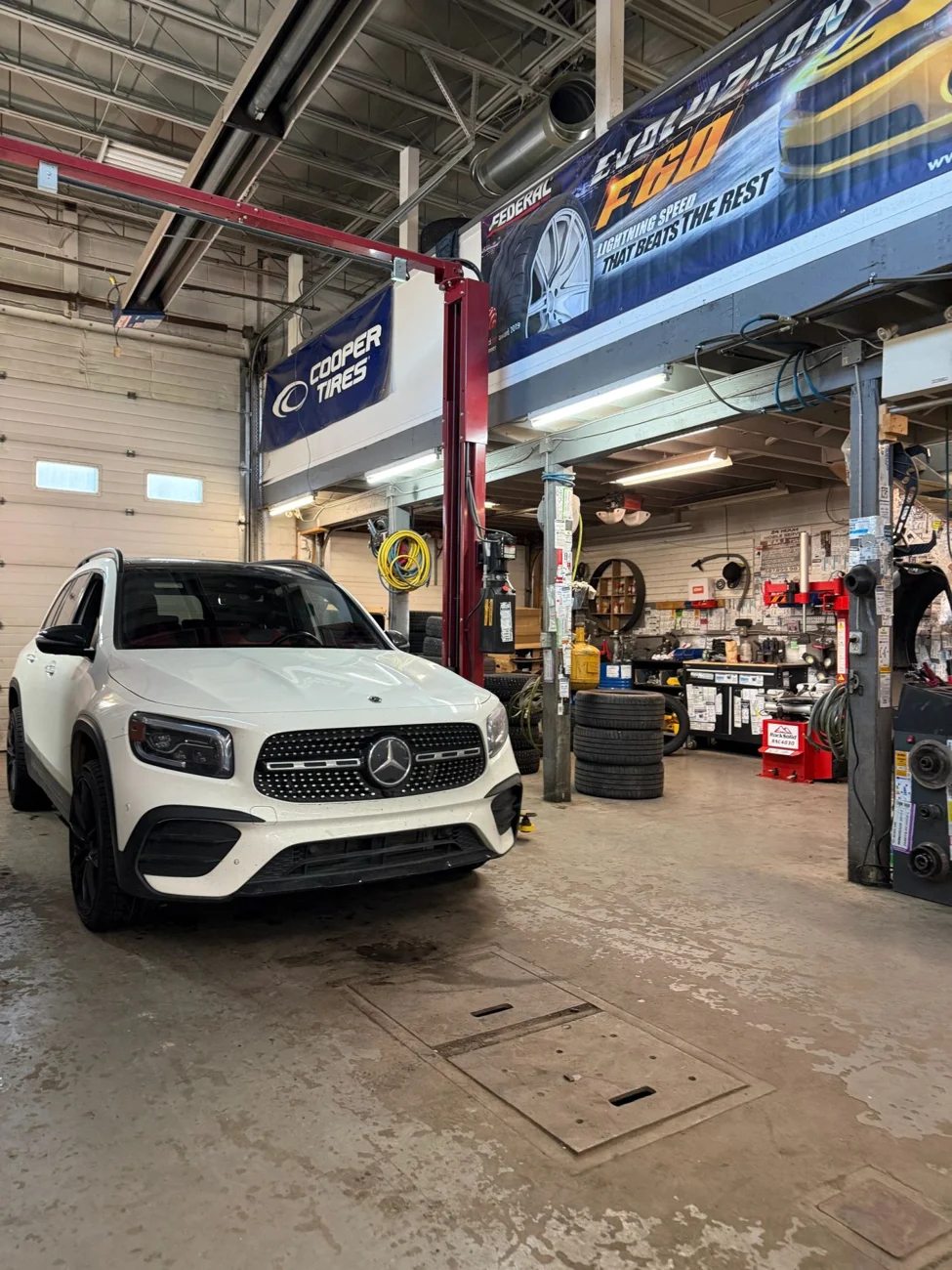
Start with your winter driving
How often must you drive when roads are snowy or icy? A driver who can delay a trip has different needs from someone who leaves early for highway work every day. Vehicle fitment and load requirements apply whichever seasonal category you choose.
Dedicated winter tires
A dedicated winter set focuses on cold-weather use. You change back to suitable warm-weather tires seasonally. That involves storing another set and budgeting for swaps or mounting, but it lets each set suit its intended season. See winter tire options.
All-weather tires
An all-weather tire with the three-peak mountain snowflake marking balances year-round use with qualifying snow traction. It avoids scheduled seasonal swaps but is not identical to every winter tire on ice or in cold conditions. See all-weather options.
Compare the whole ownership decision
Compare the installed cost, usable seasonal capability and warranty conditions of suitable models. If choosing two sets, include compatible wheels or ongoing changeover costs. The marking alone is not a model-by-model braking comparison. Ask KMJ to compare choices for your exact size and routes.