You can reserve a vehicle category without knowing which tires will be on the vehicle you collect. For a Calgary winter trip, solve that uncertainty before you build a tight itinerary around the car. Ask the rental provider what tire equipment it can actually confirm, check the specific vehicle at collection, and keep a workable alternative if the equipment does not suit the route. A reservation for an SUV is not, by itself, a reservation for four winter tires.
This guide is about planning a rental, comparing written answers, and making sensible decisions at the counter and on the road. It is not a statement of any rental company's policy. Equipment availability, permission to travel, repair authorization, roadside assistance and damage charges come from your actual agreement and the provider's current written instructions. The examples below are hypothetical planning exercises, not prices, coverage promises or descriptions of a particular fleet.
Calgary also deserves a more precise plan than simply selecting a vehicle labelled suitable for Canada. A few days travelling between urban destinations is a different assignment from a week of early departures toward mountain accommodation. The route, time of day, vehicle loading and ability to change plans all matter. Tires are one part of that decision, alongside road conditions, visibility and the driver's experience. No tire turns a poor travel decision into a safe one.
1. Start with the journey, before choosing the vehicle class
Write down where the vehicle will actually go. Include the airport transfer, accommodation, grocery run, day trips and the return journey. A reservation often begins with passenger count and luggage, but the tire question depends on the complete itinerary. A visitor who expects only downtown streets may later add a mountain drive because the forecast looks pleasant. That changes the planning problem, even though the rental confirmation remains the same.
Separate essential trips from optional trips. If reaching a remote property is unavoidable, you need equipment and a weather contingency appropriate to that obligation. If a scenic excursion is optional, a cancelled drive may be the easiest and safest contingency. Do not treat an expensive hotel reservation or a prepaid activity as evidence that the road is suitable. Put the cancellation and transport options beside the itinerary while there is still time to make choices.
Describe exposure in ordinary language when speaking with the provider: early mornings, higher elevations, possible snow-covered access roads, or regular city commuting. You do not need to diagnose tire compounds at the counter. You need a specific answer about the fitted equipment and whether it is available for the dates and pickup location. Written context helps prevent a general reassurance from being mistaken for confirmation of a particular tire type.
A vehicle class is useful for space and luggage planning, but it does not identify the installed tire model. Two similar vehicles can have different equipment. An upgrade in size or trim may change the tires too. Treat a last-minute substitution as a reason to repeat the equipment check, not as automatic evidence of better winter suitability. For background on the equipment question itself, compare the purpose of winter tires for Calgary driving before choosing a rental category.
2. Translate the words in the offer into something verifiable
Terms such as winter-ready, four-wheel drive and premium vehicle describe different things. Some are broad marketing descriptions; some concern the drivetrain. None should be silently translated into a guarantee of a specific tire model, condition or marking. Ask the provider to explain exactly what its wording means for the vehicle you will receive. Save the answer alongside the reservation instead of relying on your own interpretation later.
A tire marked M+S is not the same designation as the three-peak mountain snowflake symbol. The U.S. Tire Manufacturers Association explains these markings in its Tire Care and Safety guide, while Transport Canada recommends winter tires in sets of four for winter driving. A snow-service marking also does not certify the present condition of a worn or damaged tire. Equipment selection and condition assessment are separate tasks, and both matter at collection.
All-weather and all-season labels can also cause crossed conversations. Ask for the actual category and, when the provider can supply it, the make and model. Do not assume that a reservation agent knows the installed set before the vehicle has been assigned. An honest answer that the information is not yet known is useful: it tells you what remains unresolved. It is better than building an itinerary on an answer that sounds confident but names nothing.
For your own comparison, read about all-weather tire choices in Calgary and the limitations to consider with all-season tires in changing conditions. These are background resources, not a substitute for the rental provider's equipment confirmation. You are not purchasing tires for somebody else's vehicle. You are deciding whether the offered vehicle fits your travel needs and what to do if the answer is unclear.
3. Send a short, specific equipment request
A useful request has four parts: reservation identity, intended travel, equipment sought and the answer needed. For example: “For this reservation, we expect city driving and one possible mountain day. Can you confirm whether the supplied vehicle will have four dedicated winter tires? If that cannot be confirmed, what alternatives are available before collection?” This wording asks a concrete question without implying that any provider must supply a particular product.
Keep tire equipment separate from drivetrain. You might need to ask both questions, but combining them into “Is it a winter SUV?” invites an ambiguous answer. Similarly, “Will it be safe?” cannot be settled by a remote reservation agent without knowing the eventual road conditions and driver decisions. Ask for facts the provider can check: the tire category, whether it applies to all four positions, and how a vehicle substitution would affect the request.
If there is an extra product or equipment charge, request the current amount and conditions in writing. This article does not quote a fee because policies and availability differ. Ask whether the equipment is confirmed, merely requested, or subject to availability. Those phrases have different practical consequences even before any legal interpretation. Your travel contingency should reflect the actual answer, not the most optimistic reading of a sales conversation.
Avoid burying the question in a long email about luggage, child seats, insurance, pickup times and sightseeing. Separate headings make the answer easier to reconcile. Once the reply arrives, copy the tire-related wording into a simple note. Record the date and the reservation reference. If a later message contradicts it, ask for clarification before departure rather than bringing two incompatible assurances to the counter and hoping the staff can resolve them instantly.
4. Build an equipment record, not a folder of assumptions
One page is enough. Record the provider, pickup branch, dates, requested equipment, written response and unresolved questions. Leave space for the assigned vehicle and actual tire information. A small record is more useful than a large collection of screenshots with no explanation of which answer is current. Keep access to the original messages so a staff member can see the wording and context if necessary.
Distinguish a confirmed fact from a request. “Requested four winter tires” is not the same entry as “Provider confirmed four winter tires for this reservation.” If the answer only says that most vehicles have certain equipment, record it exactly as a general statement. Do not promote a fleet-wide description into a promise about your vehicle. This is basic evidence handling rather than a dispute strategy: it helps you make an informed transport decision.
When the exact vehicle is assigned, add its registration or other provider-approved identifier to the record. Photograph the tire information only where it is safe and permitted. Do not include other customers, their documents or unrelated personal information. A wide vehicle image establishes context; a closer image of a sidewall can capture a model and marking. Keep the photographs understandable rather than collecting dozens of indistinguishable close-ups.
The same discipline applies to dates. A message from an earlier rental is not current confirmation. Equipment can change between vehicles and between seasons. If you are a frequent traveller, reuse the format of your checklist, not the answers. A familiar branch and a familiar model can still supply a different set. Retaining clear records reduces repeated questions without turning old experience into an unsupported claim about today's vehicle.
5. Make time for collection without conducting a workshop inspection
Build a buffer between collection and the first time-sensitive journey. The purpose is to review the vehicle, understand its controls and resolve obvious problems before entering traffic. A late flight does not make an unresolved tire warning less important. If the counter is closing or staff are busy, follow the provider's documented after-hours process and preserve your observations. Do not infer that a rushed handover means the equipment has been independently checked for your route.
Inspect from a safe standing position in the designated area. Walk around the vehicle and look at all four tire positions you can see. You are checking for obvious damage, a visibly deflated tire, mismatched information worth asking about, and whether the supplied equipment corresponds to the answer you received. You are not certifying internal condition or performing a full mechanical inspection. Never crawl beneath a rental in a parking lane or jack it up to obtain a photograph.
If the area is dark, ask for help or a safer place to look. Moving the vehicle solely to improve lighting is not appropriate if you have already noticed a potentially unsafe tire. Staff can direct the next step. Avoid touching sharp objects or pulling anything from a tread. A nail that appears small does not reveal the condition inside the casing, and removing it can turn a slow loss into a faster one.
A brief visual check has limits. Radial tires can be underinflated without appearing obviously flat, as USTMA explains. A clean sidewall does not prove correct pressure, and a tire dressed to look new does not prove adequate tread. Use the walkaround to identify questions for the provider, not to replace measurements. Understanding basic tire-care checks helps you describe what you see without claiming more than the evidence supports.
6. Read the tire identity without choosing a replacement yourself
The sidewall combines several kinds of information: size, construction, service description, manufacturer and model markings, and other identifiers. Take a legible photograph if needed rather than trying to memorise everything under time pressure. The installed tires should be appropriate to the vehicle, but a traveller should not infer full compatibility from one matching size string. Different vehicle variants and approved fitments can have requirements that are not obvious from appearance.
If one tire appears different, ask the provider to identify and assess it. A different tread pattern deserves clarification; it is not an invitation to improvise a replacement at the nearest retailer. The vehicle manufacturer's requirements and the provider's authorization both matter. Some vehicles have different front and rear fitments by design, so a difference does not automatically establish an error either. Record the positions and ask a precise question instead of making a blanket accusation.
The tire sidewall maximum pressure is not the routine target for the vehicle. Use the vehicle's tire information label and owner's instructions for the recommended cold pressures. Those values can differ by axle. Read units carefully: psi and kPa are different scales. A label that looks unfamiliar is a reason to slow down and check the meaning, not to copy a number from a tire or another vehicle in the row.
For help separating the fields, consult tire sidewall information and what a tire load index means. These references support an informed conversation. They do not authorize changing the rental's size, load specification or inflation instructions. If the visible label and fitted equipment seem inconsistent, have the provider resolve that discrepancy before making the vehicle part of a long travel day.
7. Ask for actual pressure and tread information
If pressure is questioned, ask how and when it was measured. USTMA defines cold checking as after the vehicle has been parked for at least three hours, or after less than one mile at moderate speed. A vehicle brought to the collection area after a longer drive may have warmer tires. That context matters when interpreting a reading. Do not bleed a warm tire down to the cold recommendation merely because its pressure has risen after driving.
A pressure warning deserves a response, not just an explanation that the weather changed. Temperature can affect pressure, but that does not establish the cause of a particular warning or exclude a leak. Ask the provider to verify the pressures and address the warning according to the vehicle's instructions. Resetting or hiding an alert without checking the underlying condition does not establish readiness. The absence of a warning likewise does not replace an actual pressure check.
For tread, request measurements rather than a description such as “plenty left.” Measurements across relevant grooves and positions can reveal variation that one central reading misses. Transport Canada's winter guidance advises against using tires worn close to 4 mm on snow-covered roads. That is winter-performance guidance, not a statement of every jurisdiction's legal minimum. Do not confuse the point at which a tire remains legally usable somewhere with its suitability for your intended snowy journey.
The practical question is not whether you can personally adjudicate a borderline tire at collection. It is whether the provider can give a clear, credible answer about the vehicle it is supplying. If the condition is questionable, ask for assessment or another vehicle rather than trying to win an argument with a phone photograph. Record the issue and the response. Your itinerary should wait until the equipment question is resolved, not pressure you into accepting uncertainty.
8. Treat a substituted vehicle as a new decision
Imagine a traveller reserves a compact vehicle with a specific equipment request, then receives a larger crossover. The counter describes it as an upgrade. It may offer more luggage space, but that says nothing by itself about the fitted tires or whether the requested equipment carried across. Before accepting, reconcile the actual vehicle with the request. A larger cabin and a higher driving position cannot answer a tire question.
Repeat the essential checks rather than every administrative step. Confirm the tire category, obvious condition, placard information, warning display and roadside equipment. Ask whether the agreement, assistance arrangements and authorized travel remain appropriate to the substituted vehicle. A short written update connecting the actual vehicle to the existing reservation is more useful than a verbal assurance that everything is unchanged when some important details plainly have changed.
An electric vehicle substitution deserves additional familiarization. You may need to learn how its tire information is displayed, how to access the owner's instructions and what mobility equipment it carries. This is not a claim that electric vehicles necessarily lack a spare or require a particular tire brand. Check that specific vehicle. Similarly, a pickup or a large passenger vehicle can have loading and tire requirements different from the small car you expected.
If no suitable substitute is available, the next decision concerns transport, not tire improvisation. Ask about the provider's actual options and compare them with changing the route, postponing collection or arranging another means of travel. Keep commercial terms separate from the safety decision. A refund or cancellation dispute may need later attention, but it should not become the reason you drive away in a vehicle with an unresolved unsafe condition.
9. Learn the roadside arrangement before leaving the lot
Find the assistance number in the agreement or the provider's verified instructions. Save it where you can access it without a reliable data connection. Confirm what information the assistance operator will need, including the reservation and vehicle identification. Do not assume that the number on a general search result is the correct channel for your contract. The best time to discover the authorized process is before you are cold, tired and trying to explain your location.
Identify the equipment supplied with the vehicle. There may be a spare, a temporary spare, a mobility kit or another arrangement. Consult the vehicle instructions and ask the provider what renters are expected or permitted to do. The presence of a jack does not mean every roadside location is suitable for using it. A busy shoulder, unstable ground or poor visibility can make professional assistance the appropriate option even when equipment is present.
Temporary mobility equipment has specific limitations. A spare may have a speed or distance restriction, while a sealant kit may be unsuitable for certain damage. There is no universal number to apply to every rental. Read the labels and manual for that vehicle and follow the assistance provider's direction. Do not treat a temporary solution as permission to continue a full sightseeing itinerary. Record any use of the equipment so the provider knows what needs replenishment or inspection.
If you want to understand local support categories, the KMJ information on mobile tire service and tire-related emergency assistance explains where tire help may fit. These links do not establish availability, response time, rental-company approval or payment coverage. Arrange authorization through your provider before ordering work on its vehicle, and confirm actual service availability rather than assuming that a webpage creates a dispatch.
10. Separate the repair decision from the payment decision
A tire professional determines whether a tire can be repaired after an appropriate inspection. The rental provider determines what work it authorizes under its process. Coverage and payment depend on the applicable agreement and any relevant policy. These are three different questions. An assistance agent saying that help is on the way does not, by itself, settle whether the tire is repairable or who ultimately pays for every expense.
USTMA's repair guidance requires removal from the wheel for inspection and limits eligible puncture repairs to the appropriate tread area, with other restrictions. A visible screw is not enough information to approve a repair remotely. Sidewall damage, damage from running underinflated and internal condition can change the outcome. Avoid asking for the cheapest patch before anybody has assessed the casing. The correct repair decision starts with condition, not a traveller's deadline.
Ask the provider for the scope of authorization and how the service business should identify it. If practical, obtain the instruction in writing. The receipt should identify what was actually done rather than merely say “tire issue.” Keep the inspection findings, approved work and any replacement specification together. Do not order a different size or substitute a model yourself just to get moving, especially when the vehicle's matching requirements have not been established.
For an overview of the service question, read about tire repair assessment in Calgary. If replacement is required, buying replacement tires in Calgary describes a separate selection decision that needs the owner's authorization. Neither resource promises that a rental provider will reimburse a purchase. Preserve the distinction between technically suitable work, permission to perform it and the commercial arrangement for paying the invoice.
11. Do not diagnose an unfamiliar vehicle by comparison alone
A rental can feel different from your own car because of its controls, wheelbase, tire construction and other characteristics. That does not make a new vibration or pulling sensation something to ignore. Describe the observation precisely: when it started, whether it occurs on different road surfaces, whether a warning appeared and whether there was a recent impact. Do not perform repeated high-speed tests to prove the symptom, and do not assume it is simply unfamiliarity.
If there is a sudden vibration, unusual noise, handling change or visible tire damage, reduce risk and stop safely as conditions allow, then follow the assistance process. USTMA advises attention to sudden vibration or ride disturbance because it can signal a tire problem or another condition requiring professional inspection. This article cannot determine the cause remotely. Continuing just to see whether the symptom clears may turn an assessable problem into a more dangerous situation.
A balance concern is one possible reason for vibration, not the only explanation. The information on wheel balancing can help you understand that service, but it does not justify telling a technician what the diagnosis must be. Mechanical issues outside tire service require an appropriate specialist. Tell the rental provider about the symptom and let the authorized assessment establish the next step.
Avoid attaching blame before the facts are known. “It started after the gravel section” is an observation. “The gravel destroyed the tire” is a conclusion you may not be able to support. Equally, an issue discovered on return is not proof of when it began. Good notes describe time, place, readings and actions. That approach makes the service decision clearer and gives any later commercial discussion a stronger factual foundation without making promises about its outcome.
12. Make a morning departure check match the day's plan
At accommodation, use a safe, stationary check before loading everyone into the vehicle. Look for an obviously low tire, new visible damage or a dashboard warning. If you are measuring pressures, use a suitable gauge and the vehicle's recommended cold values. Do not rely on the appearance of a loaded tire or on yesterday's display. If the vehicle instructions require movement before the display updates, understand that limitation rather than treating an old number as a fresh reading.
Review current road information and weather separately from the tire check. The Alberta 511 road-information service is a useful official starting point for provincial travel conditions. Check the relevant authorities for any route beyond Alberta. This guide does not give a current forecast, road clearance or province-wide legal summary. A photograph of clear pavement in Calgary does not tell you what conditions are like later on a higher or more exposed section.
Reconsider loading when passengers or luggage change. The vehicle's loading information and manual govern capacity; the empty space in the cargo area is not a load rating. Keep luggage secured, preserve visibility and avoid packing in a way that blocks access to essential emergency equipment. If the trip includes equipment such as skis or a roof carrier, follow the provider's permission and the applicable vehicle and equipment instructions rather than inventing a tire-pressure adjustment.
A departure check should produce a decision. Clear equipment questions and suitable conditions allow the journey to be considered; an unresolved warning or unsafe condition calls for assistance or another plan. “We checked” is not a useful result if the check uncovered a problem that nobody addressed. For seasonal context, the Calgary tire education library offers background, but the actual day's route decision still depends on current information and the vehicle in front of you.
13. Work through two realistic itinerary choices
Consider a hypothetical three-day visit with accommodation in central Calgary. The vehicle is mainly for visiting relatives, and the only out-of-city journey is optional. The provider cannot confirm dedicated winter tires in advance. That uncertainty does not require pretending that the tires are equivalent, and it does not require choosing a more remote itinerary to justify the rental. The traveller can investigate other equipment, keep the excursion optional and compare local transport alternatives before committing.
At collection, suppose the actual vehicle has the equipment described by the provider, no unresolved warning and condition that the provider has assessed. The traveller still checks the day's conditions and avoids turning an optional drive into a deadline. If snow makes the planned excursion unsuitable, staying in the city may be the practical outcome. The lesson is that flexibility can be designed into the trip early, rather than treated as a failure after collection.
Now consider a different hypothetical visit: several passengers, substantial luggage, a fixed early departure and accommodation reached by an unfamiliar access road. Here, an unconfirmed equipment request is a larger planning gap. The traveller should seek a specific answer and a realistic fallback well before arrival. If no suitable arrangement can be confirmed, changing transport or accommodation access may make more sense than assuming a vehicle upgrade will solve every problem.
In neither example does the article decide which exact model is appropriate or certify a road as safe. Those decisions require real information. The comparison shows why an equipment question belongs near the beginning of travel planning. Passenger capacity, tire suitability and itinerary flexibility need to fit together. Paying more for a vehicle category without resolving the tire question can leave the central uncertainty untouched, while a modest change to the schedule may remove a difficult drive entirely.
14. Keep a clean timeline if something happens mid-rental
A useful incident note starts with the date, approximate time, vehicle identification and safe location. Describe the observation in plain language. Record the warning message as displayed, any pressure measurement with its units and whether the tire was cold or recently driven. Add photographs only when doing so does not expose you to traffic or other danger. Evidence gathering is secondary to getting occupants to a safer situation and obtaining the right assistance.
Next, record whom you reached through the authorized channel and the instructions received. If the direction changes, retain both messages with their times. For instance, an initial plan to inspect a tire may later become a vehicle exchange after assessment. That is not inherently a contradiction; it may reflect new information. A chronological record helps distinguish an evolving service decision from a misunderstanding about what was actually approved.
Keep receipts and findings, but do not rewrite a technician's report in stronger language. If a document says that a tire was replaced following inspection, do not convert it into a claim that a particular road hazard caused the damage unless the evidence says so. If a measurement is missing, mark it unknown. Guessing a pressure or tread depth after the event makes the record less useful, even when the guess seems plausible.
If KMJ is the authorized tire-service option, explain that the vehicle is a rental before work is arranged. Use KMJ's local tire-service information to understand the business, and verify service-area details for the actual location. Do not assume a provider partnership, account arrangement or direct billing exists. Those commercial facts must be confirmed by the parties involved, not inferred from a business being nearby.
15. Plan the return so a tire issue is not buried
Leave time to report a tire warning or an unresolved concern at return. A tight flight connection can tempt travellers to leave a note without speaking to anyone, but the provider needs to know about a condition before the vehicle is assigned again. Follow its documented return process, including any after-hours instructions. Record the handover of the information as well as the physical return of the vehicle. Do not reset a warning to make the dashboard look normal.
If a temporary spare or mobility kit was used, identify that clearly. Explain what happened, who authorized the response and what work was completed. The provider may need inspection, replenishment or other action under its procedures. Returning the car with four tires that visually resemble a complete set is not enough if one is a temporary solution or an issue remains unresolved. The equipment's status should be clear to the next person responsible for it.
Take return photographs where permitted and safe, with enough context to identify the vehicle and the relevant tire position. A timestamped picture is a record of what was visible then; it does not prove internal condition or settle liability. Keep your original files and supporting messages. If a later charge is disputed, use the agreement and the provider's process, and seek appropriate advice if needed. This article does not promise that photographs remove responsibility or establish entitlement to a refund.
Close the record with facts: vehicle returned, concern reported, reference received, documents retained. Do not leave an assistance case open in your own notes merely because the holiday ended. Equally, do not mark a concern resolved if all you did was send a message. A short distinction between “reported” and “assessed” protects the usefulness of the record. It also avoids telling the provider that a condition was fixed when you have no evidence of that outcome.
16. Use local tire services only within the actual permission
A rental traveller may need information before needing work. Asking about the difference between tire categories, what an inspection involves or whether a location is within a service area is not the same as authorizing a replacement. Tell the service business what the rental provider has approved and what remains undecided. This reduces wasted effort and avoids a technician preparing for work that the vehicle owner has not permitted.
Seasonal conversion is particularly easy to misunderstand. Reading about seasonal tire changes does not mean that temporarily fitting a different set is an approved solution for a rental. The vehicle owner controls that decision and must resolve fitment, equipment, timing and return requirements. Do not purchase a set independently with an expectation that somebody else will reimburse it. An unsuitable supplied vehicle is often better addressed through the provider's exchange or transport options.
If the provider authorizes tire replacement and asks for options, selection still needs the exact vehicle and required specifications. The tire selection catalogue can be a starting point for an authorized enquiry, not proof of stock, fitment or price. Availability and a complete service plan need verification. A visitor's flight time should be communicated as a constraint, but it cannot establish inventory or shorten a process that requires proper inspection.
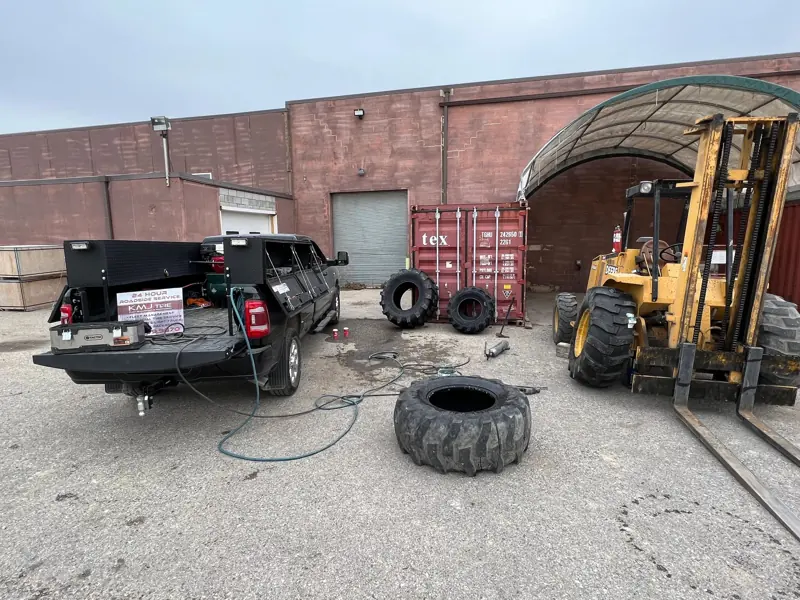
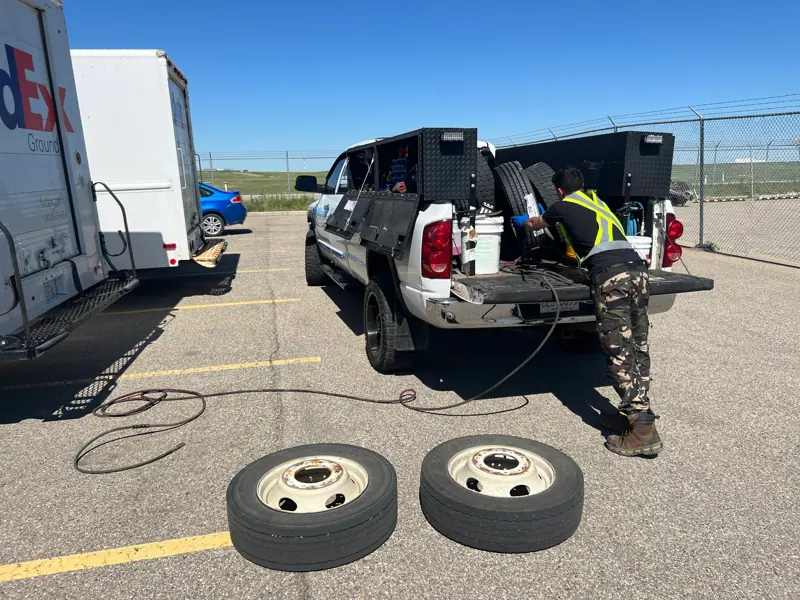
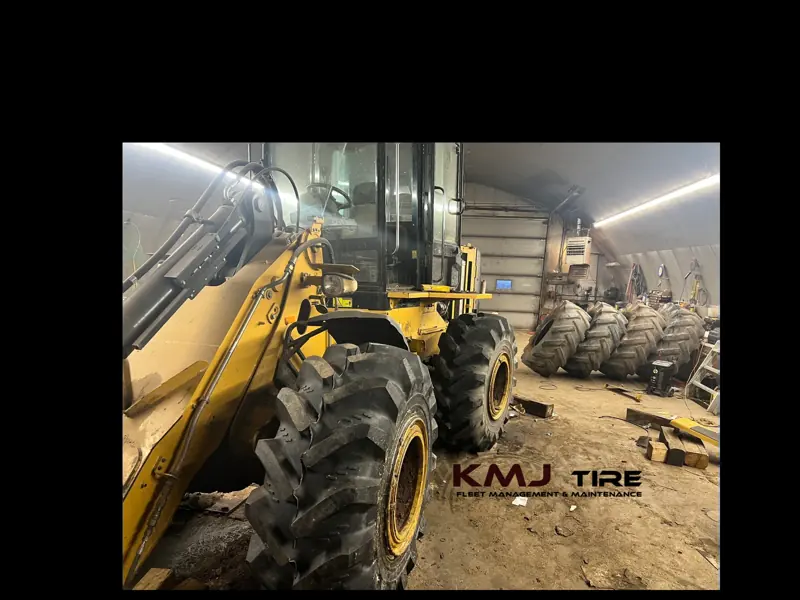
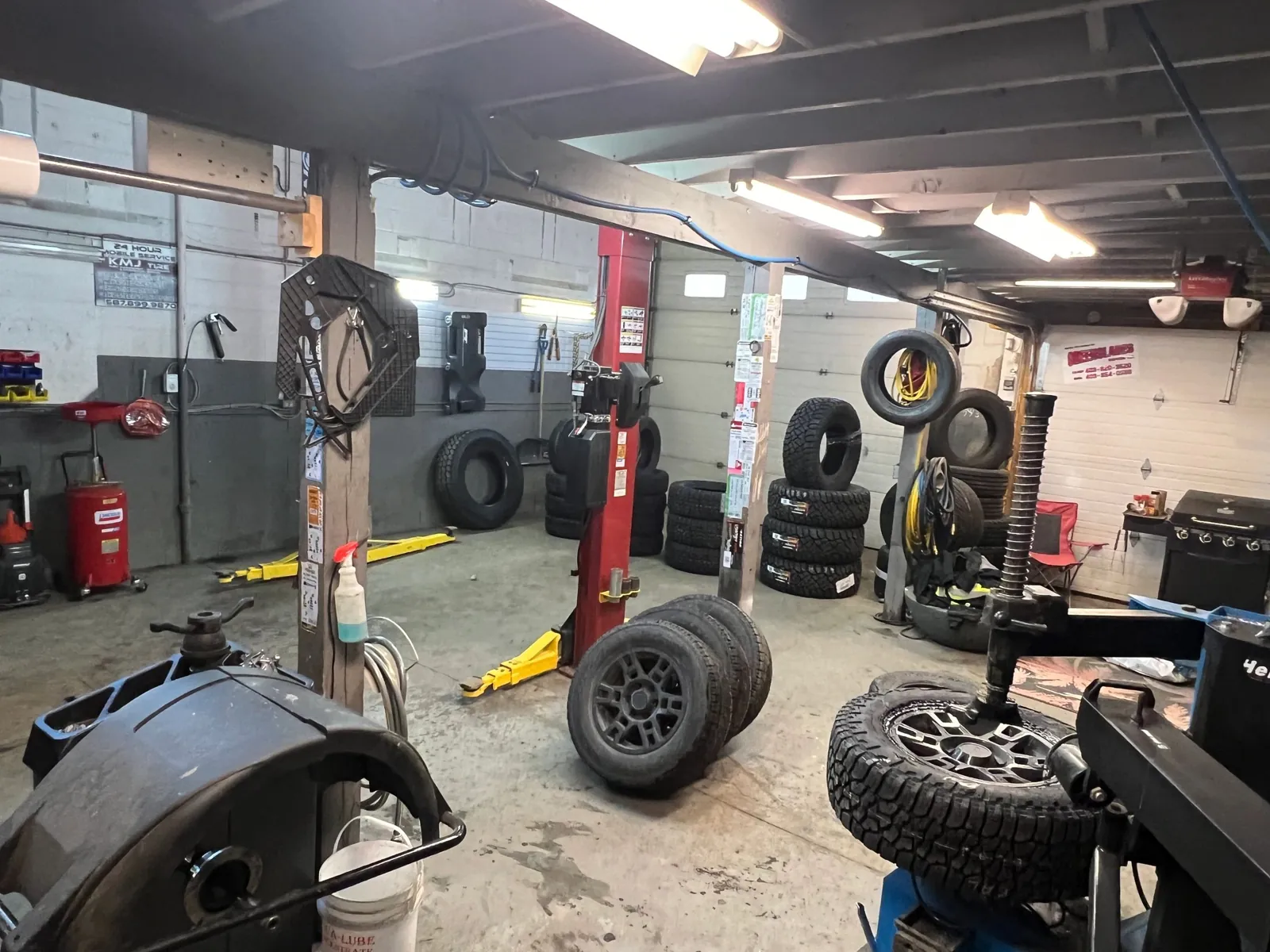
The photograph accompanying this guide shows real KMJ tire-service equipment and mounted wheels in the work area. It is not a photograph of a rental-company handover, a specific customer's incident or a partnership with a rental provider. That distinction matters: a relevant service photograph can illustrate the kind of professional setting involved without inventing a story about the vehicle pictured. The same standard applies to every practical claim in the guide.
17. Carry this compact decision sheet
Before travel, write down the intended routes, optional journeys and the equipment request. Save the provider's exact response and identify anything still subject to availability. Establish a transport alternative that you could actually use. A contingency requiring another unconfirmed vehicle at the same last-minute moment is not much of a fallback. Keep the plan simple enough that another travelling adult can understand it without searching through your inbox.
At collection, reconcile the assigned vehicle with the request. Check visible tire condition from a safe place, ask about unresolved pressure or tread questions, and understand the vehicle's warnings and roadside arrangement. Learn where the manual and tire information label are. If staff substitute a vehicle, repeat the relevant equipment checks. Do not let the words upgrade or all-wheel drive answer a question about the actual installed tires.
During the rental, respond to warnings and new symptoms promptly. Use current route information, respect the vehicle's loading instructions and follow the authorized assistance process. Leave diagnosis and repairability to a qualified professional. Keep permission, technical findings and payment questions separate in the record. At return, report anything unresolved and disclose use of temporary equipment. These steps are useful precisely because they do not require a traveller to become a tire technician.
The main decision is straightforward: obtain equipment facts early enough that they can change your travel plan. Four winter tires, where appropriate, are part of winter preparation; they do not replace cautious driving or good route decisions. A confirmed reservation is the start of a journey, not evidence that every equipment question has been answered. Resolve the important unknowns while you still have choices, and let the actual vehicle and conditions determine the next step.
Primary sources and the limits of this guide
The USTMA Tire Care and Safety guide supports the discussion of sidewall markings, vehicle-recommended cold inflation pressure, inspection, warning limitations, proper repair and temporary mobility equipment. Its passenger and light-truck guidance is not a replacement for the assigned vehicle's manual or a professional assessment. Model-specific restrictions remain model-specific throughout this article.
Transport Canada's winter tire guidance supports using winter tires in sets of four and the advice about tread near 4 mm on snow-covered roads. It does not establish the contents of a rental agreement or every route's legal equipment requirements. Rental policies, fees, availability, insurance, payment responsibility and permissions have deliberately not been generalized here. Obtain those facts from the current documents and the responsible provider for your reservation.