Should you change tire pressures or install a different set before shipping your car? Do not invent a transport pressure or select tires only for the journey on the carrier. Start with serviceable tires, the vehicle's correct inflation instructions and the carrier's written acceptance requirements. Then plan separately for the drive to collection and the drive away at the destination. A car riding on a truck or railcar still needs suitable tires for loading, unloading and every part of the trip under its own power.
The most useful preparation is a documented handoff. Establish the tire condition before collection, identify anything the carrier needs to know and retain enough evidence to compare the vehicle at delivery. If a tire is losing air or damaged, disclose and resolve the issue before the scheduled pickup. Shipping does not turn an unsafe tire into acceptable loading equipment, and a delivery signature does not establish that the tires are ready for a highway drive.
This guide covers passenger cars and light trucks being transported by a professional carrier. It does not teach loading, recovery, tie-down installation or rail operations. Carrier requirements vary, so the company handling your actual shipment must confirm its own conditions. The examples below are hypothetical. They illustrate decisions and records rather than claims about a particular customer's shipment, a guaranteed delivery time or insurance coverage.
Divide the move into three different tire decisions
A vehicle shipment has at least three stages: getting the car to the carrier, transport under the carrier's control and returning the car to ordinary road use. Each stage has a different decision-maker and a different set of constraints. Problems arise when a driver treats the middle stage as though it removes all concern about the other two. A vehicle may travel most of the distance without turning its wheels, yet still need to cross a cold parking lot or drive away from a terminal.
For the first stage, identify the actual journey to collection. Is the car being collected from a suitable location, or must someone drive it to a terminal? What tire condition and seasonal suitability are needed for that drive? Do not count on the transport truck arriving at the curb if the agreed service requires a terminal handoff. If the vehicle cannot be driven safely, discuss a suitable transport arrangement instead of treating a short trip as an exception.
For the carrier stage, obtain acceptance instructions and disclose special features. The carrier decides how to handle an accepted vehicle using its own procedures and the vehicle manufacturer's requirements. Do not provide improvised advice about lowering tire pressure, attaching straps or moving a disabled car. Your job is to provide accurate information and make the vehicle available in the agreed condition.
At delivery, assess whether the car can return to road use under the actual conditions. A shipment collected in mild weather can arrive when the local roads are wintry. A warning that appeared during transit may need investigation before departure. KMJ's everyday tire-care guidance provides a useful maintenance baseline, but the transport plan must identify who checks the car at each change of custody.
Read the actual carrier's instructions before fixing a date
Hansen's published vehicle-shipping instructions provide a concrete example of why the carrier's own requirements matter. The company identifies tires, the battery and a working emergency brake as important to handling during shipment. It says vehicles that do not run will not be accepted under its stated instructions, and lists flat tires among conditions that can prevent a scheduled pickup. Those are that carrier's published rules, not a universal policy for every transport company or service category.
Read the complete instructions associated with your quotation. Ask whether the service is for an operable vehicle, what constitutes an unacceptable tire condition and how to disclose an existing defect. A car that starts but has a flat tire may not satisfy the carrier's loading requirements. Similarly, a vehicle described as operable when booked can become unsuitable before collection. Update the carrier if the condition changes instead of assuming the original description remains adequate.
Keep the preparation checklist with the shipment reference. Carrier guidance can also address personal items, clearance, keys, alarms, seasonal preparation and documentation. These details affect the handoff even when the tires themselves are sound. Do not copy a checklist from a different provider and assume it applies. Ask the booked company to resolve unclear or conflicting instructions before making an irreversible change to the vehicle.
A practical enquiry identifies the exact issue: one rear tire loses pressure over several days, a wheel has visible damage, or the vehicle is fitted with nonstandard wheels. Ask what assessment or correction is required before acceptance. For the tire portion of the preparation, contact KMJ with the vehicle and shipment details. KMJ tire work does not replace a carrier inspection, a transport contract or any separate mechanical requirements imposed by the carrier.
Choose the tire set for the roads at both ends
Think about the road journeys surrounding the shipment before deciding which seasonal set travels on the car. It is not enough to ask what weather the transport truck will encounter. The relevant question is what conditions your car will face while being driven to pickup, moved during handling and driven after delivery. A vehicle that leaves Calgary in one season can arrive somewhere with a different climate, and the delivery date may move within the carrier's agreed window.
Do not use a calendar date as proof that a particular tire category is suitable. Consider the expected temperatures, road conditions and any applicable route requirements for the trips you will actually drive. Check current requirements through the relevant authorities for those routes. This article does not establish provincial or international legal compliance. If a set is unsuitable at the destination, make a workable arrangement before collection rather than planning to solve the problem while standing in a terminal lot.
One option may be a suitable tire change before shipping. Another may be transport to an appropriate location where a prearranged assessment or change can occur before normal road use. Whether either option is available depends on the carrier, the destination provider and the vehicle. Do not assume someone will perform tire work at the delivery site or allow you to remain there while waiting for parts.
The Calgary winter-tire selection information can support the seasonal discussion before departure. Ask for a vehicle-specific recommendation and current availability when a change is necessary. The cheapest sequence of appointments is not automatically a workable route. Build the plan around safe movement at each end, then coordinate timing, keys and the second set's location around that decision.
Establish the vehicle's correct pressure instructions
Create a pressure reference before the handoff. For the original tire specification, use the vehicle tire-information placard and owner's manual rather than the maximum figure on the tire sidewall. Front and rear recommendations can differ, and the spare may have its own instruction. Record the units along with the numbers. A pressure note that says only a number can be misunderstood when a gauge or dashboard display can show different units.
Photograph the placard clearly and retain the picture with the vehicle identifier. If you transcribe the values into a shipment note, check the transcription against the photograph. Do not transfer the settings from another vehicle or use a pressure remembered from a previous seasonal set without verification. Replacement fitments, modifications or other specification questions need qualified advice based on the actual vehicle, tire and wheel combination.
There is no transport inflation value supplied by this article. Do not inflate every tire to its sidewall maximum because the car will be stationary, and do not lower pressure to make the vehicle sit differently on the carrier. If a carrier requests a pressure change that seems inconsistent with the vehicle or tire instructions, ask for clarification and resolve the conflict with qualified guidance. Avoid being the person who turns a vague loading suggestion into an unsupported tire setting.
KMJ's tire-sidewall information explanation helps distinguish size and service markings from the vehicle's operating instructions. Keep those two types of evidence together but separate. The sidewall photographs identify the installed equipment; the verified vehicle instructions establish the relevant pressure targets. Both can help a professional answer questions, but neither should be used to improvise a loading procedure.
Measure cold pressure and record the conditions honestly
Michelin's passenger and light-truck replacement-tire owner's manual recommends cold inflation checks at least monthly and before long-distance trips, including the spare. A shipment is a useful occasion to establish a fresh baseline, especially if the car has spent time waiting for collection. Arrange the check while the tires are cold according to the applicable instructions. Driving even a short distance can warm them and change the readings.
Record whether the measurements were taken before driving or after a journey. If the car is driven to a terminal, a reading there may not represent the same conditions as a cold measurement at home. Do not bleed warm tires down to the cold target. Tell the professional assessing them about recent driving and arrange a cold recheck when required. A truthful warm reading is more useful than a falsely labelled cold reading that makes two records appear directly comparable.
Retain initial readings as well as any adjustments. If one tire repeatedly needs air, the pattern matters to the person investigating it. A final row of correct numbers can conceal the reason the check was needed. Note the wheel position, date, gauge units and any prior pressure loss. You do not need a complex monitoring system; a clear note with the pressure-card photograph and the work record can be enough.
A spare that is installed in an awkward position should not disappear from the plan. Ask a capable person or professional to check it safely under the vehicle instructions rather than making an unsupported assumption about its condition. Include uncertainty explicitly when a check cannot be completed. The record's purpose is to distinguish verified information from gaps, not to produce an apparently perfect checklist for the carrier.
Resolve pressure loss before the vehicle enters custody
A slow leak is particularly inconvenient during a shipment because the owner may not be present when it becomes a flat tire. A car can appear ready at collection and be difficult to move later if an unresolved problem continues. Repeated topping up does not establish that the cause has been corrected. Arrange assessment ahead of collection, disclose the history and leave enough time to act on the findings.
Describe what you know without diagnosing the cause. Record the wheel position, how often pressure has needed correction and whether the problem followed an impact, tire work or a warning. The cause might involve the tire, valve, wheel or another issue that requires examination. Do not tell the carrier that a tire only needs air unless a qualified assessment supports the plan. A reassuring description is not a substitute for a stable, serviceable assembly.
If the tire has been driven while low, include that fact in the history. An exterior photograph or a successful inflation attempt does not determine internal condition. Repairability requires assessment under the applicable tire guidance. The Calgary tire-repair information is a starting point for arranging that assessment, not a promise that every puncture or pressure-loss problem can be repaired.
After any work, retain the invoice or report and ask what follow-up is needed before shipping. If the issue is not resolved in time, update the carrier and discuss the next step rather than presenting the vehicle as unchanged. A delayed handoff can be frustrating, but an undisclosed tire problem may create a much more complicated situation after the vehicle is away from you. Do not authorize loading on the assumption that the destination will sort it out.
Make a photographic baseline that a stranger can understand
Before collection, photograph each wheel and tire in a safe location with enough light to show useful detail. Take a wider view that identifies the vehicle corner and a closer view of any existing mark or concern. A close-up alone can be hard to place later. Keep the original images rather than relying only on a compressed collage or a heavily edited version that removes context.
Use consistent position names from the driver's perspective. Driver-front and passenger-rear are often clearer than an unlabeled left or right when someone is standing in front of the car. Include tire make, model and size where readable, along with relevant visible markings. If a particular sidewall marking is inaccessible, note that rather than moving into an unsafe position or treating the absence of a photograph as proof that nothing is there.
Document existing wheel marks honestly. A photograph should show the condition, not attempt to establish an insurance conclusion. Clean enough dirt from the visible area to make it understandable using appropriate care, but do not conceal damage with dressing or cosmetic work just for the handoff. Keep any professional condition report separate from your photographs so the carrier and recipient can see which observations were made by whom.
Photos cannot prove internal tire condition, precise tread depth or correct inflation. Add actual measurements and professional findings where relevant. The baseline is a communication tool and a comparison record, not a certificate of roadworthiness. A well-organized set makes it easier to identify a changed condition at delivery without claiming that a picture alone establishes when damage occurred, what caused it or who is responsible.
Decide whether a replacement belongs before or after shipping
If an inspection identifies tires that require replacement, discuss the timing in terms of safe movement rather than cosmetic preference. A tire that is unsafe for use does not become acceptable because the distance to the loading area is short. If a tire is serviceable but approaching a planned replacement point, you may have more flexibility, subject to the carrier's requirements and the road conditions at both ends.
Ask for the reason behind the recommendation. Is the issue damage, wear, age-related concern, an incorrect specification or suitability for the destination conditions? Each answer can lead to a different next step. Do not combine them into a vague statement that new tires would be nice before the move. Retain the findings so the recipient understands whether a change is required before driving or merely part of a future maintenance plan.
Use the guide to buying tires in Calgary to prepare a specific enquiry. Provide the vehicle details, current size, relevant fitment history and expected use after delivery. A shipment deadline does not verify stock or justify a substitute that has not been approved for the vehicle. Confirm the exact product and the work scope before coordinating collection around an assumed completion date.
When comparing options, the budget-versus-premium tire discussion can help frame performance and ownership trade-offs. Keep any transport-related costs separate from the tire comparison. No price, availability or promotion is asserted here. The practical objective is to avoid paying for an unnecessary change while also avoiding a handoff that leaves the recipient with a known safety problem and no suitable way to move the vehicle.
Treat a second wheel set as a separate cargo question
Do not assume you can place four seasonal wheels inside the car simply because there is room. Carriers may restrict personal belongings or additional cargo, and the vehicle's load and securement requirements still matter. Hansen's published instructions prohibit personal belongings subject to stated exceptions and identify the spare tire and tire-changing tools as vehicle items. That does not automatically authorize a loose seasonal set. Ask the carrier specifically about the items you intend to include.
Describe whether the set consists of loose tires or mounted assemblies, how many pieces there are and how they would be packaged. Request written confirmation of acceptance and the required arrangement. If the carrier does not accept them, organize a separate method. Do not hide the set under luggage or assume the driver will approve it at collection. An unresolved cargo question can disrupt the handoff even when the vehicle's installed tires are completely suitable.
Avoid improvising load limits from empty space. Four assemblies plus belongings can add meaningful mass, and carrying capacity is not determined by whether the hatch closes. The tire load-index guide explains one part of tire capability, but it does not authorize a particular cargo load or override vehicle limits. The carrier's acceptance rules and the vehicle's limits are separate requirements.
Label the second set for the correct vehicle and retain photographs if it is moving by an approved method. Arrange who will receive it and where it will be stored. A seasonal plan can fail if the car arrives but the suitable tires are still at the origin. Coordinate the two movements explicitly rather than assuming an included spare, a personal-effects allowance or a transport quotation covers every wheel you own.
Keep the spare, wheel-lock key and instructions identifiable
A spare tire and associated tools are useful only if they can be located and are suitable for use. Before shipment, identify what the vehicle actually carries: a spare, an emergency mobility kit, run-flat equipment or another manufacturer-specified arrangement. Do not assume there is a spare beneath the luggage floor because a similar model has one. Check the exact vehicle and its manual.
Hansen's instructions specifically ask that the jack, wheel-nut key and spare tire be properly stowed. For your shipment, confirm what the booked carrier needs and where those items should be placed. Do not leave tools loose in the cabin or attach a wheel-lock key in a way that interferes with vehicle operation. Record the location in the handoff information so the recipient does not have to search through unfamiliar storage compartments.
A temporary spare can have different pressure and operating restrictions from the regular tires. Preserve those instructions and do not present the spare as a universal replacement for any road tire. A sealant kit also has its own limitations and condition checks. Shipping preparation is a good time to identify the equipment, but it is not an invitation to test a jack or perform an unfamiliar roadside procedure without the proper setting and competence.
If the vehicle has no usable spare, make that fact clear to the recipient and include an assistance plan. This does not necessarily determine whether the carrier accepts the car; ask the carrier rather than guessing. It does affect the response if a tire concern appears after delivery. The person collecting the vehicle should know what is available before relying on it during the first trip away from the terminal.
Disclose unusual wheels and handling requirements accurately
A modified or unusual vehicle needs more than a generic description such as small car or pickup. Tell the carrier about relevant changes, including wheel and tire modifications or clearance concerns, and provide the information requested for its acceptance review. Do not assume that fitting on the road guarantees straightforward loading onto every transport vehicle. The carrier must evaluate its equipment and procedure for the actual car.
If a tire or wheel specification is uncertain, resolve it with a qualified provider. The Calgary tire-brand information can help begin a product enquiry, but a brand name does not establish size, load capability, clearance or compatibility. Preserve exact markings and any documented fitment approvals rather than offering the carrier a general assurance that the wheels have always worked.
Follow the vehicle manufacturer's transport instructions, especially for systems that require particular handling. Those instructions may concern more than tires, so provide the relevant manual information to the carrier and let trained personnel determine the appropriate procedure. This article does not authorize towing with wheels on the road, dragging a vehicle or using a particular attachment point. Do not substitute an online comment or another model's procedure for the actual instructions.
If the carrier requires a mechanical inspection or repair beyond tire services, arrange that with an appropriate provider. KMJ's scope described in this guide is tires and oil changes; no claim is made that KMJ performs the other mechanical work a carrier may require. Separating these responsibilities avoids a misleading handoff where a tire invoice is treated as proof that all vehicle acceptance requirements have been satisfied.
Leave loading and restraint decisions to the professionals
Owners sometimes want to help by recommending where straps should go or changing tire pressure to make restraint easier. Those are not decisions to improvise. Vehicle transport involves equipment, restraint systems, loading geometry and manufacturer requirements that must be handled by the responsible professionals. Your preparation should support their assessment, not supply an unverified procedure that could be mistaken for permission.
Provide the known condition and relevant instructions. If a wheel is damaged, a tire has been repaired or a special handling requirement exists, disclose it. Ask questions when you do not understand how the vehicle will be handled, but do not enter a loading area or reach toward equipment to adjust something yourself. Follow the operator's directions about where to stand and when the vehicle can be approached.
There is no tie-down tutorial in this guide. A photograph of a tire under a strap does not demonstrate that a particular method is suitable for your vehicle or carrier. Nor does a tire's load rating establish the capacity of a restraint system. Treat those as distinct technical subjects, each with its own instructions and responsible person.
If the car's condition prevents ordinary loading, pause the handoff and let the carrier determine the accepted next step. Do not repeatedly inflate a failing tire or move the car onto a ramp merely to see whether it will manage. An accurate pre-collection disclosure gives everyone a chance to arrange an appropriate response before equipment arrives. The owner contributes most by making the facts clear, not by taking over a process for which they are not equipped.
Put exceptions on the handoff record while everyone is present
At collection, compare the vehicle with the prepared baseline and review the carrier's condition documentation. Point out existing marks and any unresolved question. Ask how an exception should be recorded under the carrier's process, and retain your copy. A spoken comment to one person may not travel with the shipment. A clear entry tied to the correct vehicle is more useful than an assumption that the driver will remember it later.
Do not sign a description you know is inaccurate without raising the issue. Equally, do not treat a signature as a technical inspection of every tire surface. Understand what the document actually records. If there is a disagreement about condition, use the carrier's procedure and preserve the relevant photographs and correspondence. This article does not determine liability or the legal effect of a transport document.
Identify what the recipient needs to know. That can include the installed tire set, the location of the wheel-lock key, any completed tire work and any follow-up already recommended. Make the record available to the person who will take delivery, not only the person paying for the shipment. If a representative is collecting the vehicle, establish their authority and responsibilities through the carrier's process.
Keep personal information proportionate. The recipient needs vehicle and maintenance facts, not unrelated documents left loose in the cabin. Store your own records securely and supply the carrier with the documentation it requires. A short, organized tire handoff can reduce confusion without turning the car into a filing cabinet or assuming that extra belongings are permitted under the shipping agreement.
Prepare for a delivery inspection before planning the drive home
Give the recipient enough time to inspect the delivered vehicle in a safe place. A rushed pickup just before another commitment can make it tempting to overlook a warning or postpone a condition question. Arrange suitable lighting if possible and know the carrier's process for reporting concerns. Do not walk into an active unloading area or reach around equipment until the operator says it is safe to approach.
Compare the visible tires and wheels with the collection photographs. Check whether the installed set and wheel positions are consistent with the records, while recognizing that a photograph alone cannot prove every event during transport. Look for a visibly low tire, new apparent damage or a warning on the vehicle. Record observations accurately and bring concerns to the carrier's attention using its procedure before making assumptions about cause.
A cold pressure check may be appropriate before the road journey, depending on the circumstances and access. If that cannot be done safely at the delivery point, arrange a suitable assessment rather than guessing. Do not drive away on a visibly damaged or substantially deflated tire simply to reach a more convenient place. The appropriate next step can involve tire assistance or recovery transport.
If delivery is in the Calgary area, KMJ's service-area information can help identify whether a tire-service enquiry is geographically relevant. Confirm the exact location and task before relying on availability. A terminal may have access restrictions, and a carrier's property is not automatically an approved workspace for another provider. Coordinate permission, vehicle location and any safe transfer before arranging attendance.
Interpret changed readings without jumping to a cause
Different pressure readings before and after shipping do not by themselves establish damage or a transport error. Temperature, recent driving and measurement conditions matter. Compare like information where possible: verified units, identified wheel positions and cold readings taken under appropriate conditions. A warm pre-collection measurement and a cold delivery measurement are not a controlled experiment, even when the difference looks striking in a phone note.
That does not mean dismissing a low reading. Correct inflation remains necessary, and a tire that repeatedly loses pressure needs assessment. Separate two questions: what action is needed now, and what explains the change? The immediate decision should protect the vehicle and occupants. Determining the cause may require inspection, a history review and appropriate testing rather than a debate in the delivery lot.
Dashboard values also need context. Read the vehicle manual for how and when the monitoring system updates. A blank field, stored value or warning message should not be interpreted according to another car's behavior. Michelin's manual explains that tire-pressure monitoring does not replace regular manual gauge checks. Record the actual message instead of deciding that the system must have become confused during transport.
Avoid resetting warnings merely to make the handoff appear complete. If the manual calls for a reset or calibration as part of a verified procedure, follow the correct sequence after the underlying condition has been addressed. Clearing a display is not equivalent to confirming inflation or inspecting tire condition. Retain the initial finding and the action taken so a later professional does not have to reconstruct the history from an edited version of events.
Distinguish a delivery concern from a damage claim
If you observe a possible change in tire or wheel condition, preserve evidence and follow the carrier's reporting procedure. Record the time, location, vehicle position and what you can actually see. Keep collection and delivery photographs together with the condition reports. Ask about deadlines and required documentation directly rather than relying on a general online statement about transport insurance.
Do not assume every mark is new, every new concern was caused during shipping or every tire expense is covered. Those conclusions depend on facts and the applicable agreement. At the same time, do not delay a safety assessment while waiting for a coverage answer if the vehicle is not suitable to drive. Tell the carrier about the concern and ask how urgent assessment or necessary work should be documented under its process.
A tire professional can describe observed condition and recommend an appropriate tire-related next step. That does not automatically establish legal responsibility for the condition. Ask for a clear factual report rather than a speculative statement about who must have caused it. Preserve removed components if the relevant parties request that and a suitable storage arrangement can be made, following their actual instructions.
The answers to common tire-service questions can help you prepare an enquiry about assessment or replacement. They do not define the carrier's claim process. Keep the maintenance decision and the claim decision connected by evidence but separate in authority. One determines what the vehicle needs; the other addresses responsibility and coverage under the relevant terms.
A worked example: a Calgary departure into winter conditions
Imagine a family arranging shipment of a passenger car from Calgary to another Canadian city. They plan to leave the car at a terminal and have a relative collect it. The installed tires are suitable for the first drive, but the family has not considered the likely conditions at delivery. Their second seasonal set is stored in a garage, and they assumed it could travel in the back seat without asking the carrier.
Before collection, they obtain the carrier's written preparation rules and ask specifically about the loose wheel set. If it is not accepted, they arrange another approved method rather than concealing it in the car. They then discuss tire suitability for the intended arrival conditions with a qualified provider. A change before departure may be appropriate, or a different delivery arrangement may be required. The decision is made before the relative is stranded with an unsuitable set at the terminal.
The family records cold pressures, has a recurring pressure-loss concern assessed and photographs the wheels after any necessary work. They send the recipient the relevant records, installed-tire details and wheel-lock key location. The recipient knows to compare condition and respond to warnings before driving home. The plan does not require them to decide tire suitability from a carrier's delivery notification alone.
If preparation needs tire work, online tire-service scheduling can be part of the coordination after the scope and timing are confirmed. Do not assume a requested appointment or a shipping estimate guarantees completion on a particular day. Leave room to resolve findings rather than making the handoff depend on every task succeeding at the final possible moment.
A second example: a shipped car with an unexpected low tire
Consider a buyer receiving a used car through a transport carrier. The seller supplied dated tire photographs and a pressure record, but at delivery one rear tire appears low. The buyer is tempted to add air and drive several hours home because the carrier appointment has already taken time. The better sequence starts with a safe condition assessment and the carrier's reporting process, not with an assumption about who is at fault.
The buyer documents the observation and alerts the carrier representative. They compare the wheel position and appearance with the supplied records without claiming the photographs establish internal condition. They arrange appropriate tire assistance or recovery as needed, and ask how the findings should be recorded. If professional inspection recommends work, they keep the report and any relevant correspondence. The immediate road-use decision is made on the tire's condition, not on whether a claim has been approved.
For a Calgary delivery, mobile tire-service enquiries may help establish whether the requested work and location are suitable. The buyer must still confirm terminal permission and provider availability. If the vehicle cannot be safely driven, that fact should be made explicit. Mobile service is a possibility to assess, not a promise of access to every delivery yard or an alternative to recovery in every case.
Keep emergency tire-assistance information alongside the carrier contact and a suitable recovery option. Do not rely on an invented arrival time. The lesson in this example is not that shipping caused the low tire. It is that a documented handoff and a prepared response let the buyer address an actual condition without being forced into a risky drive or an unsupported accusation.
Give multi-vehicle shipments one record per vehicle
When several vehicles move together, a shared email thread is not enough to distinguish tire histories. Assign each vehicle its own identifier, installed-set description, pressure reference and condition record. A photograph of a placard needs to be attached to the correct car. Similar vehicles may still have different fitments or requirements, so avoid copying one set of values across the shipment without verification.
Identify who owns the preparation task for each unit and who receives it at the other end. Keep completed work, pending assessment and unverified information in separate fields. A vehicle should not be described as ready merely because the rest of the group passed through the process. If one develops a tire concern before pickup, update that vehicle's status and tell the carrier rather than leaving the entire shipment labelled with yesterday's condition.
The fleet tire-management overview can support coordination of tire work for multiple vehicles. It does not replace the transport company's acceptance review or create an assumption that every vehicle can be handled at the same location. Share the individual unit details and requested tasks so scheduling reflects the actual work rather than the number of keys in an envelope.
After delivery, reconcile each record with the recipient's observations. Close the tire-preparation task only when its agreed checks and follow-ups are accounted for. This makes it easier to identify an unresolved issue without confusing it with another vehicle's invoice or photograph. The administrative work is modest compared with trying to reconstruct which tire, which car and which date a vague message referred to after the vehicles have dispersed.
The final handoff should answer five practical questions
Before releasing the car, ask whether the installed tires are suitable for the planned movements, whether inflation and condition have been checked, whether the carrier has accepted any special circumstances, whether additional wheels are moving by an approved method and whether the recipient knows what to do on arrival. Those questions connect the tire work to the actual shipment instead of creating a checklist that ends when the truck leaves.
Keep the resulting packet compact: vehicle identification, placard photograph, readings with conditions, visible-condition photographs, relevant tire-work records and the location of the spare equipment and wheel-lock key. Add the carrier's instructions and the recipient's contact arrangement. Do not present this packet as a mechanical inspection certificate or proof that hidden damage is impossible. Its strength is that each statement has a source and an identifiable scope.
At delivery, repeat the decision rather than merely filing the documents. Confirm the vehicle's observable condition, respond to warnings and arrange assessment where necessary before the first ordinary journey. If everything is consistent and no concern remains, the records can return to the vehicle's maintenance file. If something is unresolved, name the next action and the person responsible so it does not vanish between seller, carrier and recipient.
Vehicle shipping is easiest to manage when tire safety, carrier acceptance and evidence are treated as related but distinct responsibilities. You do not need to become a transport operator. You need accurate preparation, honest disclosure and a recipient who is ready to make a fresh road-use decision. That is the difference between assuming the tires travelled successfully and checking that they are ready for the next drive.
Sources and application limits
The pressure and inspection principles in this guide follow Michelin's passenger and light-truck replacement-tire owner's manual and its manufacturer advice on checking tire pressure. Apply the instructions for the actual vehicle and tires, including any special-system requirements. No universal transport inflation setting, towing procedure or restraint method is supplied here.
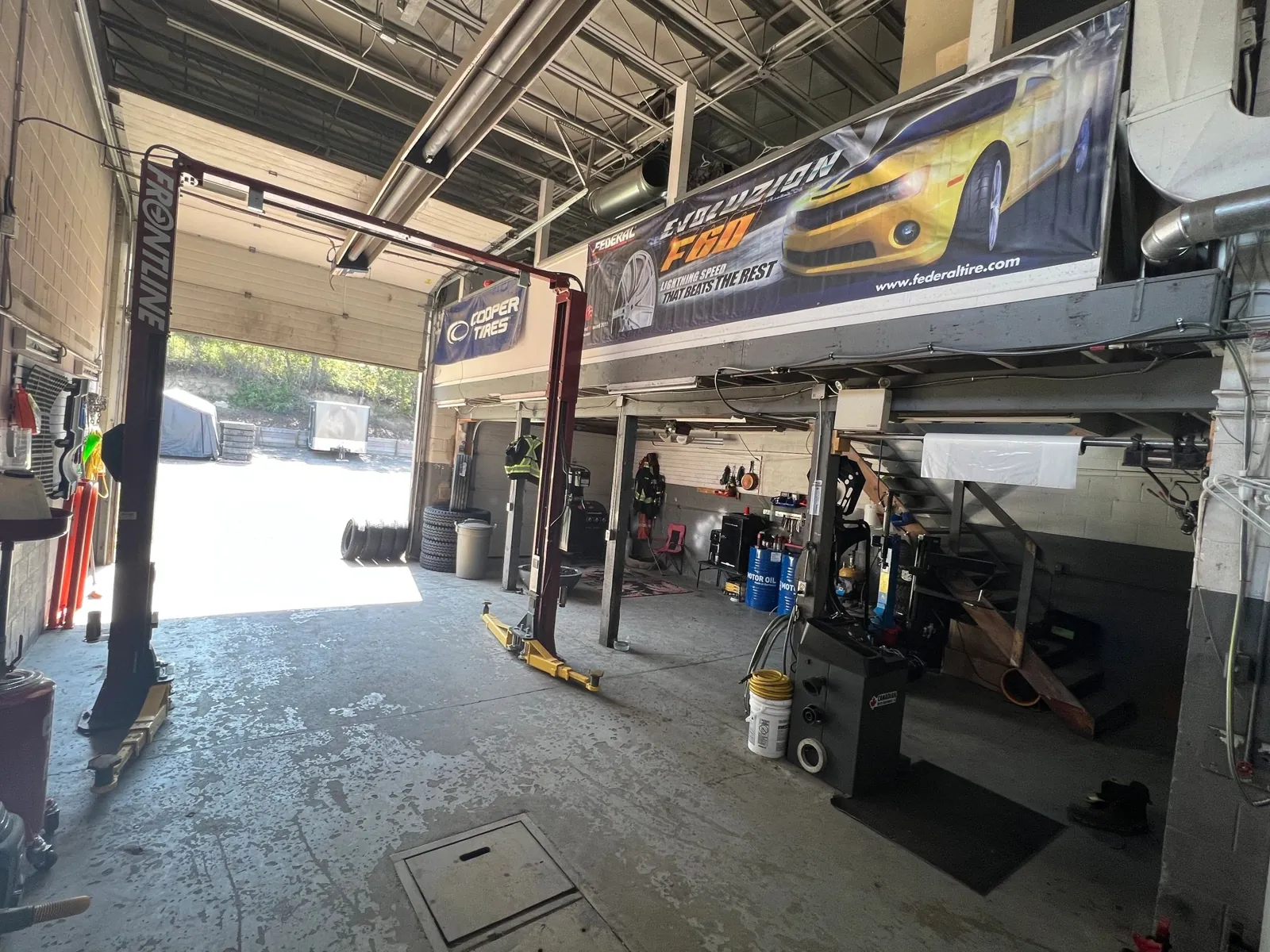
Carrier examples come from Hansen's published vehicle-shipping instructions, checked for this article. They illustrate why operability, tires, properly stowed equipment and declared conditions matter. They are not presented as the rules of another carrier, a recommendation of a transport service or an interpretation of insurance coverage. The photographed KMJ service bay illustrates tire-service preparation, not a vehicle-shipping facility or a transport partnership.