The moving truck is reserved, your keys change hands next month, and your car still has a separate set of tires in a Calgary garage. Suddenly the tire decision is not just about the next season. It is about the departure date, the roads between two homes, the load in the vehicle, the carrier if you are shipping it, and what happens to that second set when you arrive. Those decisions need to fit together before the last box closes.
A cross-Canada move creates a particular trap: buying for the destination while forgetting the journey. The opposite can be wasteful too. A driver may buy equipment around one difficult travel day without considering years of use at the new address. The useful starting point is to separate the trip from the ownership plan, then find an arrangement that supports both without compromising either.
This guide is for people leaving Calgary, whether the car travels under its own power or on a vehicle transporter. It is not a province-by-province legal chart or a promise that one tire category suits every Canadian route. It gives you a working sequence for gathering the right information, deciding what deserves professional assessment, and leaving with records another tire provider can actually use. KMJ's service scope is tires and oil changes; vehicle loading approvals, mechanical repairs, carrier rules and destination regulations belong with their respective authorities.
Start with three different dates, not one moving day
Write down the day the car leaves Calgary, the expected day it reaches the new city, and the day you will next be able to deal with tire maintenance after arrival. These dates can be quite different. A shipped car may sit before collection, travel separately from the household, and arrive before you have access to your garage. A driven car may spend a week crossing several weather regions. Your tire arrangement has to make sense across that whole period.
Add a fourth date if the second set is going in a household shipment. A winter set that reaches the new home two weeks after the car cannot solve a need during those two weeks. Label this gap explicitly. It is easy to remember that you own suitable tires and overlook that you will not have physical access to them when they are needed. Availability in your own plan matters just as much as suitability.
Use a simple written timeline rather than trying to mentally connect four calendars. For example, a hypothetical household might leave Calgary on a Friday, stop with family for several nights, and receive its belongings later. That is not a recommendation for a particular travel month or tire type. It illustrates why the car's journey and the household shipment are separate projects. Mark when each tire set is accessible, who holds it, and what decisions remain unresolved.
Before choosing a service location, use the Calgary tire-service location guide to establish practical geography. Confirm current access and timing directly. Build enough time into your departure plan to act on findings; an assessment performed after every other moving commitment is fixed leaves fewer options if a tire needs attention.
Describe the route as segments with decision points
A line from Calgary to the destination on a map is not enough. Divide the intended journey into the roads and stops that meaningfully change your choices. Relevant differences include elevation, likely seasonal conditions, the distance between safe stopping options, and whether you can postpone a segment. Do not treat an urban departure forecast as evidence about a mountain pass or a different province several days later.
Write down the planned route and one realistic alternative. An alternative is useful only if it is accessible, lawful for your vehicle, and appropriate to the conditions. Taking an unfamiliar road to avoid a delay can introduce a different problem. Official road reports and the current provincial transportation guidance should drive those decisions; a tire article cannot substitute for live closure, warning or restriction information.
Set decision points before departure: when you will review conditions, where you can stop without pressure to continue, and who will change accommodation or arrival arrangements if necessary. These are planning choices, not guarantees of safe passage. Having capable tires does not make every road condition manageable. A postponed journey can be the appropriate result of good preparation rather than evidence that preparation failed.
Keep the discussion with the tire provider concrete. Instead of saying that you are moving east or west, describe the route, departure window, expected stops, vehicle and flexibility. Someone who is shipping the car needs a different conversation from someone driving the entire distance. The Calgary tire-buying preparation guide can help organize vehicle information before that discussion, but the route-specific decision still needs the actual details of your move.
Separate travel suitability from provincial requirements
There are three questions to ask about a proposed set: does it meet the vehicle's requirements, is it appropriate for the conditions you reasonably expect, and does it meet the applicable rules along the route and at the destination? Those questions overlap, but they are not interchangeable. A marking that satisfies one legal requirement is not a promise of suitable performance in every winter situation.
Read current guidance from the relevant provincial authorities close to departure. Check dates, the roads covered, vehicle categories, registration-related conditions and any stated exceptions. Do not assume an exemption applies because someone else used it during a different move. If wording about a newly registered vehicle or temporary travel affects your decision, obtain clarification from the responsible authority instead of relying on a summary copied into a forum.
Transport Canada's guidance on using winter tires is a useful national safety reference. It recommends winter tires in sets of four and explains the winter marking. Use it for the safety principles it actually covers. It does not erase provincial requirements, prescribe a specific product for your vehicle, or establish that a particular travel day is safe.
Save the official page address, the date you checked it, and the particular point that matters to your itinerary. Recheck when departure approaches if your dates or route change. That small record is more useful than a screenshot with no visible source. Keep legal compliance and performance suitability as separate lines in the plan so neither becomes an excuse to skip the other.
Build a baseline for the vehicle that is actually leaving
Collect the year, make, model and relevant trim, then photograph the tire information placard and the markings on the tires currently fitted. If the vehicle has different front and rear specifications, preserve that distinction. A description such as standard crossover tires is not enough for a reliable comparison, especially if a previous owner changed wheels or fitted a different size.
The tire-sidewall information guide helps explain the numbers and markings you are collecting. Treat photographs as identification evidence, not as permission to substitute a size. The vehicle manufacturer's requirements and a competent fitment assessment remain the basis for any change. A matching wheel diameter alone does not establish that an alternative tire is suitable.
Include known modifications, recent tire work and symptoms. If you have noticed repeated pressure loss, a vibration or uneven wear, record when it happens and what was done previously. Do not try to solve the cause by naming a part you have not had assessed. A factual description is more helpful than a confident but unsupported diagnosis, especially when a new provider will inherit the history after the move.
Photograph the second set separately and identify which wheels, if any, belong with it. Distinguish a set of four loose tires from four complete wheel-and-tire assemblies. They have different handling and service implications. Write down where the set is now, whether someone else is storing it, and whether you have the relevant collection details. Lost access to an otherwise suitable set is an avoidable moving problem.
Assess condition before deciding to keep, replace or ship
A move is not automatically a reason to buy tires. It is a reason to establish whether the existing set is appropriate for the planned use. Ask for condition findings that distinguish what was observed from what remains uncertain. Measurements, the locations of concerns, visible damage and relevant history are more useful than a bare conclusion that the set looks fine.
Do not collapse everything into a single tread number. The pattern across the tire and differences between tires can matter. So can damage, age, previous repairs and suitability for the journey ahead. A photo of the outside shoulder cannot establish the condition of an inaccessible inner sidewall or internal structure. Avoid crawling underneath an unsupported vehicle or removing anything merely to improve your moving file.
A documented assessment also helps separate immediate needs from later planning. If a tire is not suitable to drive on, the moving schedule does not make it acceptable. If a finding concerns future replacement rather than immediate danger, ask the provider to explain that distinction and the limits of the assessment. Nobody can promise a fixed distance of remaining life from a quick look.
Use the Calgary tire-repair information page when discussing an existing puncture concern. Repairability requires assessment; the presence of a small object or a past repair does not establish the answer. If a problem is outside tire service, arrange the appropriate specialist separately. Do not let the fact that all your household decisions are happening at once blur the boundary between tire work and mechanical work.
Choose for the transition, not the destination stereotype
It is tempting to label the new city mild, snowy or rainy and buy around that label. A better description includes where the vehicle will actually go, when it must travel, whether trips can be delayed and what storage is available. A city address can still involve frequent rural or mountain travel. Conversely, a vehicle that can stay parked during difficult conditions has a different use pattern from one that must travel on a fixed schedule.
For cold-season planning, start with the winter tire selection information for Calgary and connect it to the vehicle requirements and onward itinerary. This is not a claim that every product on a category page is available or appropriate. Product-level sizing, specifications and current availability need confirmation before you make a commitment around them.
If you are considering reducing the number of sets you own, read the all-weather tire comparison information with the same discipline. A year-round arrangement may be attractive when storage changes, but convenience does not settle winter suitability or every provincial rule. Ask what trade-offs apply to your actual use rather than treating a category name as a complete answer.
The all-season tire selection guide provides another category reference. Keep the terms precise in your notes and on any proposed order. Similar-sounding descriptions are not interchangeable. If the trip and destination suggest different needs, discuss how to manage the transition safely rather than quietly assuming the tires that suit ordinary destination driving will also suit every part of the relocation journey.
Treat the moving load as a vehicle question first
A car can become the overflow space when the household truck fills up. That is where a tire plan can accidentally turn into a loading problem. Tires with a higher stated capacity do not authorize extra vehicle payload, raise axle limits or solve poor cargo placement. Start with the vehicle manufacturer's loading guidance and the actual load you intend to carry.
Count people, luggage, pet equipment, emergency supplies and any loose wheel assemblies among the items that affect the plan. If the loading limits or distribution are unclear, consult the manufacturer or an appropriate qualified professional. Do not invent a pressure adjustment from the number of boxes. Use the vehicle's specified guidance for its approved configuration and loading conditions, with professional advice where needed.
The tire load-index explanation is useful for understanding a specification, not for expanding the vehicle's abilities. Keep tire capacity, wheel suitability and vehicle limits distinct. The approved combination matters. A move is a poor occasion for experimenting with an unverified substitute simply because it appears stronger on a product listing.
Plan a place for items that do not fit within the vehicle's limits. That may mean revising the household shipment rather than asking the tires to compensate. Avoid leaving heavy objects loose where a sudden stop could send them through the cabin. Follow appropriate cargo-securement guidance for your vehicle and transport method. If you add a trailer, that introduces its own loading, equipment and tire requirements; it is not an invisible extension of the car's original plan.
Compare driving and vehicle shipping honestly
Driving gives you direct access to the car but places the journey's road exposure on its tires. Shipping changes that exposure and adds custody transitions. Neither choice eliminates the need for a suitable, serviceable vehicle. A carrier may have requirements about operability, loading access, tire condition or items left inside. Obtain its current written conditions instead of assuming the household mover's rules apply to the vehicle transporter.
Ask who will collect the vehicle, who records its condition, how delays are communicated and what happens if it cannot be loaded as expected. These are carrier questions. KMJ cannot promise acceptance by a transporter or interpret a carrier's contract on its behalf. Share any relevant tire issue accurately so the transporter can explain its process before a driver arrives.
Do not leave a spare seasonal set in the car without the carrier's explicit agreement. Some transport arrangements restrict personal goods or impose their own limits and requirements. Approval for a small bag does not imply approval for four heavy wheel assemblies. The second set needs an agreed method of shipment and identification, whether it travels with household goods or through a separate arrangement.
Compare the complete transition rather than a headline transport price. Consider where the car is handed over, how you reach that location, where it is received, and whether the tires fitted at delivery suit the next journey. A car shipped through winter conditions may still need appropriate tires for the drive from the receiving yard to the new home. The last local leg deserves planning too.
Make the second set a named shipment
Give the second set an inventory identity that a mover and a household member can both recognize. Record the number of items, whether they are loose tires or mounted assemblies, their markings, and any accessories being included. Use labels and photographs that remain understandable if the outer wrapping is removed. Avoid relying on bag colour alone when several households' belongings may be handled in the same facility.
Confirm packaging and handling requirements with the company transporting the set. A method suitable for carrying tires in your own vehicle may not satisfy a mover's acceptance rules. Ask whether the set is listed on the inventory, how condition is recorded, and what documentation applies if an item is missing or damaged. Do not assume that ordinary household coverage means a specific tire-related loss will be covered.
Keep wheel-lock information and relevant hardware organized, but do not mix unidentified fasteners into a loose bag and expect the destination provider to sort out compatibility. Accessories need correct identification and appropriate handling. If you are uncertain which parts belong to which wheels, resolve that before departure with a qualified tire professional. This is especially valuable when a household owns more than one vehicle.
For a planned change between sets before leaving, the seasonal tire-change information helps frame the service conversation. State which set will remain on the car and which will enter the shipment. Have the final arrangement recorded. A handwritten label saying winter is less useful than an inventory that links the actual tire markings and wheel set to the correct vehicle.
Decide what to do when destination storage disappears
A Calgary garage and a destination apartment represent different ownership conditions. Before committing to two sets for the next several years, find out what storage is permitted and physically available at the new address. Ask the property manager about relevant building rules rather than assuming a balcony, storage locker or parking space is acceptable. Access can be just as important as square footage.
If you are considering commercial tire storage, confirm the provider's actual terms, collection process and timing. Do not describe it in your plan as available until it has been established. In particular, find out whether the set must be attached to an existing service arrangement and how a third party can collect it if your travel plans change. These details vary by provider.
Keeping, transporting or selling a second set is a separate decision from whether it is safe and suitable. Do not pass a questionable set to someone else as a way to avoid resolving its condition. If it is no longer usable, ask about appropriate local tire handling or recycling options. If it remains usable, any transfer should describe its identity and condition accurately without promising fitment for an unknown buyer's vehicle.
A budget-versus-premium tire comparison may help with product trade-offs, but storage costs and moving logistics are separate inputs. Compare those inputs explicitly. Paying to move an unsuitable set is not a saving; discarding a suitable set merely because it is inconvenient this week can be wasteful. Establish facts before choosing either path.
Resolve tire symptoms without inventing a diagnosis
Long travel tends to make drivers pay attention to sensations they have tolerated locally. A vibration, repeated pressure loss or unusual wear deserves an assessment, not a confident guess based on a search result. Record the conditions under which you notice the symptom, including whether it changed after tire work or an impact. Provide the history without trying to force it into a preferred explanation.
For a vibration concern, the wheel-balancing service information explains a relevant tire service. It does not mean balancing is necessarily the remedy. Other causes may require a separate qualified mechanical provider. KMJ's scope remains tires and oil changes, so do not treat a tire visit as a comprehensive mechanical clearance for a cross-country drive.
If a tire appears seriously damaged, rapidly loses pressure, or the vehicle feels unsafe to control, do not continue the trip simply to preserve the moving schedule. Move to a safe position only if it is safe to do so and obtain appropriate roadside assistance. A checklist can help you communicate, but it cannot remotely determine that driving remains safe.
After work is completed, ask what was found, what changed and what instructions apply. Keep any follow-up requirements with the travel timeline. Avoid booking the next non-negotiable part of the move so tightly that you cannot act on the instructions. The goal is not to create an elaborate medical chart for the car; it is to avoid losing important information between the person doing the work and the person driving away.
Make the Calgary service visit fit the moving sequence
The best time for an assessment is early enough that its findings can influence the plan. That does not require an arbitrary number of days for every move. It requires enough flexibility for your circumstances, especially if a product must be confirmed, another professional must assess a separate issue, or a shipment inventory needs to change. Explain the departure constraint without presenting it as a reason to skip necessary work.
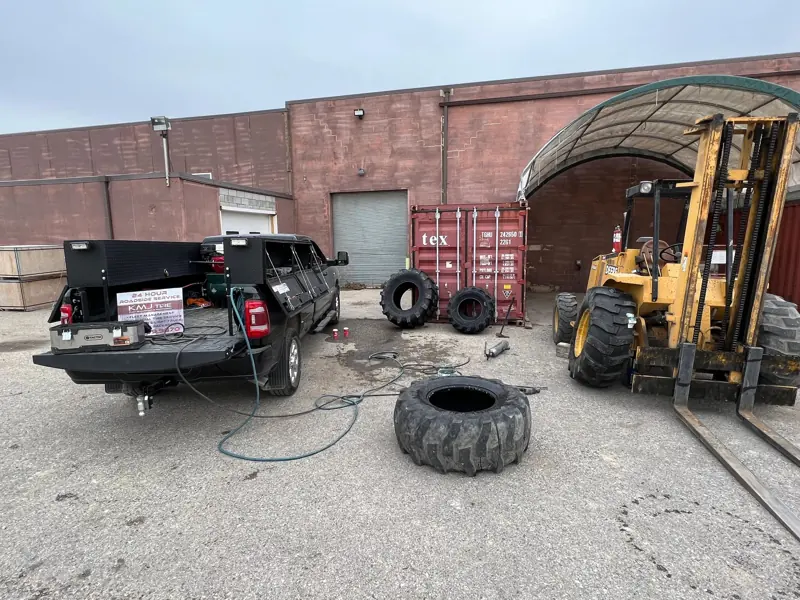
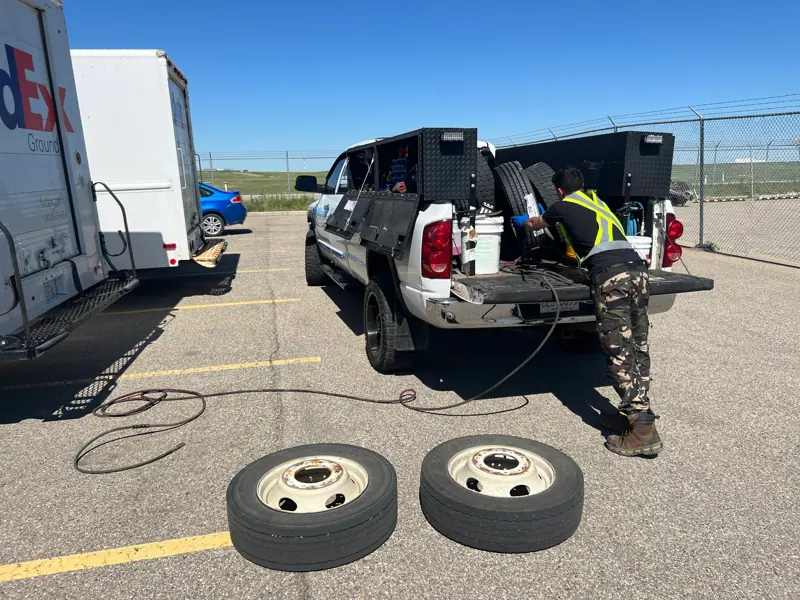
If you are considering service where the vehicle is located, read the mobile tire-service details and ask whether the specific site and work can be accommodated. Access, a suitable work area and operating conditions matter. A moving van occupying the driveway or a restricted loading zone can change what is practical. Do not assume that a service description guarantees attendance at any location.
Use the listed tire-service areas as a starting point, then confirm the actual address and arrangement. Keep the person coordinating the move informed so the car is accessible when needed. The tires should not be buried in a locked storage unit whose keys are already travelling with someone else.
For a written request, the online tire-service enquiry page gives you a place to begin. Describe the vehicle, the sets involved, the departure date and the decision you need help making. A submitted request is not a confirmed time or a guarantee of product availability. Wait for an explicit arrangement before connecting it to a carrier collection or other commitment.
Build a small file that survives the move
Your destination tire provider does not need every receipt you have ever collected. Start with identification, the latest relevant findings, work performed, tire and wheel details, and any follow-up instructions. Include the date and vehicle reading recorded at service if available. Keep original documents rather than replacing them with a summary that may accidentally omit qualifications or conditions.
Use clear filenames such as the service date followed by vehicle and document type. Avoid making the only copy a message buried in a conversation thread. Store a readable digital copy and make sure the driver can access it without depending on the household computer, which may be packed away. A second authorized household member can hold a copy if that suits your arrangements.
Photographs should explain something: the placard, tire markings, a documented condition concern or the identified second set. A dozen indistinguishable close-ups are not automatically stronger evidence than two well-labelled images. Note which wheel position a concern was associated with at the time, recognizing that positions may change after service. Dates and context prevent old observations from being mistaken for current ones.
Avoid including unnecessary personal information when sending records to a new provider or transporter. A tire question may not require unrelated financial documents or a full household inventory. Share what the recipient needs for that task through an appropriate channel. Keep ownership and moving documents elsewhere in the file structure so you can provide useful service history without exposing the entire move.
Use delivery and departure photos for different purposes
A departure record describes the condition and arrangement you are handing over or starting with. A delivery record describes what is present when the vehicle or tire shipment reaches you. Keep these records separate and dated. If a car is transported, follow the carrier's condition-report process and retain a copy. Personal photos supplement that process; they do not automatically replace its required inspection or reporting steps.
Take accessible, clear views in reasonable lighting without putting yourself near moving equipment or entering a restricted loading area. Capture the whole item before details so another person can identify what a close-up belongs to. If you notice damage or a missing item, describe what you can see rather than asserting when it happened without evidence. Ask the carrier to record the concern according to its procedure.
Do not turn a visual handover into a claim that every tire is internally sound. Photos cannot show everything. A tire may require professional assessment even if it looked ordinary in a delivery image. Likewise, an unusual mark is not automatically proof of functional damage. Preserve the observation and have its significance assessed by someone qualified for that work.
For a personally driven car, a simple arrival record serves a different purpose: it helps distinguish pre-existing concerns from anything noticed during the trip. You do not need to photograph every fuel stop. Document meaningful events, such as an impact followed by a symptom, while prioritizing personal safety and an appropriate response over evidence collection.
Keep checks manageable while driving
A moving journey already demands attention. Make tire checks consistent and understandable rather than creating an elaborate routine no one will follow. Use the vehicle manufacturer's pressure guidance and the cold-check approach in Transport Canada's tire-maintenance guidance. If pressure information seems inconsistent, resolve it before departure; do not use the maximum marking on the tire as an automatic everyday target.
Read the practical tire-maintenance guidance alongside the vehicle manual. A gauge, the correct specification and a clear record of a recurring issue are more helpful than guessing by appearance. Do not deliberately bleed a warmed tire down to a cold specification. If readings or loss patterns concern you, seek qualified advice about the actual situation.
Allow ordinary stops and rest in the itinerary. Tire capability does not compensate for fatigue, reduced visibility or unsuitable road conditions. The driver needs freedom to stop without negotiating against an unrealistic arrival promise. Tell the people expecting you that the time is an estimate subject to conditions, especially when a long trip coincides with a tightly scheduled move.
Keep roadside information accessible outside the packed household shipment. Know what emergency equipment the vehicle has and read its instructions before you need it. Do not assume every car carries a conventional spare. If the vehicle has a temporary mobility solution, its specific limitations matter. Never treat it as permission to complete the rest of a long relocation journey without the required follow-up.
Scenario: driving east while the second set arrives later
Consider a hypothetical household driving from Calgary to another province while its household goods take a separate route. The car's fitted tires have been assessed, but the second set is packed for a later delivery. The central question is not simply whether the household owns winter tires. It is whether the fitted set suits the actual journey and the period before the other set becomes accessible.
The household first establishes its travel dates, provincial requirements and realistic conditions. It then confirms what the vehicle needs and whether any planned change should happen in Calgary before departure. If a different arrangement is needed at arrival, it identifies who will handle that work and whether the tires will physically be there. The plan is not complete if the answer is merely that someone will sort it out later.
Suppose the goods shipment is delayed. That delay should trigger a review of the tire-access plan, not an assumption that the car can continue unchanged until the boxes arrive. The response may involve changing travel, limiting vehicle use, or obtaining qualified advice about a different suitable arrangement. No particular product or service availability is implied by this example.
The useful lesson is that custody creates its own calendar. Four suitable tires in transit are not the same as four suitable tires available for use. By writing down the access gap before the move, the household can decide deliberately instead of discovering the problem at the destination while also managing keys, utilities and unpacking.
Scenario: shipping west and collecting the car at a yard
In another hypothetical move, a driver flies to the new home while the car travels by transporter. The journey sounds simpler because the owner is not driving the long distance. However, the car still needs to meet the transporter's conditions, the owner must understand the handover procedure, and the fitted tires must be appropriate for the onward drive after collection.
The driver obtains the carrier's written requirements and confirms whether any extra wheel set can travel in the vehicle. If it cannot, that set receives a separate shipment plan. At pickup, the condition record identifies the vehicle and any noted concerns. The driver keeps the record accessible rather than placing it with household documents that will arrive later.
Before collection at the destination, the driver checks current local conditions and confirms the receiving arrangements. A delayed delivery can put the onward journey into different conditions from those originally anticipated. The owner should not assume the carrier has evaluated that personal journey. The transporter is responsible for its service, while the owner still needs a safe plan for driving away.
If a tire concern is noticed at handover, the driver records it through the carrier's process and obtains the appropriate assessment before driving if needed. A dispute about responsibility is separate from whether the car is safe to use. Keeping those questions separate prevents paperwork pressure from becoming a reason to ignore an immediate tire problem.
Make purchasing decisions only after the facts are together
By this point, you should know the vehicle requirements, condition findings, departure plan, route, destination use and second-set logistics. That is the right time to compare suitable products. Starting with a sale banner or a vague category preference reverses the sequence and can leave you defending an option before you know whether it solves the actual problem.
Use the Calgary tire catalogue to begin a product conversation, then confirm exact specifications, suitability and current availability. A listing is not a stock promise. Ask for a clear description of what is proposed and which parts of the plan it addresses. If the proposal changes, compare the updated details rather than assuming all products within a category are equivalent.
Avoid treating a cross-country move as proof that the most expensive option is necessary or the cheapest option is sensible. Your expected use, vehicle requirements and verified performance information matter. So does whether you will maintain one set or two. Explain the constraints honestly and ask the provider to identify meaningful trade-offs without inventing guaranteed lifespan, fuel savings or a universal best tire.
Keep the purchase record linked to the specific set. If you later need warranty information, the actual manufacturer's terms and your documentation will matter more than a remembered sales phrase. Confirm how support works after relocation rather than assuming a Calgary service relationship automatically transfers to another business. Coverage, eligibility and assistance processes should come from the responsible provider's current terms.
Set up the first maintenance handover at the new home
Do not wait until the car develops a problem to learn where its records are. Once settled, identify an appropriate destination tire provider and make the maintenance file available when relevant. Explain that the vehicle has relocated, what sets it has, what work occurred before departure and whether any follow-up remains. Give the provider facts, not a demand to endorse an assessment it did not perform.
Check that the second set actually matches the shipment inventory when it arrives. Count the items, compare identifying details and record discrepancies through the transport company's process. If a bag is labelled for the wrong vehicle or hardware is missing, resolve that before the next seasonal change. A move can separate components that previously lived together in one garage.
Update storage access and household responsibilities. Decide who keeps the records, who checks the vehicle guidance, and who arranges future tire work. This need not become a complicated shared system. A short note in a known location is enough if it clearly names the set, the vehicle and the next required action. Avoid leaving the previous address as the only place important correspondence can reach you.
For further background while building that handover, the Calgary tire education library covers individual topics in more depth. Use those explanations to ask better questions, not to replace the destination provider's inspection or the manufacturer's instructions. The move is complete from a tire-planning perspective when both the equipment and its useful history have reached the next stage of ownership.
A final departure review you can actually finish
Read the plan once as if you were the person taking over tomorrow. Is it clear which tires are on the car, which set is being transported, and which requirements still need confirmation? Can the driver find the vehicle specifications and the latest service instructions? Does the route plan allow a stop or delay without forcing an unsafe decision? Are any assumptions still disguised as confirmed arrangements?
Check the last practical details against reality. The second set should be where the inventory says it is. The carrier's conditions should be understood by the person handing over the car. Current road information should be reviewed at the appropriate time. Any tire concern that affects safe use needs resolution or a suitable alternative transport plan, not a note promising to deal with it after arrival.
Then stop expanding the checklist. A useful plan is one you can explain and follow: identify the vehicle, assess the tires, match the journey and destination, arrange custody of the spare set, and preserve the records. These steps serve different purposes, which is why none should silently stand in for another. Good documentation cannot make an unsuitable tire suitable, and suitable tires cannot guarantee an uneventful journey.
Moving across Canada asks a vehicle to bridge two lives. Give its tires the same deliberate handover you give the house keys: know what is leaving, who has it, what condition is documented and what the next person needs to know. That approach leaves you with fewer unresolved tire decisions when you reach the new home, without buying on assumptions or asking a departure deadline to override sound judgment.