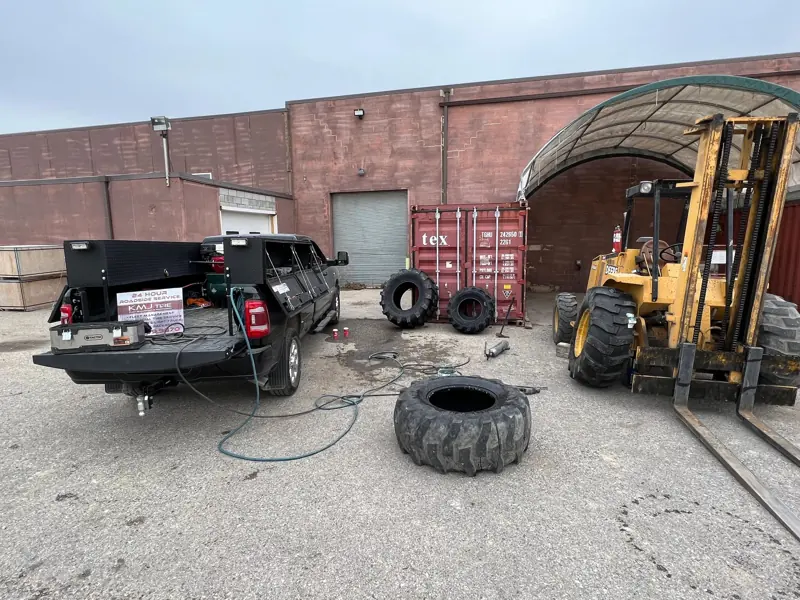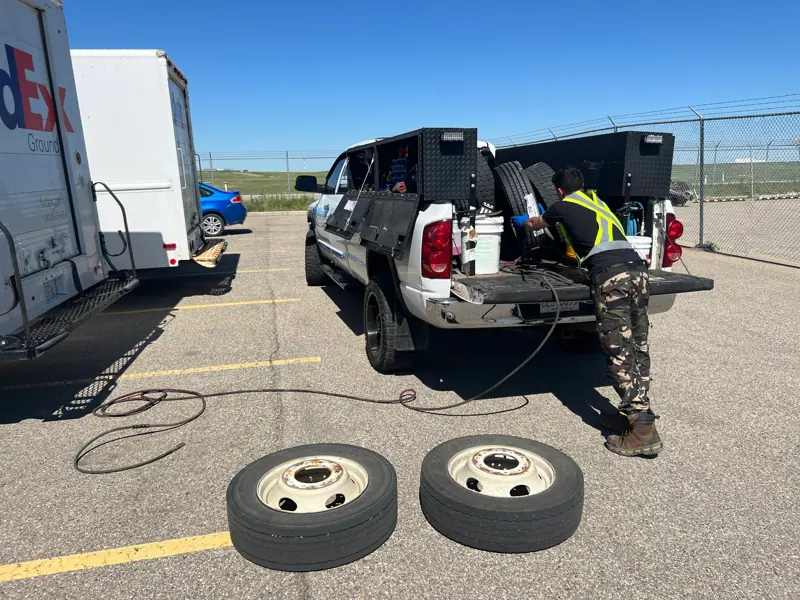
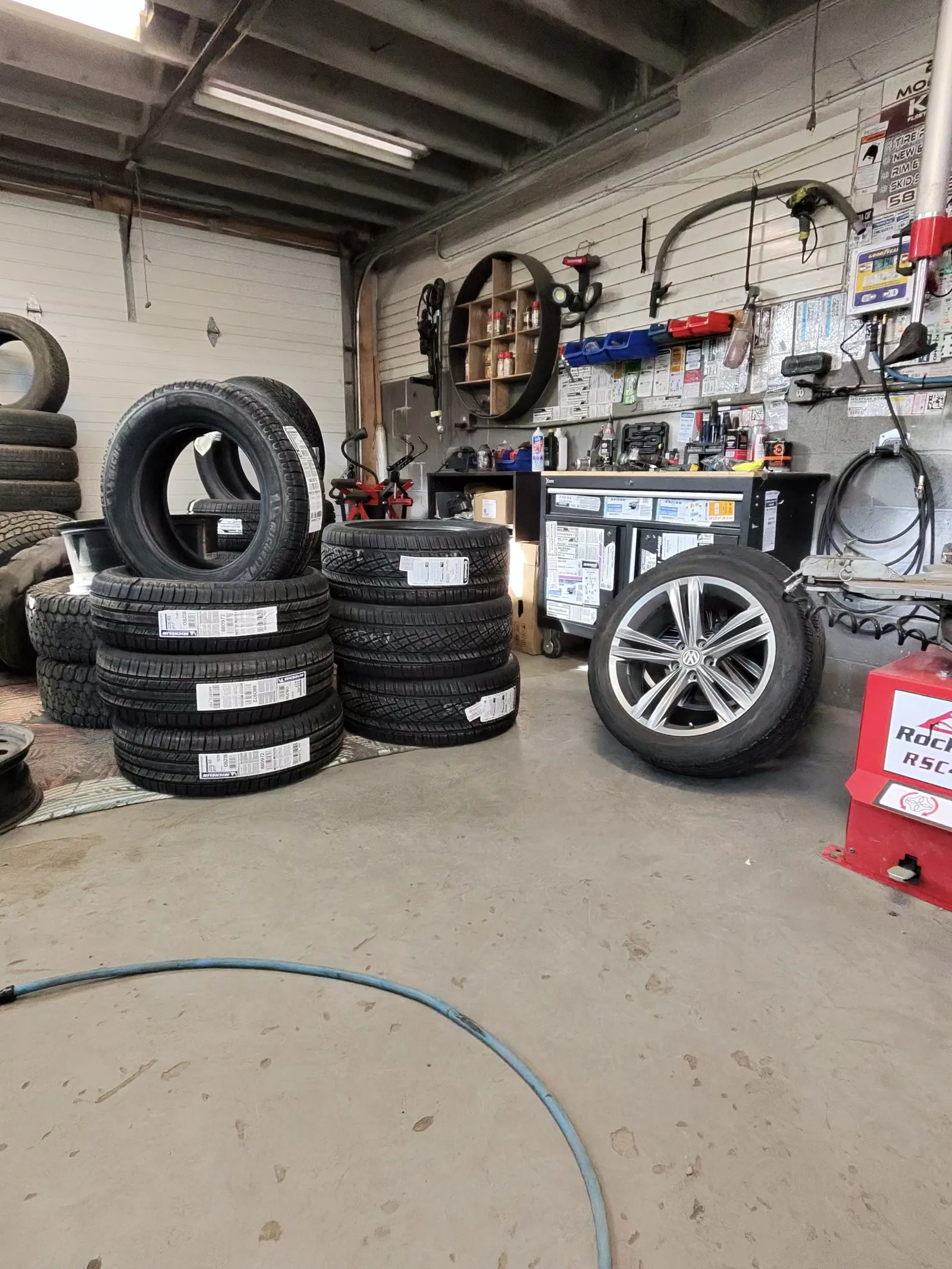
The learner notices a new sound halfway through a parking exercise. The instructor has another student waiting across the city. The lesson car still moves normally, but nobody can explain the sound yet. This is where a tire plan earns its place: not in a binder full of reassuring checkmarks, but in a decision that protects the people in the car without asking a nervous learner to diagnose it.
A driving-school vehicle is both transportation and a classroom. Different people handle the steering wheel throughout the day, practice manoeuvres at different skill levels, and describe sensations in different words. An instructor needs a consistent way to prepare the tires, hear observations, interrupt a lesson when necessary, and carry useful information into the next service visit.
This guide develops that working routine for Calgary instructors and small driving schools. The examples are hypothetical teaching situations, not customer stories or reports about a particular school. They do not replace Alberta training requirements, your insurer's conditions, the vehicle manual, or professional assessment. KMJ's services are tires and oil changes; teaching qualifications, dual-control equipment, and mechanical repairs belong with the appropriate providers.
Start with the lesson timetable, not a tire advertisement
Write down what the car actually does during a representative teaching week. Separate practice in residential streets, parking exercises, ordinary city travel between learners, and any higher-speed instruction. Include the instructor's own travel. A car can accumulate meaningful distance while no student is in the passenger seat, and leaving those kilometres out makes maintenance planning less accurate.
Record the number of teaching sessions as well as distance. Sessions are useful for understanding how often the vehicle changes hands and where inspection opportunities naturally occur. They are not a scientifically established substitute for mileage, and there is no universal number of lessons after which a tire must be replaced. The point is to expose the routine rather than invent a new wear formula.
Next, identify the periods when the vehicle is difficult to take out of use. Perhaps several learners prefer evenings, or the same car is requested for an upcoming test. These constraints belong in the planning conversation before choosing a service date. They must never become a reason to keep using an unresolved damaged tire.
Build the purchasing brief around fitment, seasonal conditions, predictable care, and realistic downtime. KMJ's guide to buying tires in Calgary is a useful starting point for that conversation. State that the vehicle is used for instruction so suitability and any applicable product terms can be discussed for the actual use, not assumed from a normal private commute.
Give each teaching car its own specification card
A small school may use two cars that look nearly identical but have different approved equipment. Keep a separate card for each vehicle rather than copying the first car's specifications across the fleet. Identify the vehicle clearly, then record where its tire information label and owner guidance can be found. A photograph of the label helps prevent transcription errors.
The card should distinguish manufacturer requirements from observations about the installed set. Those are not necessarily the same thing. A tire already fitted to a second-hand teaching car is evidence of what is present, not proof that the selection was correct. Resolve discrepancies before ordering replacements, especially where wheels or other equipment have changed.
Use the full tire designation rather than just wheel diameter. KMJ's explanation of tire sidewall markings for replacement selection can help an instructor communicate the printed information. Keep photographs readable and attached to the right vehicle record. A close-up without any vehicle identifier is easy to misfile when several sets are being handled.
Do not publish registration documents or student information alongside these records. Staff need access to the vehicle's relevant maintenance details, not an unrestricted folder of personal paperwork. A short specification card can be shared with a tire provider while the school's confidential records remain separate.
Separate teaching adaptations from tire decisions
Some lesson vehicles have instructor controls or other adaptations. Their presence does not authorize a tire shop to evaluate or modify those systems. Maintain the relevant documentation with the vehicle, and ask the equipment installer or responsible vehicle specialist how any changes affect servicing access or approved operating conditions.
Weight and loading questions should be resolved through the vehicle's actual ratings and appropriate professional guidance. Do not assume an added pedal makes a passenger car a commercial truck application, or that a higher-rated tire increases the vehicle's permitted carrying capacity. A tire rating is one part of a complete vehicle specification, not permission to exceed another limit.
For background terminology, review load-index information before choosing lesson-car tires. Then use the relevant manufacturer instructions to settle the specific selection. Avoid a purchase based on a confident comparison between two numbers when the underlying application has not been established.
Make the scope boundary practical at drop-off. Identify adaptations that a service provider should know about, provide any relevant handling instructions, and keep specialist questions with the qualified installer. KMJ can discuss the tire work. The existence of a lesson-car guide is not a claim that KMJ installs, certifies, or repairs instructional controls.
Choose a seasonal policy that supports the teaching plan
A school benefits from deciding how winter tire readiness will be assessed before its busiest teaching dates arrive. That policy should consider the vehicle's approved fitment, the condition of the set, the conditions in which lessons may operate, and the school's cancellation procedures. It should not rely on the confidence of the most experienced instructor alone.
Transport Canada's winter tire guidance recommends installing winter tires in sets of four and explains the importance of suitable tires, adequate tread, and proper inflation. Use this as primary safety background. A training car does not gain extra grip because an instructor has an additional pedal or a well-rehearsed verbal intervention.
When considering winter tires for Calgary lesson vehicles, bring the specification card and the teaching-use description together. The discussion should produce an appropriate fitment and clear care instructions. It should not produce a promise that lessons can proceed in every winter condition.
A seasonal policy also needs an owner. Name the person who reviews tire condition and arranges the change, plus the person who can remove a vehicle from the timetable. If everybody is generally responsible but nobody has authority to act, the school has a statement of intent rather than a functioning process.
Keep category comparisons tied to operating decisions
Instructors may be asked by students whether one tire category is sufficient all year. Answer at the level of the learner's real vehicle and conditions rather than turning the lesson car into a universal recommendation. The school's selection demonstrates one considered decision; it does not establish the best choice for every student's household.
KMJ's all-weather tire options for Calgary driving provide a separate category to discuss where appropriate. Any suitability assessment still depends on the exact product, approved fitment, condition, and intended conditions. Avoid describing a label as a guarantee that an inexperienced driver will feel confident on every surface.
Similarly, the all-season tire selection information can support a discussion about non-winter use and category limitations. Keep that discussion distinct from the school's operational policy. A learner asking about their own car should leave knowing which vehicle documents and circumstances to bring to a tire professional.
Do not conduct improvised grip comparisons on public roads to prove a category difference. Deliberate skids, abrupt braking demonstrations, or experiments with mismatched equipment are not part of this maintenance guide. Approved instruction must stay within the school's training procedures and the conditions in which it can be conducted safely.
Create a morning check with a clear finish
Before the first lesson, choose a safe place to inspect the parked car. Allow room to move around it without stepping into traffic or squeezing between moving vehicles. Good light, a suitable pressure gauge, and the specification card make this easier. The exercise should not depend on a learner arriving early or lending a phone flashlight.
Look at the accessible tire surfaces and note obvious damage, unexpected deflation, or anything newly lodged in the tread. This is a screening check, not a complete internal inspection. Do not reach under a car, move it while someone is inspecting a wheel, or remove an embedded object simply to see how deep it goes.
Measure inflation under the conditions required by the vehicle guidance and compare with the correct placard or manual values. Transport Canada emphasizes cold checks and identifies the vehicle information label as the source for recommended pressure and size. Record units; a number without a unit is an avoidable source of confusion.
Finish by identifying unresolved concerns. A morning record needs more than a signature: it should make clear whether an issue was found, what happened next, and whether the vehicle remains unavailable. The general tire-care guidance for Calgary drivers can help reinforce the underlying habits without replacing a school-specific responsibility structure.
Use the student walkaround as observation practice
The learner's walkaround serves a different purpose from the instructor's maintenance check. It teaches the student to notice their surroundings and recognize reasons to seek help. It does not transfer responsibility for the lesson car's condition to somebody who is there to learn.
Ask open, concrete questions. What can you see from this safe position? Does anything appear different from the other wheels? Where would you find the recommended inflation pressure? These prompts encourage observation without demanding a diagnosis. A student who cannot name a tire component can still provide a useful description.
Keep the exercise short enough to remain connected to the lesson objective. If the learner is already overwhelmed by basic controls, one well-explained observation may be more useful than a lecture about every sidewall marking. Return to other topics in later sessions when there is capacity to absorb them.
Make reporting safe socially as well as physically. Tell the learner that noticing a concern is useful, even when assessment later finds no defect. Dismissing a question with the car always does that teaches the wrong habit. A respectful response can be as simple as acknowledging the observation and explaining the next check.
Listen for descriptions instead of technical vocabulary
A new driver may describe a vibration as a wobble, a scrape as a hiss, or a steering sensation as the car feeling heavy. Preserve their wording before translating it into a possible cause. The instructor can add context about road surface, speed range, timing, and whether the sensation occurred while turning or travelling straight.
Avoid leading questions that supply the diagnosis. Asking whether a wheel is out of balance may produce agreement without new evidence. Asking what changed between one stretch of road and another is more likely to produce an observation a technician can use.
Do not ask a learner to repeat a manoeuvre that caused a concerning symptom just to improve the record. You can document incomplete information honestly. Safety does not require a perfect description, and a professional assessment should not depend on recreating a potentially unsafe event during instruction.
If communication needs differ between learners, agree on a simple way to interrupt. A spoken phrase, an established signal, or another accessible method can make it easier to report discomfort promptly. This is a teaching arrangement, not a substitute for the instructor's responsibility to monitor the vehicle and road.
Treat curb contact as an event, not a verdict
Parking practice can include mistakes. If a tire or wheel contacts a curb, the instructor should first manage the situation and move people to safety as appropriate. The educational conversation about positioning comes after the immediate condition of the vehicle and surroundings has been considered.
Do not decide that a contact was harmless solely because the speed seemed low or the learner is embarrassed. Equally, a visible mark does not establish the entire repair scope. Record which wheel was involved, what was observed, and any new pressure loss, visible damage, or change in vehicle behaviour. Seek professional assessment where safety is uncertain.
Photographs can supplement that account when they can be taken safely. Include a wider view that identifies the wheel position and a closer view of the concern. Avoid placing students, pedestrians, licence plates, or nearby private property in the picture unnecessarily. The purpose is tire evidence, not a public account of a learner's mistake.
Separate incident reporting from blame. A school can review coaching and route choices without discouraging accurate disclosure. If learners or instructors fear that every reported contact will become an argument, the maintenance record becomes less trustworthy precisely when it matters most.
Define when the lesson stops before pressure builds
A written interruption policy should cover obvious deflation, a bulge or other significant visible damage, rapid pressure loss, severe vibration, or changed control that raises a safety concern. These are reasons to stop safely and obtain appropriate assistance, not invitations to conduct a roadside diagnosis. The precise response depends on where the car is and what is happening around it.
Make clear that a tire-pressure warning requires attention according to the owner guidance. An unlit warning does not prove that every tire is undamaged or correctly maintained. Students should learn that dashboard information is one part of vehicle awareness, not an all-clear certificate.
The timetable should never make the decision for the instructor. A learner may have arranged childcare, paid for travel, or be anxious about a coming test. Those circumstances deserve thoughtful communication, but they do not improve the condition of a suspect tire. A policy written in advance reduces the temptation to negotiate with the symptoms.
Avoid universal roadside instructions in the lesson plan. Where to wait, whether occupants should leave the car, and how assistance can reach them depend on traffic and location. Follow appropriate emergency guidance and the vehicle manual; do not turn an unsafe roadside position into a tire-changing demonstration.
Build a calm message for an interrupted session
The first message to the student can be plain: a vehicle concern needs assessment, the driving portion cannot continue safely as planned, and the school will explain the next arrangements. Avoid naming a failed component before it has been assessed. A clear statement of what is known is more reassuring than an unsupported technical answer.
The office needs a different message: vehicle identifier, present location, people requiring assistance, immediate support needed, and the effect on the next scheduled session. Keep maintenance details separate from learner evaluation. The student who happened to be in the car when a symptom appeared is not automatically its cause.
Discuss rescheduling and any financial arrangements through the school's own published terms. This guide does not invent cancellation rights, refunds, replacement vehicles, or insurer obligations. If a rule is unclear, resolve it through the responsible school administrator rather than improvising a promise at the roadside.
Afterwards, close the communication loop. Tell the affected learner when the transport or lesson arrangement is settled, and tell the next instructor what remains unresolved. A conversation that ends with somebody will look at it leaves too much room for the car to reappear on the timetable prematurely.
Distinguish an assessment request from a repair order
When a tire has lost pressure or contains a visible object, describe the situation and ask for assessment. Do not promise the learner or office that a patch will solve it. Repair suitability depends on the tire's condition and professional inspection, including information that cannot be established from an exterior photograph alone.
KMJ's Calgary tire-repair assessment information is relevant when preparing that request. Share any known impact, warning, air loss, or distance travelled after the concern appeared. An incomplete history should be labelled incomplete rather than filled with guesses.
A vibration request needs the same discipline. The wheel-balancing service information explains a tire-related service, but a vibration is not automatically a balance problem. Other causes may require a qualified mechanical provider. KMJ does not perform mechanical repairs, and the school should keep those referrals distinct.
Ask for the outcome in usable terms: what was assessed, what work was completed, what limitations remain, and what follow-up is required. The vehicle's teaching schedule should be updated from that outcome, not from the fact that a service visit has occurred.
Schedule seasonal work around recoverable gaps
A recoverable gap is time that the school can actually keep free if the work takes longer than expected. It is not the optimistic half-hour between two learners on opposite sides of Calgary. Choose a service window with room for transport, assessment, and any questions about the set being installed.
Before arranging seasonal tire changes for a teaching car, establish whether the tires are already mounted on compatible wheels. Identify where the set is stored, who can retrieve it, and whether the correct hardware or wheel-lock key is available. Missing items are easier to resolve before the car has been removed from teaching duty.
Give the instructor time to review the service outcome before the next learner arrives. If there are follow-up instructions, place them where the person responsible for the vehicle will see them. Do not rely on a verbal message passed through several staff members during a busy change of shift.
If the service provider identifies an unexpected issue, use the reserved flexibility rather than asking for an unsupported completion promise. The school can protect its timetable by planning a response to uncertainty; it cannot remove uncertainty by demanding that every set be ready at the same predictable minute.
Decide whether a mobile visit fits the site
A parked lesson car may seem a convenient candidate for mobile tire work, but the location still needs to be suitable for the service. Describe the site honestly: available space, surface, access restrictions, and whether other vehicles or pedestrians routinely pass nearby. Do not assume a student pickup point is an appropriate work area.
Review mobile tire-service options in Calgary and confirm whether the requested work and location are suitable. Availability and completion time need direct confirmation. Nothing in this guide promises roadside emergency response, same-day attendance, or permission to work in a shared parking lot.
The school's teaching territory may be broader than the provider's practical coverage for a particular request. Check the Calgary tire-service area information before building a timetable around travel assumptions. A neighbourhood name in a marketing page is not a confirmed arrival time for a specific address.
Keep learners away from the work zone. A service visit can inspire useful classroom discussion afterwards, but students should not crowd a technician or treat active equipment as a demonstration station. Ask separately about any educational observation; ordinary tire service does not imply supervised training access.
Compare quotations without losing the application
Start every quotation request with the same vehicle specification and intended use. Otherwise, apparent price differences may reflect different sizes, product lines, or included work. Ask what the quote covers and what remains to be confirmed, including any necessary compatibility checks.
The budget-versus-premium tire comparison can help frame questions about priorities. A lesson car may put a high value on dependable scheduling and a suitable, consistent setup, but those preferences do not establish that the most expensive option is automatically best. Compare actual products and terms rather than labels alone.
Ask whether any warranty or mileage terms treat instructional use differently. Obtain the applicable written terms and keep them with the purchase record. This is a question to verify, not a claim that every manufacturer excludes driving schools or that a particular set carries special coverage.
For replacement research, use the Calgary tire catalogue to narrow suitable candidates. Catalogue presence is not proof of current stock or a reservation. Confirm the exact selection before committing the teaching schedule, and avoid advertising a new set to students until the installation is actually complete.
Track cost per kilometre without pretending to forecast life
A simple cost record can help a school understand its own spending. Keep invoices, installation dates, odometer readings, and the reason each tire or set leaves service. Distinguish planned replacement from damage, an application change, or an unresolved history. These categories explain more than a single total.
For a completed set, divide the actual costs included in your chosen calculation by the recorded kilometres in service. State what was included. Tire purchase alone is different from purchase plus seasonal handling and related tire work. Consistency makes comparisons meaningful; a sophisticated spreadsheet cannot rescue mismatched definitions.
For a set still in use, describe the figure as cost to date, not final lifetime cost. Do not project a guaranteed retirement distance from one season or another school's experience. Lesson mix, care, vehicle differences, conditions, and unexpected damage prevent a simple promise about future life.
Use the record to ask better questions at the next purchase. Did an avoidable scheduling problem create repeated downtime? Were specifications unclear? Were maintenance checks actually completed? A useful review can improve the process without claiming that any brand guarantees a fixed number of paid lessons.
Keep tire measurements connected to the right wheel
When recording tread measurements, identify the tire and its current position. A bare set of four numbers becomes hard to interpret after rotation or seasonal removal. The tire's identity and its location on the vehicle are related facts, but they are not interchangeable.
Follow appropriate measurement instructions and use consistent units and locations so successive observations can be compared. Uneven readings deserve attention rather than being averaged into a reassuring single value. Have a professional evaluate concerning wear or uncertainty about continued suitability.
Do not make the lesson car a classroom experiment in minimum remaining tread. Transport Canada's winter guidance warns against using tires worn close to four millimetres on snow-covered roads. That is safety background for planning, not a universal legal statement for every use or permission to continue until a single threshold is reached.
Record the assessor's recommendation and the action that follows. If replacement is advised, the useful record includes who is arranging it and whether the vehicle is withheld from instruction. A measurement log that never changes a decision is merely documentation, not maintenance management.
Teach pressure numbers without creating a new rule
Students often assume the largest pressure number they can find must be the target. Use the parked vehicle's information label to show why that assumption is unreliable. Explain that the vehicle guidance determines the recommended operating inflation for the application; a sidewall marking has a different purpose.
Show the units explicitly. If a gauge and placard use different units, use a reliable conversion and check the result rather than relying on a remembered approximation. A student should learn to preserve the unit with the number whenever they write a measurement down.
Explain cold measurement conditions before asking the learner to interpret a reading. A value obtained after driving should not be silently compared with a cold baseline as though the conditions were identical. The point is not to make the student an engineer; it is to show why a measurement needs context.
Keep the practical task within the student's abilities and the school's procedures. The instructor can demonstrate how to find information and interpret a recorded example without asking a learner to inflate an unfamiliar tire unsupervised. Handling equipment safely is a separate skill from understanding the label.
Use three teaching scenarios with different decisions
Consider a hypothetical morning in which a learner points to a tire that looks lower than the others before entering the car. The instructor thanks them, keeps the car parked, and checks the concern using the vehicle guidance and appropriate equipment. If a problem remains unresolved, the lesson plan changes. The teaching success is recognizing uncertainty before movement, not proving that the student guessed the correct pressure.
Now consider a parking exercise followed by a newly reported thump. The instructor manages the immediate situation and stops safely to assess what can be observed. They do not repeat the exercise several times to decide whether the student is imagining it. The event is recorded, and assistance is sought if condition or safety remains uncertain.
A third situation occurs after seasonal tire service. The instructor has the completed work record and specific follow-up instructions, but the next learner arrives early. The instructor still takes time to review the vehicle and guidance before teaching begins. Returning from a provider does not eliminate the school's responsibility to manage its own handover.
These scenarios deliberately produce different tasks: check a parked concern, interrupt for a new symptom, and complete a service handover. A single instruction to keep an eye on the tires would not explain any of them well enough. Good procedures name the next action without overreaching into diagnosis.
Write service notes that survive a busy afternoon
A useful service note starts with vehicle identity and the observation. Add when it happened, which wheel or area was involved if known, the conditions that matter, and what has already been done. Include photographs only where they improve the account. A folder of unlabelled images can be less helpful than two carefully described pictures.
Keep possible causes in a separate field or sentence. If an instructor suspects imbalance, say that it is a suspicion, and preserve the actual symptom description. This prevents a later reader from mistaking an early guess for a technician's conclusion.
State any restrictions clearly. Vehicle unavailable pending assessment is different from service requested for a future date. Those states should not be represented by the same vague note saying tires. A relief instructor needs to know what they may do with the car, not merely that somebody has thought about it.
When using online tire-service scheduling in Calgary, include a concise description and confirm the scope directly where needed. Do not place student names, lesson assessments, or private medical details in a service request. The tire provider needs the vehicle concern and relevant operating information.
Protect the next instructor from incomplete handovers
Shared teaching cars need a clear transfer of responsibility. The outgoing instructor should identify new observations, unresolved items, and service-related follow-up. The incoming instructor should have a chance to read that information before accepting the car for a learner.
Avoid relying entirely on a dashboard note that can be dismissed or a chat message that disappears among schedule changes. Keep the current vehicle status in one agreed location, with supporting evidence accessible nearby. This can be a paper sheet; it does not require new software.
If the incoming instructor cannot establish what happened to an unresolved concern, obtain the missing information. Do not assume that another staff member would have stopped the car if it mattered. That assumption allows each person to believe someone else made a decision that nobody actually made.
At the end of the day, close completed items with the outcome and carry open ones forward honestly. Do not reset the record to a clean page simply because the date has changed. A recurring pressure issue remains relevant even when yesterday's learners have finished their sessions.
Plan a replacement vehicle as a different classroom
An alternative car is not automatically a ready substitute. The school must confirm that its use is permitted under the relevant training, insurance, and operating arrangements. This guide cannot authorize a private family car for instruction or establish whether a particular vehicle is acceptable for a test.
From a tire perspective, the substitute needs its own specification and condition checks. Do not borrow the main car's pressure values or assume its seasonal set can be moved across. Similar vehicle size does not prove compatible tires, wheels, or hardware.
The learner also needs orientation. Controls, sight lines, seat position, and vehicle responses can differ. The school's qualified instructor should determine how to introduce the replacement within the approved lesson plan rather than treating the change as a simple key swap.
If a suitable substitute is unavailable, rescheduling may be the responsible outcome. Planning that possibility in advance lets the school communicate clearly. It avoids pressuring a tire provider for an unsupported repair promise or putting a learner into a vehicle whose suitability has not been established.
Keep the student takeaway small and transferable
At the end of a tire-related discussion, ask the learner to explain one action they can apply to their own vehicle. They might locate the correct pressure information, describe a new symptom without diagnosing it, or identify when they would seek help. A transferable habit is more valuable than memorizing the lesson car's specifications.
Do not give the student the school's maintenance sheet as though it were a universal checklist. Their vehicle may have different equipment, a different spare arrangement, or different manufacturer requirements. Teach them how to find the right instructions rather than giving them a set of numbers to copy.
For further reading, point interested learners to practical tire guides for Calgary motorists. Choose a relevant subject instead of assigning an entire archive. The educational goal is to support the next question, not to overwhelm a beginner with technical material unrelated to their present skill level.
Remind learners that a tire professional can assess tire concerns, while mechanical issues need an appropriate mechanical provider. That distinction helps them seek the right help without expecting every automotive business to offer every service. Clear scope is part of good consumer education.
Review the process after a real interruption
Once the people and vehicle have been looked after, review the interruption briefly. Was the concern reported promptly? Could the instructor find the vehicle information? Did the office understand the car's status? Was the next learner notified before unnecessary travel? These questions focus on the process rather than assigning blame.
Look for one practical improvement. Perhaps the wheel-lock key needs a reliable location, the record needs clearer wheel-position names, or a service window needs more flexibility. A modest correction that staff actually use is more valuable than adding several pages of instructions after every event.
Do not judge the interruption only by whether a tire ultimately required replacement. A concern can justify stopping for assessment even when the final finding is less serious than feared. Penalizing cautious reporting after a reassuring outcome encourages people to hide uncertainty the next time.
Review the school's broader teaching and administrative requirements with the appropriate responsible people. Tire maintenance is only one part of lesson-car readiness. Keep those responsibilities connected, but do not let a tire-service invoice stand in for every other check the school must complete.
A workable instructor routine, from first key to last note
Begin with a vehicle-specific record, a safe pre-use check, and a timetable that can accommodate necessary service. During instruction, invite clear observations and respond to new concerns without asking the learner to prove a diagnosis. After an event, preserve the facts and make the vehicle's availability explicit.
At service time, provide the correct specification, instructional-use context, and symptom history. Review the completed work and follow-up requirements before returning the car to lessons. Between instructors, transfer unresolved concerns as carefully as the keys. At purchase time, compare suitable products and actual terms rather than unsupported promises about life or performance.
For tire-related planning, the information about KMJ's Calgary tire shop provides a starting point for discussing the vehicle and requested work. Confirm current arrangements directly. No special driving-school partnership, priority queue, package price, or guaranteed completion time is implied here.
The strongest lesson-car tire routine is easy to explain when the day becomes complicated. It gives the instructor permission to pause, gives the office enough information to help, and gives the learner a useful example of responsible driving. The car is maintained as equipment, but the habits students see are part of what they take onto the road themselves.