The drive to work can happen in mild afternoon weather, while the drive home begins before sunrise with a car that has stood outside all night. For a Calgary night-shift commuter, those are two different journeys. A tire decision based only on the afternoon departure can miss the conditions that matter at the end of the shift, when changing plans may be harder and the driver has less energy to spare.
A useful plan starts with the return trip. Think about where the vehicle sits, how much freedom you have to delay, what would happen if a tire were visibly low, and who could help you get home without driving it. Then choose appropriate tires, put routine checks at a sensible point in your waking day, and arrange service around protected sleep. This is about making fewer decisions when you are tired, not about finding equipment that makes fatigue or dangerous roads harmless.
This guide is for people who work evenings, overnight rotations, early starts, or changing rosters. The examples are hypothetical planning exercises, not customer stories. They do not describe today's weather, promise road conditions, or imply that KMJ provides overnight response. KMJ's service scope is tires and oil changes. Other vehicle faults belong with the appropriate mechanical specialist, and immediate roadside danger belongs with emergency or roadside assistance services suited to the situation.
Start with a two-direction commute map
Write down both halves of a normal shift journey separately. Record when you leave, roughly how long the vehicle is parked, where the parking area is, and the roads you expect to use. A person leaving home at six in the evening and returning after six in the morning should not compress those trips into one line labelled daily commute. The timing, light, temperature, traffic and ability to find help can all differ.
Keep the map practical. You do not need a record of every intersection. Three or four meaningful segments will do: a residential departure, a major road, a workplace access road and the parking area. For each segment, identify what you can actually change. You might have a different entrance, an alternative route, a colleague willing to share a ride or an option to delay departure. You cannot choose the weather or assume that an apparently clear road is ice-free.
Next, mark the least flexible part of the journey. A fixed shift start may mean there is little room to leave late, but a return trip may still allow waiting indoors for assistance. Another worker may need to collect a child after the shift and have less flexibility going home. That distinction affects contingency planning more than the badge on a tire. The goal is to remove pressure to drive a questionable vehicle because no alternative was discussed.
Use the map when reviewing winter tire options for Calgary commutes. Explain the actual schedule and outdoor parking exposure, not just annual kilometres. A short distance does not remove the possibility of slippery surfaces, and a mostly urban route does not make a damaged tire acceptable. Conversely, a long list of hypothetical hazards is not a reason to invent special specifications beyond the vehicle manufacturer's requirements.
Separate traction, tire condition and driver readiness
Three questions need separate answers before a journey. Are the tires suitable for the expected conditions? Are they in serviceable condition and correctly inflated? Is the driver sufficiently alert to drive? Treating these as separate questions prevents one reassuring fact from concealing another problem. New winter tires do not cancel a warning about a visibly damaged sidewall, and good pressure readings do not make a person who is struggling to stay awake ready for the road.
Tires help the vehicle interact with the surface. They cannot tell you whether a shaded ramp has frozen, prevent every skid, or provide a safe stopping distance at any chosen speed. Even with suitable tires, the driver still needs a speed and following distance appropriate to the actual conditions. This guide deliberately avoids promised braking percentages, because a number from a particular test is not a guarantee for your car, surface or trip.
Fatigue deserves its own fallback. Before a run of night shifts, decide what you will do if you finish work too sleepy to drive. Possibilities depend on your circumstances and may include a ride, a taxi, transit when available, or a safe place to rest with permission. Verify those options instead of assuming they will exist at the required hour. A plan that works only during daytime business hours may not work after an overnight shift.
A basic tire-care checklist for Calgary drivers can support the vehicle side of the decision. Keep it beside, not inside, the question of fitness to drive. If a safety concern remains unresolved, the next step is clarification or alternative transportation. It is not an improvised test drive to see whether the concern disappears on a quieter road.
Check the return forecast before leaving home
Look at the expected conditions for the whole period you will be away, including the journey home. Read current weather and road information from official sources close to departure, then check again before returning. A forecast is not a surface inspection: conditions can vary locally, and a parking ramp or access lane may differ from the roads described in a regional report. Never infer that the route is safe simply because precipitation is not forecast.
Decide in advance which changes would prompt a fresh transport decision. That might include a travel advisory affecting the route, conditions beyond your comfort and ability, or a return journey that no longer fits the original plan. The threshold should not be an arbitrary promise to drive whenever the tires are a certain type. Vehicle readiness, driver alertness and actual conditions still need to be considered together.
Share a changed arrival plan with the person who needs to know before you start driving, while safely parked or still indoors. Do not try to monitor reports or coordinate a ride through a phone while moving. A short message before departure is more useful than a stream of updates that distracts from the road.
Choose for exposure rather than the time on a clock
There is no universal night-shift tire category. The relevant factors are the vehicle, its approved fitment, the seasons in which it operates, the surfaces it encounters and how easily trips can be postponed. An overnight schedule matters because it can change exposure and flexibility, not because tires behave differently merely when the clock reaches midnight. Describe those factors before narrowing the product list.
For a driver who must travel through Calgary winter conditions, a dedicated winter set deserves serious consideration. Transport Canada's winter tire guidance explains the mountain-and-snowflake symbol, the benefits of winter tires in cold conditions, installation in sets of four, and the importance of condition and pressure. It is a useful primary reference; it is not a substitute for the vehicle's own fitment requirements or an assessment of a particular set.
When considering all-weather tires for Calgary driving, discuss the exact product, its markings and its intended use. Do not turn a category name into a promise of equal performance across every kind of snow, ice and temperature. Your tolerance for postponing a journey is part of the conversation. A driver who can stay home during difficult conditions has a different planning problem from someone with a fixed overnight roster.
Similarly, all-season tire choices in Calgary need to be understood in context. The phrase all-season should not be taken as a guarantee of suitability for every Canadian winter journey. If two products are being compared, ask which evidence applies to the exact sizes and models under consideration. Avoid deciding from a tread photograph, a single online comment or a general claim that a tire works for everyone.
Keep fitment information ready before your sleep window
A night worker should not have to answer a stream of avoidable fitment questions while trying to sleep. Prepare a small information bundle while alert: the vehicle year, make, model and trim; photographs of the tire information label; the complete markings on the currently installed tires; and whether the vehicle has different front and rear sizes. Include relevant owner-manual information and any known approved changes to wheels or tire sizing.
The installed tire is evidence of what is on the vehicle, not automatic proof of what should be installed. A previous owner might have made changes, and a similar-looking trim can have different requirements. If information conflicts, have it resolved before buying. Do not quietly choose one source because it is easier to read. The supplier needs to know about the conflict, especially if a proposed replacement changes a load or speed specification.
Use the tire sidewall information guide to organise the markings you are collecting. Record the whole size designation rather than only the wheel diameter. A message saying eighteen-inch tires leaves out essential details. Clear photographs reduce transcription errors, but do not photograph the vehicle from an unsafe position or crawl beneath it just to complete a worksheet.
Load requirements also remain vehicle-specific. The tire load index explanation is a starting point for understanding the notation, not permission to substitute a lower rating. Ordinary commuting equipment, passengers and any work-related cargo should remain within the vehicle's limits. Neither a higher-pressure guess nor a more rugged-looking tread makes an overloaded vehicle acceptable. If your work changes what you carry, discuss that before selecting tires.
Make the cold-pressure check fit your waking day
For many day workers, a cold tire check naturally happens before the morning departure. A night worker may need a different routine. Cold refers to the tire's condition after sufficient rest under the relevant manufacturer guidance, not to a particular hour and not simply to whether the air feels cold. An afternoon check before leaving can be more useful than a rushed reading immediately after driving home.
Follow the vehicle's recommended cold inflation pressures and the instructions in its manual. Front and rear values may differ. The maximum figure moulded into the tire sidewall is not your everyday target merely because it is easy to find. Keep the pressure units consistent when comparing the label, gauge and inflator; an unexplained number without its unit is a poor record and can lead to a serious error.
Choose a safe, level and well-lit place for the check. Leave enough time to use the gauge carefully and replace valve caps. If a tire has lost pressure unexpectedly or is visibly damaged, do not treat a refill as proof that the problem has been solved. The cause and condition need appropriate assessment. A tire that was driven while severely underinflated may have damage you cannot establish from an outside glance.
Record useful observations rather than trying to build a scientific model of every temperature change. A note can include the date, cold or recently driven status, all four readings, the vehicle's targets, and anything unusual. If one tire repeatedly differs from the others, that pattern is more useful to a tire professional than a vague statement that the warning light appears sometimes. The record supports assessment; it does not authorize continued driving on an unresolved problem.
Do not use the end of a shift as the only inspection window
A hurried look in a dark parking area is a poor substitute for planned checks in good light. Put the more deliberate inspection at a time when you are rested. Look for visible damage, unusual wear or something embedded in a tire, without removing objects or attempting an unsafe inspection. Have condition, tread and any concern assessed professionally when needed. A visible outside surface cannot establish everything about internal tire condition.
The quick departure check still matters, but its job is narrower. Notice whether the vehicle sits unusually, whether a tire is obviously low, whether warning indicators remain on, and whether there is a new problem that makes driving questionable. It is a chance to stop before a trip, not an invitation to diagnose every possible fault by torchlight. If you cannot assess a concern safely, use the backup transport plan.
Tread measurements should be understood as one part of winter readiness. Transport Canada warns against using tires worn close to four millimetres on snow-covered roads. Do not convert that guidance into a claim that any tire just above a single measurement is automatically fit for the whole season. Damage, uneven wear, age-related concerns, correct installation and the expected use also matter. Seek tire-manufacturer guidance and professional assessment for the actual set.
Separate maintenance from shift urgency. The question is not whether a questionable tire might last until your next day off. It is what safe next step is justified by its condition now. A roster can explain why arranging service is inconvenient; it cannot establish that a defect is harmless. This is where preparation pays off: transportation alternatives reduce the temptation to bargain with a safety concern.
Treat the workplace parking area as part of the route
The public road is only part of the commute. Workplace access lanes, ramps, entrances and parking spaces can introduce their own practical constraints. Observe them without assuming that their conditions match a nearby major road. A brightly lit entrance does not prove good traction, and a familiar space does not guarantee that surface conditions will be the same when your shift ends.
Ask the site operator about the arrangements that affect you: permitted parking, access after hours, whom to notify about a vehicle that cannot move, and where you may wait safely for assistance. These are operational questions, not requests for a weather guarantee. If your shift spans a gate closure or security change, know how a legitimate assistance provider would reach you and how you would meet them without entering traffic.
Avoid building a routine around a parking space that requires risky tyre checks beside moving vehicles. If access is tight, do planned checks at home or another suitable location before leaving. Do not kneel in an active lane, move into an unlit area solely to inspect a wheel, or assume that a reflective item makes an exposed position safe. Personal safety takes priority over obtaining one more photograph.
Keep the exact location available in a form you can communicate. A large hospital, industrial site or airport-area property may have several entrances and similarly named parking areas. The useful information is the correct vehicle location and authorised access route, not a general neighbourhood description. Store only what is necessary, and avoid putting workplace security details into public posts or an unsecured shared document.
Schedule seasonal work around protected sleep
A tire change should not consume the only meaningful sleep opportunity between shifts. Look at the roster before choosing a time, including travel to the service location, possible delays and transport home. A slot that technically fits between the end of one shift and the start of another may still create an exhausting day. Protect sleep first, then find a realistic service window around it.
Review seasonal tire change services in Calgary before describing the work you need. Say whether the seasonal set is already mounted on separate wheels, whether it is stored with you, and whether any condition concern has appeared since its last use. Those details help avoid misunderstandings about the requested tire work. They do not establish a completion time or confirm that a particular slot is available.
If another person will transport the vehicle, give clear permission and instructions. Decide who can authorise additional tire work, how that person can be reached, and what spending or scope limits apply. Do not leave a half-awake driver to interpret an unexpected message without the facts. Written instructions can be short: the requested work, the known concern, the authorised decision-maker and the best contact method during your sleep period.
Before relying on online tire-service scheduling, distinguish a submitted request from a confirmed arrangement. Verify the time, location, scope and any preparation requirements directly through the accepted process. Nothing in this guide promises early-morning opening, overnight service, immediate availability or same-day completion. A workable schedule uses confirmed facts, not optimistic assumptions about what a website form must mean.
Ask specific questions before planning mobile service
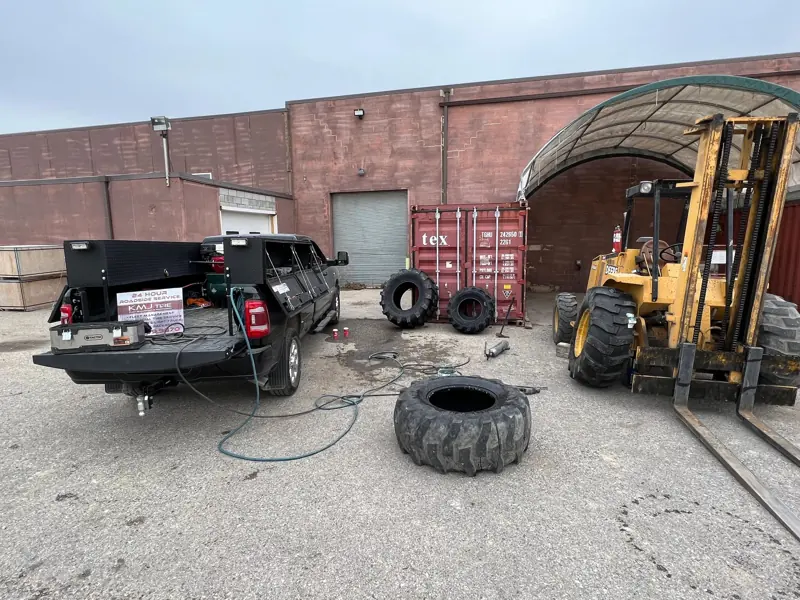
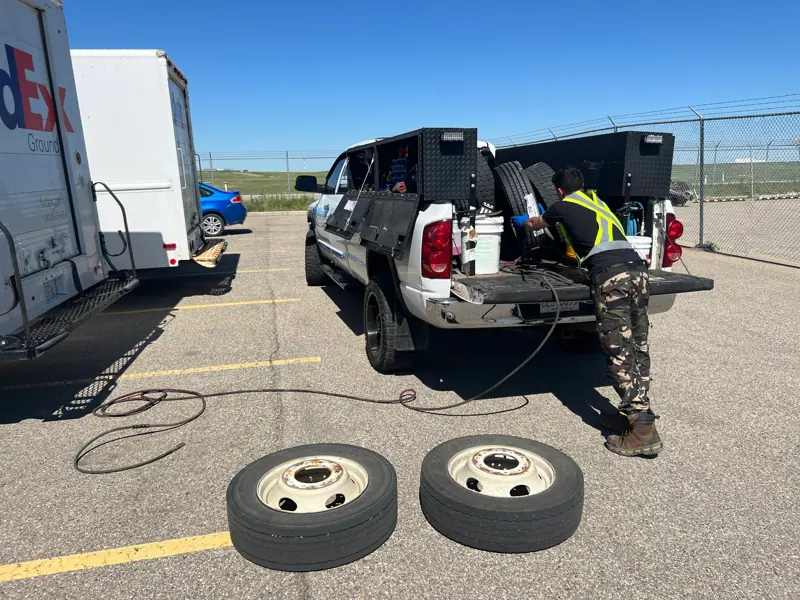
Mobile tire work can be worth investigating when taking the vehicle elsewhere would disrupt a difficult roster. Start with the exact need and location. Is this a planned seasonal service at an approved parking space, or a vehicle with a problem whose safe movement is uncertain? Those are not interchangeable situations. A general service description cannot confirm whether a particular job, vehicle or location is suitable.
Use the Calgary mobile tire service information to begin that conversation, then confirm the actual arrangements. Ask about availability, site suitability, access requirements, permitted work and who must be present. Check permission with the property operator if the vehicle is at work. A worker's ability to park somewhere does not automatically include permission for service equipment or tire work in that space.
The KMJ tire-service area information can help frame a location enquiry, but do not infer a response time from a place name. Coverage, scheduling and the suitability of the specific site need confirmation. If the vehicle is in a dangerous position, arranging routine mobile work is not a substitute for appropriate roadside assistance. Tell the provider about restrictions instead of waiting until they arrive at a locked gate or unsuitable ramp.
Consider how the arrangement affects sleep as well as vehicle access. An agreed daytime window may still require you to remain reachable. Decide whether a trusted person can handle the vehicle and whether that is acceptable to the provider. Keep the plan simple enough that everyone understands it. The service is only a useful fit if the confirmed logistics work; convenience should not depend on promises nobody has made.
Give a new vibration or warning its own decision
After a demanding shift, a driver may be tempted to label an unfamiliar sensation as tiredness, road texture or cold weather. Do not dismiss a new vehicle symptom solely because the timing is inconvenient. A new vibration, warning indicator, visibly low tire or handling concern deserves a safe response and appropriate assessment. If control feels impaired, stop in a safe place and arrange help rather than continuing to gather observations.
When it is safe to record details, describe what happened without diagnosing it. Note whether it was present from departure, whether there had been a recent tire change or impact, and whether a warning appeared. Avoid deliberately reproducing the symptom at speed. A concise factual description gives the professional something to investigate without making you responsible for identifying the component involved.
Wheel balancing information for Calgary drivers explains one tire-and-wheel service, but not every vibration is a balance problem. For a night worker, the immediate decision comes before choosing a service: recognise the change, avoid unsafe testing, and arrange the appropriate assessment without sacrificing sleep or assuming one service must solve it.
KMJ handles tires and oil changes. If the cause lies outside that scope, the work belongs with a qualified provider for the relevant vehicle system. Do not build a single visit around an assumption that unrelated mechanical work will be available. Separating the questions helps: first establish whether the vehicle can be moved safely, then identify who can assess the concern, and only then arrange the appropriate work.
Plan the flat-tire branch before you need it
A flat after an overnight shift is a transport problem before it is a repair decision. Your immediate priorities are personal safety, a safe vehicle location where possible, and appropriate assistance. A tire that looks low in a protected parking space presents different immediate hazards from a sudden problem beside moving traffic. Do not step into danger to inspect it, and do not continue driving on a flat simply to avoid disrupting the morning.
Read the vehicle manual in advance so you know whether the vehicle has a spare, a temporary mobility kit or another specified arrangement. Know the location of the equipment and its restrictions. Do not assume that every vehicle carries a spare or that every tire can be used after pressure loss. The manual's limits for a temporary spare or mobility system matter; a familiar procedure from a previous vehicle may not apply.
Roadside tire changing is not a default requirement. Darkness, traffic, slope, weather, fatigue and uncertainty about equipment can make assistance the safer choice. Never go beneath a vehicle supported only by a jack. If the location or task is unsafe, do not attempt it. A spare being present does not oblige you to fit it yourself, and a shorter wait is not a reason to accept an exposed working position.
Whether a damaged tire is repairable requires proper evaluation. The Calgary tire repair service guide is a relevant starting point, not a promise that any puncture qualifies. Do not remove an embedded object merely to see what happens or assume that an external fix establishes internal condition. Explain if the tire was driven low, because that history can matter to the professional assessing it.
Build a backup ride plan that matches the actual hour
Start with one primary alternative and one fallback rather than a long list of vague possibilities. For example, a household member might be able to provide a ride on some mornings, while a transport service is the second option. The names are less important than whether the options actually operate at the time and place required. Check availability and practical limits before the first difficult morning, and revisit them when the roster changes.
A colleague's generous offer is not an unlimited transport guarantee. Discuss pickup location, which shifts overlap, how much notice is realistic and what happens if they are absent. Avoid transferring the same fatigue risk to another person who is also too tired to drive. If no suitable ride exists, discuss the situation with the appropriate workplace contact and use a safe waiting arrangement rather than assuming immediate departure is mandatory at any cost.
Keep relevant numbers and location details accessible if the phone battery runs low. A short offline note or a paper card can hold roadside assistance information, the correct workplace entrance and a trusted contact. Protect sensitive details. You do not need to share your complete roster or household schedule publicly to make the plan usable. Also know how you will pay for an unexpected ride without relying on a single device.
Where a tire concern prevents driving home, decide what happens to the vehicle while you leave. Confirm that it may remain in the space, notify the necessary site contact, and keep keys and access instructions secure. Taking a ride does not automatically resolve parking restrictions. That final administrative step can prevent a manageable tire issue becoming an additional problem while you are asleep and unable to respond promptly.
Compare costs without buying imaginary certainty
Night-shift commuting can make downtime feel more expensive because it may consume sleep, a planned rest day or a carefully arranged ride. Include those practical costs in your thinking, but do not turn them into invented savings claims. No tire purchase guarantees that you will avoid a flat, never need assistance or always make a shift. Budget for sensible preparation and for the possibility that a plan still needs to change.
The budget versus premium tire comparison can help organise product questions. Compare exact products in the correct specification and ask what evidence supports the differences you care about. Separate traction, noise, comfort, expected use and warranty terms. A higher price alone is not proof of the best fit for your particular vehicle, while the lowest initial total may omit work or requirements that another proposal includes.
Use a realistic planning horizon. If your roster changes seasonally, note how many months of overnight commuting are expected and whether the car has other drivers or duties. Do not buy solely for a hypothetical extreme journey while ignoring ordinary use, and do not ignore winter exposure because the calendar still contains mild days. The decision should reflect the use you reasonably expect, without claiming to predict the weather.
For the purchase process itself, the Calgary tire buying guide is useful background. Ask for a clear written scope and confirm applicable terms before committing. Keep the financial conversation separate from a safety judgment about an existing tire. A budget constraint is real and deserves a practical discussion; it does not change the condition of a damaged tire or justify an unsupported assurance that it is safe.
A rotating-roster example: the schedule changes first
Imagine a Calgary worker who alternates between day and overnight shifts. During the daytime rotation, checking the vehicle before breakfast has become routine. On the first night rotation, that reminder fires while the worker is sleeping, gets dismissed and is forgotten. The failure is not lack of concern about tires. It is a routine tied to a clock time that no longer matches the person's waking day.
A better approach attaches the routine to an event: the first rested departure after the weekly roster review, for example. The cold-pressure requirement still needs to be respected, so the event must occur before driving or after an appropriate rest period rather than automatically after a grocery run. The worker chooses the occasion deliberately, checks the manual's instructions and records the readings with their context.
The roster review also changes the transport fallback. A household ride available at four in the afternoon may be unavailable at seven in the morning. Rather than discovering this beside a low tire, the worker confirms which alternative works for each rotation. A saved plan can have two lines, one for each return window, with the relevant contact and safe waiting option. Simplicity makes the plan easier to use under pressure.
The lesson is not that every shift worker needs elaborate tracking. It is that reminders and support arrangements should move when the working pattern moves. The tire specification does not change with the roster, but the chance to inspect, the ability to arrange work and the availability of alternatives can. A short review at each rotation prevents an old daytime assumption from quietly controlling an overnight journey.
A fixed-night example: the morning obligation creates pressure
Consider a second hypothetical driver who finishes an overnight shift and normally handles a household errand immediately afterwards. The vehicle spends the shift outdoors. One morning a tire appears visibly low before departure. The driver has suitable seasonal tires, knows the route and has completed it many times. None of those facts resolves the new condition concern, even though the household obligation feels urgent.
The useful preparation happened earlier: another adult knows how to take over the errand, the workplace knows the vehicle may need to remain temporarily, and the driver has a confirmed way to get home or wait safely. That preparation removes three reasons to rationalise driving. The next vehicle step is appropriate assessment or assistance, not a hopeful trip followed by a pressure check after the errand.
This example also shows why the fallback should name responsibilities rather than merely say get help. Who handles the errand? Who communicates with the parking operator? Who authorises tire work while the driver sleeps? The answers may all be different people, or there may be only one person involved. What matters is that nobody assumes an exhausted worker will coordinate everything in real time without a clear plan.
After the issue has been assessed and resolved, the household can review the response without turning it into blame. Was the location easy to communicate? Did a message arrive during protected sleep? Was the alternative ride actually available? Adjust the practical details that failed. A single incident is not proof that a whole tire category is unsuitable, and it should not generate a product claim unsupported by the assessment.
Keep one short vehicle note, not a second job
A useful note can fit on one screen. Include the vehicle identification needed for a tire enquiry, approved tire specifications from the relevant documentation, cold inflation targets with units, the location of the seasonal set, and the date and outcome of the last relevant tire service. Add a separate line for an unresolved concern so it is not buried among routine details. Update the record when something changes rather than copying forward assumptions.
Keep observations separate from conclusions. Left rear measured below the other tires before departure is an observation; slow puncture is a diagnosis that has not yet been established. A photo of a sidewall mark is evidence of the mark, not a full condition report. Clear language reduces the chance that a later reader treats a guess as a confirmed finding and makes a decision on that basis.
If several people use the vehicle, agree who updates the note and where the current version lives. A recent tire change should not be recorded in one person's messages while another person uses an old screenshot. Retain invoices and work descriptions where the authorised driver can find them, while protecting payment information and personal details. Access should be sufficient for the practical task, not broader than necessary.
Use KMJ's tire education articles when a specific question needs more background, rather than stuffing every possible answer into the note. The record should tell a tired person what is known, what remains unresolved and what action has already been arranged. If it becomes difficult to find those three things, shorten it. The purpose is clearer decisions, not a perfect archive of every kilometre.
Turn the plan into a focused tire enquiry
Once you have the vehicle details and commute pattern, you can review tires available to browse for Calgary vehicles with better questions. Browsing a catalogue does not establish current stock or suitability. Confirm the exact model, size, required ratings and fitment for your vehicle. Explain whether the overnight commute is fixed, whether the vehicle sits outside and whether difficult-weather travel can be postponed.
A concise enquiry might say that you work a rotating roster, leave the vehicle outdoors for the full shift, need the correct winter fitment verified and want a service time that does not interrupt your main sleep period. Add any condition concern separately and state whether the vehicle can safely be brought in only if that is already established. Do not conceal a warning or damage because you are primarily enquiring about a seasonal set.
The local Calgary tire service information provides a starting point for the service discussion. Ask for confirmation of the actual arrangements and use a contact method that works with your schedule. Keep mechanical concerns outside KMJ's tire-and-oil-change scope with the appropriate specialist. A clear boundary makes it easier to arrange the right help without assuming services or hours that have not been confirmed.
The finished plan should answer a few ordinary questions: which tires suit the vehicle and expected conditions, when a rested person will check them, what would stop a journey, how the driver gets home if the car cannot be used, and how tire work fits around sleep. You do not need a dramatic winter story to justify those answers. For a night-shift commuter, careful preparation is most useful when it makes an inconvenient morning less complicated and leaves no pressure to drive on an unresolved safety concern.