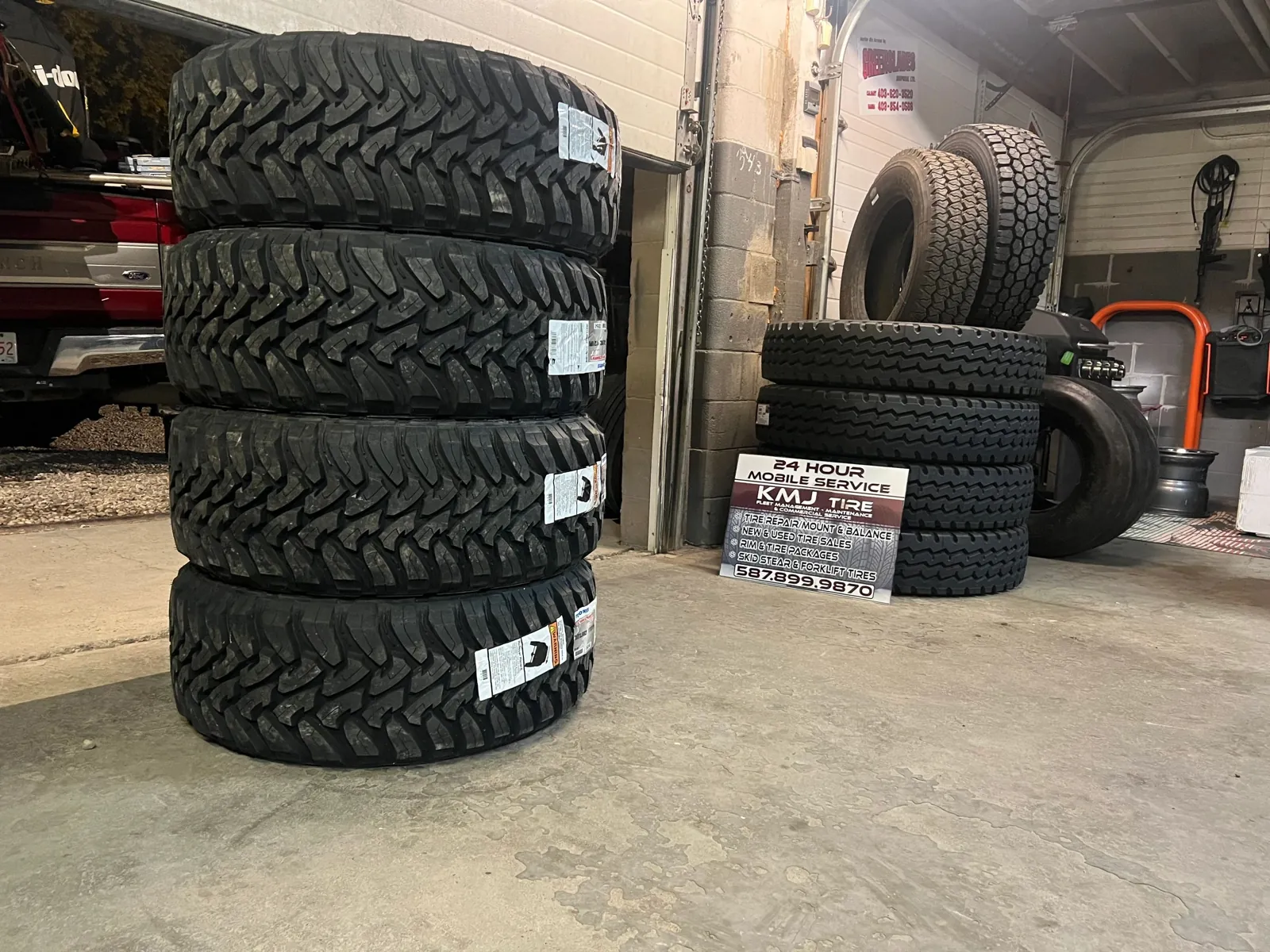
You need one replacement tire, but the model on your car no longer appears in the catalogue. Does that mean you need four new tires? Not automatically. It means the replacement decision has to start with your vehicle's requirements and the condition of the remaining tires, not with whichever product has the closest name. An exact match may still be obtainable, an approved pair may be an option, or the vehicle may need a complete matched set. Those are different outcomes, and none should be promised before the details are checked.
This guide is for the Calgary driver trying to make that decision without chasing obsolete listings or buying something that cannot be used. It separates the search for a product from approval to install it. It also explains how to compare written options, keep a vehicle safely out of use when necessary, and preserve useful information for the next replacement. The examples are hypothetical decision exercises, not statements about current inventory, prices or any particular vehicle's approved fitment.
First, establish why the replacement is needed
A discontinued model is a purchasing problem. A tire that is losing air, visibly damaged or otherwise unsafe is a vehicle-use problem. Deal with the second problem first. Do not keep driving on a questionable tire merely because an exact replacement is difficult to find. Stop somewhere safe and obtain appropriate assistance when the tire's condition makes continued travel unsafe or uncertain. An online delivery estimate does not establish a safe driving window.
Write down what prompted the search. Was there a puncture, an impact, a wear finding, an age recommendation, or simply a plan to renew the set before another season? A tire professional may need to inspect a punctured tire before determining whether repair is possible. Model availability cannot decide repairability. Equally, finding a matching tire cannot make a damaged wheel or a vehicle fault disappear. Mechanical concerns belong with an appropriate specialist; KMJ provides tire services and oil changes, not mechanical repairs.
If damage is the starting point, use the information on tire repair assessment in Calgary to frame the tire-service discussion. Describe what happened and any driving while pressure was low. Do not request a predetermined repair just to preserve the existing set. The useful first answer is whether the affected tire can remain in service at all. Once that is established, the replacement search becomes much clearer.
Confirm what the seller means by discontinued
“Discontinued,” “not available from this supplier,” “not made in that size” and “temporarily unavailable” are not interchangeable statements. Ask which one applies. A retailer may be unable to obtain a product without having evidence that the manufacturer has ended every version of it. Conversely, a product family may remain on a manufacturer's website even after one size or specification has disappeared. A search result is a lead, not confirmation of supply.
Request the exact product identifier associated with the answer. A model name alone can hide several sizes, load descriptions, speed ratings and vehicle-specific versions. If the seller offers a newer model, ask whether it is a replacement product in the marketing sense or an approved match for the tires already fitted. A successor in a catalogue is not automatically interchangeable within an existing set. Do not let similar lettering settle a technical question.
Keep a short search log: supplier, date, exact specification requested, response, and whether an actual item was verified. This avoids repeatedly receiving answers about a different variant. It also helps you recognize when the search has stopped producing new information. There is no need to circulate a long story to every seller; a precise specification and a clear request are more useful than a dozen screenshots of vaguely similar tires.
Build an identification packet before comparing alternatives
Photograph the vehicle's tire information label, the relevant owner-manual pages and the markings on every tire currently fitted. Capture the full size designation, load index, speed symbol, model name and any additional markings a tire professional asks to see. Where markings are hard to access, have them checked safely during service. Do not crawl under an unsupported vehicle or place yourself beside traffic to complete a photograph.
Include the vehicle's year, make, model and trim, along with any known wheel changes. If the vehicle was modified, say so. The tires presently installed are evidence of what is there, not proof that the installation was correct. A previous owner may have changed wheels or substituted a specification. Comparing a proposed replacement only with that existing tire can reproduce an old mistake. The vehicle requirements remain the reference point.
KMJ's guide to reading tire sidewall information can help organize the photographs, but the final interpretation must account for the vehicle. Name the files by position rather than relying on memory: front left, front right, rear left and rear right. Photograph any spare separately. A compact packet makes remote enquiries easier and gives the inspecting professional a useful starting point without pretending that photographs replace a physical inspection.
Separate the non-negotiables from preferences
USTMA's replacement guidance says replacement tires should match the size, load index and speed rating recommended by the vehicle or tire manufacturer, and should not have less load-carrying capacity than originally specified. That is a different question from whether you liked the old tire's ride. Start with the required fitment, then work through seasonal suitability, matching requirements and your preferences. Do not negotiate away a requirement because one option is easier to obtain.
A request such as “something similar” is too broad. Instead, ask the professional to identify the requirements that every proposed option satisfies and any unresolved conditions. An alternative might be acceptable only as a complete set, or only after a particular manufacturer instruction is checked. That conditional answer is useful information. It is not a reason to treat the option as already approved or to purchase a single tire in advance.
For background on one part of the specification, see tire load index explained. Avoid treating a higher number on one specification as compensation for a mismatch elsewhere. There is no general exchange rate between load capacity, tread design and seasonal performance. The proposed tire has to meet the whole applicable specification. A comparison sheet should therefore have a requirements column before it has a preference or cost column.
The same printed size is only the beginning
Two tires can share a printed size while differing in model, tread pattern, construction, ratings or intended use. Continental recommends the same tires at all wheel positions, with vehicle-approved mixed fitments treated as specific exceptions. Its guidance on unavoidable mixing is not an invitation to choose any two products that fit the same wheel. The vehicle manufacturer's requirements still have to be followed.
This is why a marketplace filter cannot approve a replacement. The filter may help you find candidates, but it does not know the wear and condition of the other tires, the details of your vehicle or whether the listing describes the correct variant. A product image may also be generic. Request written specifications and, where appropriate, photographs of the actual item rather than interpreting a stock picture as an identification record.
If you are beginning the search from scratch, browsing replacement tires by specification is a discovery step. Treat the shortlist as material for a fitment discussion, not as a finished installation plan. Before paying, the useful question is: “Is this exact product approved for the number of tires and positions being replaced on this vehicle?” That question prevents the common mistake of solving wheel fit while leaving the rest of the set unresolved.
Measure the remaining set instead of calling it nearly new
“Only one winter old” and “hardly driven” are understandable descriptions, but they do not tell a professional the condition of the remaining tires. Have tread depth, wear pattern, visible damage and relevant history assessed. Record the findings by position. If you measure accessible tread yourself, use an appropriate gauge and report the readings honestly; do not use an average to hide a notably worn area. Professional inspection may reveal information that a quick driveway look misses.
Record the units as well. A note that says “six left” is not useful without explaining what was measured and how. Separate the measurement from the conclusion: “this groove measured this amount” is evidence; “therefore one new tire is fine” is a fitment decision. A good record lets the person responsible for approval make that decision against the actual manufacturer guidance rather than a vague impression of remaining life.
USTMA advises monthly inspection for uneven wear and damage as part of tire care fundamentals. A replacement discussion may expose uneven wear that needs a mechanical specialist's attention. Buying a matched set does not correct an underlying vehicle problem. Ask which findings affect the purchasing decision now and which require separate investigation. That separation avoids both unnecessary tire purchases and the false reassurance of replacing tires without addressing why they wore unusually.
Ask for the vehicle-specific matching instruction
Some vehicles place particular requirements on tire matching. Do not apply a rule remembered from another vehicle, and do not assume every all-wheel-drive system uses the same allowable difference. Ask for the relevant owner-manual instruction or manufacturer guidance for your exact vehicle. If the first person you speak with cannot confirm it, leave the decision unresolved until the appropriate information is obtained.
A useful written answer identifies the document, the requirement and how the proposed installation satisfies it. If a tolerance is involved, it should also identify the measurement method and units. This article supplies no universal tread-depth or circumference tolerance because doing so could misdirect the decision. A figure taken from a forum may refer to a different drivetrain, model year or manufacturer procedure. More decimal places do not make an unrelated number applicable.
The same caution applies to a vehicle with approved different front and rear sizes. A factory arrangement is not evidence that arbitrary mixing is harmless. Its replacement and rotation instructions must be preserved. If you are unsure what information a tire professional will need, the answers to common tire-service questions offer a starting point for preparation. Bring the vehicle documentation into the discussion rather than asking a general web article to certify a particular combination.
Consider one replacement only after the whole set is assessed
An exact model found elsewhere can look like the simplest answer. It may be a candidate, but an identical name does not resolve wear, condition, specification or vehicle restrictions. Ask the professional whether a single replacement is appropriate after inspecting the remaining set. If the answer is no, ask which requirement rules it out. A specific explanation is much more useful than assuming that a larger purchase is either always necessary or always excessive.
USTMA warns that replacing a single tire can negatively affect suspension, transmission and treadwear. Its general guidance for an unavoidable single replacement includes pairing it with the tire having the deepest tread and placing that pair at the rear. That guidance must not be used to override a vehicle-specific restriction, a staggered fitment or another condition that makes the proposed arrangement unsuitable. The actual installation needs professional confirmation.
For a hypothetical commuter with three almost unworn matching tires, the next step is still measurement and approval, not an automatic yes. For another car with substantially worn remaining tires, locating the old model might accomplish little. The search result is the same kind of information in both cases, but the decision differs because the vehicles and sets differ. This is the central reason to obtain the fitment assessment before investing heavily in a nationwide hunt.
Understand what replacing a pair does and does not solve
A pair of identical replacements may be an option where the vehicle permits it and the remaining pair is suitable. Continental discusses matching the brand and tread pattern across an axle when mixing is unavoidable, while continuing to recommend a uniform set wherever possible. That makes pair replacement a conditional solution, not a general shortcut around manufacturer instructions. It still requires assessment of the complete installation.
Both USTMA and Continental give general guidance favouring new tires on the rear when replacing two, to support rear traction and stability on slippery roads. Continental also notes that manufacturer-specific exceptions exist. Do not translate this into a driveway instruction to rearrange every set yourself. Different axle sizes, directional fitments or vehicle requirements can change what is permitted. Ask the installer to explain the position plan for your vehicle and record it on the service paperwork.
Pair replacement also leaves a future purchasing question. The older pair may reach replacement first, and the vehicle may need another assessment at that point. Include that likely sequence in the comparison without inventing a remaining kilometre life. You are choosing an acceptable configuration now, not buying a guarantee that every future replacement will be convenient. The benefit is clarity about what remains in service and why, rather than merely reducing today's tire count.
Know when a complete set is the clearer option
Replacing all four can remove the need to maintain a discontinued model within a mixed-age set. USTMA recommends replacing all four together for optimal performance. However, the professional should still explain why that approach is appropriate for your vehicle and circumstances. It may follow a vehicle matching requirement, the condition of the remaining tires, or a deliberate decision to move to a suitable current product. Those reasons should be distinguished.
A complete set is also an opportunity to reconsider how the vehicle is actually used. Perhaps the old purchase reflected a different commute or a second vehicle that is no longer available. Discuss those changes while keeping fitment requirements fixed. Do not let the discontinued name force you into duplicating a category that no longer suits your needs. Equally, do not assume a newer model is better in every respect simply because it replaced an older catalogue entry.
KMJ's guide to buying tires in Calgary can help structure that broader comparison. Ask for the exact model and specification on the written proposal, not just a brand name and a total. If an option is recommended because it simplifies future replacement planning, describe that as a planning advantage rather than a promise of permanent availability. No current product can be guaranteed to remain in production for the life of your vehicle.
Keep the winter decision separate from the supply decision
A winter tire being unavailable does not automatically make a different tire category an appropriate substitute. The same is true when an all-weather or all-season model disappears. Decide what seasonal role the set must fulfil before comparing alternatives, then confirm the proposed products and installation against that role. Calgary weather can make an improvised substitution particularly consequential, but local weather does not create an exception to the vehicle's requirements.
If you are considering a category change, compare it as a complete plan. Will the vehicle retain two seasonal sets? Which set will be used for a planned winter journey? Are you relying on a symbol, a product description or a verified manufacturer classification? Those are questions to resolve in the selection process. Do not assume that an aggressive-looking tread or a familiar brand name answers them.
The comparison of winter and all-weather tire choices is useful background, while Calgary winter tire selection supports a more focused discussion. Neither link is a claim that a particular product is currently available. If the eventual solution is another seasonal set, plan its installation and the disposition of the old set explicitly. Changing only the product name on a purchase list is not the same as resolving the vehicle's winter setup.
Treat a successor model as a new candidate
Manufacturers often retain recognizable family names across product generations. A new suffix or number may look insignificant to a shopper, but it can represent a different product. Ask for the complete model designation on both the old tire and the proposed replacement. Avoid shortening the names in messages, because the part you omit may be the part that distinguishes the two.
A successor may be a sensible choice as a complete set while being unsuitable as a single substitute in the old set. Those statements are not contradictory. One evaluates the new product for the vehicle; the other evaluates a combination of old and new. Ask the supplier which question their recommendation answers. “This replaced that model” is useful catalogue history, but it is not enough to approve mixing.
When comparing alternatives, separate documented features from personal priorities. Ride preference, seasonal use, noise expectations and budget matter, but none can establish a technical match. The discussion of budget and premium tire trade-offs can help keep the comparison grounded. Avoid demanding an exact recreation of the old tire's feel from a different model. Instead, identify the important qualities and ask what evidence supports the recommendation, while acknowledging that your experience may change with a new set.
Evaluate remaining old-model stock without assuming its condition
A product can remain for sale after production ends. That fact alone neither proves it is unsuitable nor establishes that it is a good purchase. Ask about the actual item, its identification markings, its storage history where known, and the applicable manufacturer age and inspection guidance. Obtain the seller's return and warranty terms before committing. Do not invent a universal age cutoff from the fact that the model has been discontinued.
The distinction between manufacture date and purchase date matters for your records, but a date code is not a complete condition report. Conversely, a clean label and unworn tread do not answer every question about a tire's history. Have the item assessed as appropriate before installation. If the seller cannot supply enough information to identify what will arrive, record that uncertainty instead of filling the gap with an optimistic assumption.
Check quantity carefully. A listing for the old model does not establish that the seller has the exact number needed in the exact specification. Ask whether the items are physically available, whether substitutions require your approval and what happens if only part of the order can be filled. These are purchasing controls, not claims about any particular supplier. They are especially useful when the plan depends on receiving a matched pair rather than one isolated tire.
A used exact match still leaves an inspection problem
A used tire with the right model name can be tempting when new stock is scarce. Its history and condition still need assessment. Photographs cannot establish everything about prior low-pressure use, impact history or previous repair. Ask what is known, what documentation exists and what inspection is possible before installation. A seller's description should not become your own unsupported assurance that the tire is safe.
Do not confuse matching with suitability. An exact model that cannot responsibly be put into service is not a solution. If the only apparent match has an uncertain history, compare that uncertainty with other professionally approved options instead of treating the search as finished. The absence of visible damage in an advertisement is not the same as a tire professional's finding after examination.
Agree on the consequences of a failed inspection before purchase wherever possible. Who pays return shipping? Can the item be returned after an inspecting professional rejects it but before installation? What happens if the markings differ from the listing? Those practical questions can determine whether the purchase is workable. This is not a blanket declaration about every used tire; it is a reminder that a discontinued name increases the temptation to lower your evidence standard precisely when clear evidence is most valuable.
Check online orders before installation changes your options
Keep a copy of the accepted specification and order confirmation. When the tires arrive, compare the labels and sidewall markings with that record before they are mounted. Confirm the number of items, model version, size and service description. If something differs, stop and resolve it with the seller and installing professional. Do not accept a verbal “close enough” without establishing that the proposed installation remains appropriate.
Retain the packaging and take clear photographs of discrepancies. Avoid making your own marks or alterations that complicate a return. The seller's actual terms govern the return process, so read them rather than assuming every merchant uses the same rules. A corrected order should have an updated written specification; otherwise the installer may still be working from the original, now inaccurate information.
If you are coordinating delivery with tire service, distinguish arrival from readiness. A parcel marked delivered does not mean the contents have been checked or the installation approved. Leave enough flexibility to resolve a mismatch without pressuring someone to install an unsuitable product. That is a planning choice, not a recommendation for a specific delay. The objective is to avoid turning a shipping inconvenience into a rushed fitment decision after the vehicle is already disassembled.
Compare the full installation plans, not isolated tire prices
Ask for written alternatives that describe the complete work and exact products. One proposal might retain a suitable pair; another might replace the full set. Comparing their per-tire numbers alone hides the main difference. Each proposal should state which tires remain, where replacements will be installed, and what unresolved inspection or manufacturer checks could change the recommendation.
Ask which installation-related services are included and which are separate. Discuss mounting, balancing and any tire-pressure-monitor work appropriate to the vehicle without assuming a universal package. KMJ's explanation of wheel balancing service can clarify one part of that conversation. Any mechanical investigation should be identified separately and handled by an appropriate specialist. Do not fold an unresolved mechanical concern into a tire quote as though buying tires automatically resolves it.
Compare timing and purchasing conditions as well as money. Is the proposed product confirmed, merely requested, or still being researched? What happens if it cannot be obtained? Does a change require your approval? A clear quote can say that availability is unconfirmed; that is more useful than an unsupported delivery promise. This guide supplies no prices or stock claims because the relevant numbers and availability must come from an actual current proposal for your vehicle.
Make a safe mobility plan while the decision is unresolved
If the vehicle cannot safely be used, the purchasing process needs a separate transportation plan. Consider appropriate roadside assistance, towing or another vehicle rather than stretching the use of a damaged tire. A temporary spare, where provided, has vehicle-specific restrictions. Read the applicable instructions and do not treat it as a permanent replacement while a discontinued model is being located.
If an inspected tire remains suitable for use, follow the professional's advice rather than turning that assessment into an unlimited promise. A planned replacement date does not remove the need to respond to new pressure loss, damage or warning signs. Record what was assessed and what conditions would require another check. If the problem changes, the plan may need to change too.
For location planning, mobile tire service information and Calgary tire-service coverage help frame the enquiry. Confirm whether the actual vehicle, location and requested work are suitable; do not assume every site is accessible or that immediate attendance is available. A service location should enable safe work, not simply be where the car happens to be parked. Sorting out access early can prevent a second delay after the replacement decision is finally made.
Three examples that lead to different questions
Imagine a hatchback with one damaged tire and three others described as almost new. The original model is no longer listed by the first supplier. The driver should first obtain the damage assessment and identification packet, then have the remaining tires measured and the vehicle requirements checked. The useful question is whether one replacement can be approved, not whether somebody can find a tire with a similar tread photograph. An exact item located elsewhere is a candidate for that assessment.
Now imagine a crossover whose manual contains specific matching instructions. A seller offers two newer-generation tires in the same printed size. The pair might be a good product, but the driver still needs evidence that the complete proposed configuration complies with the vehicle's requirements. If that cannot be established, the offer does not become acceptable simply because two cost less than four. The correct comparison includes a suitable complete-set option and a safe plan while the decision is pending.
Finally, consider a car with an older seasonal set that is already approaching replacement based on inspection. Finding a single unused example of the discontinued model may not offer much planning value. The driver can compare that candidate with a current matched set, using the actual condition findings and seasonal needs. None of these examples supplies an automatic tire count. Each shows which missing information should be obtained before the number of replacements is decided.
Use a concise enquiry that invites a specific answer
A useful first message can read: “My vehicle is this year, model and trim. The attached photographs show the tire label and current tire markings. One tire needs assessment after this event. A supplier says this exact model or specification is unavailable. Please confirm what measurements and manufacturer information you need before recommending one tire, a pair or a complete set.” That request leaves room for inspection rather than demanding a predetermined outcome.
Once a proposal arrives, ask for the reasoning in plain English. Which requirement does it satisfy? What condition finding matters? Is the alternative suitable individually, as an axle pair or only as a full set? What remains unverified? You do not need a lecture on every aspect of tire design. You need a traceable explanation connecting your vehicle and its measured tire condition to the recommended configuration.
Use KMJ's tire-service contact information when you have that packet ready. Keep personal information out of public marketplace posts and send vehicle details only through an appropriate direct enquiry. A short, well-labelled set of photographs usually communicates more effectively than a long chain of cropped advertisements. It also reduces the chance that a reply about one size or variant will be mistaken for approval of another.
Review the result at collection, not months later
Before leaving after installation, compare the fitted tire markings with the agreed proposal. Confirm which tires were retained and where they are now positioned. Ask how the pressures were set for the vehicle and whether any relevant tire-pressure-monitor procedure was required. Keep the invoice and any inspection notes together. If the delivered arrangement differs from the written plan, resolve the discrepancy before assuming the change was intentional and approved.
USTMA recommends gauge checks at least monthly, with tires cold after the vehicle has been parked for at least three hours, using the vehicle label or owner's manual for recommended pressure. It also emphasizes that monitoring systems do not replace gauge checks. Use those general habits alongside your vehicle's instructions; this article does not provide a universal pressure or warning threshold. Position changes can matter where front and rear recommendations differ.
If this work coincides with a seasonal change, review the seasonal tire changeover process and label the removed set accurately. Do not preserve the old model name in your records as though it is still fitted everywhere. A future person ordering “the same tires again” needs the current configuration, not the configuration from before this replacement. That small administrative correction prevents the discontinued-model problem from resurfacing as a recordkeeping mistake.
Leave yourself a better starting point for next time
Save the final model and specification, installation date, odometer reading, position record, invoice and inspection findings in one place. Include the manufacturer guidance used to approve the arrangement where available. Keep actual measurements separate from estimates. If a pair was retained, identify it clearly rather than describing the vehicle as having a new set. Those records will support the next condition assessment without claiming a precise future service life.
Plan routine checks according to the vehicle and tire guidance. Do not attempt to preserve matching tread by inventing a rotation pattern; some configurations have restrictions. A change in wear, recurring pressure loss or new vibration deserves assessment rather than an assumption that the discontinued tire was inherently defective. Tire-related work and mechanical investigation are different responsibilities, and a clear symptom history helps the appropriate professional handle each.
When the specification and work are agreed, arrange the appropriate tire service using the confirmed plan. The essential sequence is simple: establish safe vehicle use, identify the actual tires, assess what remains, check the manufacturer's requirements, and compare approved configurations. A discontinued product name is an inconvenience, not a reason to improvise. The best outcome is a documented, suitable installation—not merely winning the search for one last tire with familiar lettering.
Put a sensible boundary around the search
An open-ended search can consume time without improving the decision. Once the vehicle's requirements and the remaining set are understood, agree on what evidence would make an exact-match purchase worth considering. That might include a verified specification, an acceptable inspection pathway and a workable return arrangement. If a lead cannot provide those basics, classify it as unresolved instead of repeatedly treating it as nearly solved.
This is not a recommendation to abandon a useful option after a fixed number of enquiries. The appropriate boundary depends on the vehicle's safe-use status and the practical alternatives. A car awaiting repair has a different mobility problem from a usable car whose owner is researching next season. In both cases, distinguish verified leads from stale listings. Record when an enquiry produced no new information so another family member does not restart the same conversation unknowingly.
A stop point can be conditional rather than time-based: if no exact candidate meets the agreed requirements, return to the approved pair or full-set options. This keeps the search subordinate to the vehicle decision. It also protects against the feeling that hours spent looking must be justified by buying whatever finally appears. Research effort is not evidence that an item is suitable, and a rare product is not necessarily the best answer for the remaining set.
Keep warranty questions separate from fitment approval
Ask the seller for the actual coverage terms that apply to the proposed item, particularly if it is remaining stock or obtained through an unfamiliar sales channel. Record who would handle a claim and which purchase documents would be required. Do not assume that discontinuation cancels coverage, extends coverage or creates a right to four replacements. The applicable written terms and the circumstances of a claim determine that discussion.
A warranty is also not a statement that a proposed tire combination is suitable for your vehicle. A perfectly genuine product with valid paperwork can still be the wrong specification or the wrong choice for a partial replacement. Likewise, approval to install an appropriate product does not tell you what a seller will reimburse if a future claim arises. Keep the technical decision and the contractual question on separate lines of your comparison sheet.
If a current claim prompted the search, retain the affected tire and relevant evidence as instructed by the party handling it, without continuing unsafe use. Ask before disposal or any action that could prevent inspection. Record the proposed remedy exactly: a replacement item, an allowance, or another specific response should not be paraphrased into a promise that was never made. Resolve any difference between the claim remedy and the vehicle's actual replacement needs before authorizing the final installation. That makes it easier to understand both the safe configuration and your own remaining purchase decision.
Sources and the limits of this guide
The technical starting points are USTMA's tire replacement guidance, USTMA's tire care essentials, and Continental's guidance on mixing tires. These primary sources support the replacement-specification principles, general advice on replacing fewer than four tires, matching considerations, and basic pressure and inspection habits discussed above. They do not approve an unidentified vehicle or an uninspected tire.
The purchasing checklists and hypothetical examples are practical planning suggestions, not manufacturer promises or descriptions of KMJ inventory. No particular tire model is declared discontinued here. Verify any such statement with the relevant supplier or manufacturer. Vehicle-specific instructions, actual inspection findings and current written product details are what turn this general decision process into a suitable recommendation for your car.