How should you look after tires when the same car takes your family to school in the morning and carries paying passengers later? Start by treating tire condition as a decision about whether the vehicle is ready to work, not just another item on a monthly expense list. Know the correct specifications, measure changes rather than guessing, and arrange tire work before a preventable problem interrupts a shift. Buying the most expensive tire is not a substitute for that routine.
Rideshare use creates an awkward mix of ordinary driving and business responsibility. Your car may travel much farther than a neighbour's similar vehicle, switch between short urban trips and airport runs, and carry different passenger and luggage loads throughout the day. You are still bound by the limits of that particular vehicle and its tires. Working longer hours does not justify a different pressure target, a higher carrying capacity, or extending the life of a damaged tire.
This guide builds a practical system around those realities. It is not a platform inspection certificate, insurance opinion, or promise that a particular tire qualifies a vehicle for paid passenger service. Check current requirements with the relevant platform, insurer and licensing authority separately. The examples below are invented planning scenarios, not customer stories or earnings claims. The aim is to make tire choices easier to explain, document and maintain through Calgary's changing seasons.
1. Separate permission to operate from physical readiness
A vehicle can satisfy an administrative requirement and still develop a tire problem the next morning. Conversely, a freshly installed set does not establish that your insurance or operating paperwork is correct. Keep those two questions on separate lines in your records. One line asks whether you are permitted and covered to do the work. The other asks whether the vehicle is presently suitable for the journey you are about to accept.
Do not read a platform's general vehicle-age policy as a tire-age policy. Do not assume a periodic inspection replaces the tire manufacturer's care instructions. An inspection describes what was assessed at a particular time, within a particular scope. A screw picked up later, a fresh sidewall injury or a persistent pressure loss changes the situation even if the paperwork remains current. A dashboard without warning lights is also not a complete condition report.
Create a small operating folder containing your vehicle manual reference, tire information, service receipts and the requirements you have confirmed with the organizations involved. Date the administrative documents so an old screenshot does not quietly become your current rule. If two instructions appear to conflict, get clarification from the source responsible for that requirement. Do not let an online discussion decide which limit you can ignore.
For local tire support, the Calgary tire-service information is a starting point for discussing the tires themselves. Mechanical inspections, vehicle licensing and insurance decisions belong with the appropriate providers. Keeping that boundary explicit avoids expecting one tire visit to resolve every part of operating a passenger vehicle for income.
2. Describe your actual working week before choosing products
Write down what the car does, not what the job title suggests. A driver who works a few evening trips has a different use pattern from someone travelling across the city throughout the week. Neither description tells the whole story without road types, trip lengths, seasonal exposure and the extent to which the driver can decline travel. A short urban route can still include a steep residential street or an untreated parking area.
Use a week or two of ordinary driving to record total distance and the broad mix of trips. Separate personal travel from work travel if that helps your own accounting, but include both when planning tire maintenance. The rubber experiences the full distance. Waiting near a pickup area adds time to your working day without adding the same number of kilometres; this is one reason income hours alone are a poor maintenance clock.
Describe passenger loads in sensible categories rather than collecting passenger details. Examples include one person with a backpack, several adults with shopping, or an airport trip with large suitcases. Those categories help identify whether you need to revisit the vehicle's loading instructions. They are not a licence to estimate payload from appearance. The vehicle's stated limits and the actual weight of people and cargo remain the relevant constraints.
A useful buying brief might read: mostly paved Calgary roads, substantial annual distance, winter operation, frequent airport luggage, and a preference for predictable wet-road behaviour and a quiet cabin. Bring that brief to a Calgary tire selection discussion. It is more informative than asking for whatever professional drivers usually buy, because there is no single tire choice that fits every vehicle or working pattern.
3. Make a specification record that survives a busy season
Before comparing brands, record the vehicle year, model and trim, the approved tire size or sizes, and the service description required for your application. Photograph the tire placard and the current sidewall markings while parked safely. The placard and manual establish the vehicle requirements; the current tire is evidence of what is fitted, not proof that a previous owner chose correctly. If those sources disagree, resolve the discrepancy before ordering.
Write down whether the front and rear specifications differ. A staggered arrangement can affect available products, rotation possibilities and replacement planning. Identify any manufacturer requirements for a matching set, especially where the drivetrain or chassis depends on closely controlled tire characteristics. Do not reduce those instructions to a generic internet tolerance. The right reference is the documentation for your exact vehicle and the tires being considered.
The letters and numbers on the sidewall carry different kinds of information. Size, load index, speed symbol and extra-load markings are not interchangeable badges of quality. A higher number in one place does not automatically compensate for a mismatch elsewhere. Use the tire sidewall information guide to prepare questions, then confirm the complete specification against the vehicle instructions and the tire manufacturer's data.
Store the finished record somewhere you can retrieve without relying on a single fading receipt. Include product model, full size, installation date, odometer reading and which positions received which tires. A photo of each identifying marking can help when a warranty question or replacement inquiry arises. Keep customer information out of that folder; passenger names and destinations contribute nothing to identifying the correct tire.
4. Carrying passengers does not create extra load capacity
A larger tire, a stiffer-looking sidewall or an extra-load marking does not increase the vehicle's allowed payload. Several limits interact: the vehicle's overall rating, axle limits, tire capacity, wheel requirements and the manufacturer's loading instructions. The lowest applicable constraint still matters. If you cannot establish that a planned load fits within those limits, reduce the load or use an appropriate vehicle instead of adjusting pressure by guesswork.
Luggage makes this question easy to overlook. A car that feels roomy can reach a loading constraint before every seat and cargo space is filled. An airport trip may combine adults, cases and the driver's own equipment. Remove unnecessary items from the trunk, but do not treat decluttering as a substitute for checking the ratings. Heavy equipment stored permanently in the vehicle consumes capacity on every journey, including the ones that appear lightly loaded.
Some vehicles specify different cold pressures for particular operating or loading conditions. Others provide one normal target within their approved use. Follow the instructions that apply to your vehicle rather than borrowing a setting from another driver's car. The maximum marking on a tire is not a general recommendation for carrying more passengers. The load-index explanation can help you understand the label without turning it into a payload calculator.
Consider a fictional driver who keeps a bulky personal tool collection in the rear cargo area. Before a full-passenger trip, the useful action is to account for that load and the permitted vehicle limits. It is not to add an arbitrary amount of air because the rear looks low. If the vehicle sits unusually or behaves differently under an otherwise approved load, have the relevant systems assessed by a qualified specialist rather than assuming tires explain everything.
5. Choose seasonal capability around the trips you cannot predict
Paid passenger trips do not always end on the same road conditions where they begin. A clear main route may lead into a shaded side street, an unplowed driveway entrance or a parking area with compacted snow. This does not make any tire an all-conditions guarantee. It means your seasonal plan should reflect the range of roads you reasonably expect to encounter, not just the easiest part of the commute to your waiting area.
Transport Canada's winter tire guidance explains the role of winter tires and the mountain-snowflake marking. That marking is useful evidence of meeting a specified snow-traction standard, not a promise of equal braking on every icy surface. Product design, condition, inflation, vehicle behaviour and the road environment all remain relevant. Leave room in your driving plan for those limits.
Compare winter tire options for Calgary driving according to approved fitment and your operating conditions. If you are considering a year-round alternative, discuss the compromises in the all-weather tire category. A category label is the beginning of the conversation, not a replacement for examining the specific model and whether its performance priorities suit your work.
Do not select an all-season tire solely because the name sounds like permission to accept any winter trip. Equally, fitting winter tires does not obligate you to work during conditions you cannot manage safely. A sound plan includes a stopping rule: you can end a shift, decline a journey or wait for conditions to improve. Tire equipment supports that judgment; it does not remove the need for it.
6. Set up a pressure routine around cold readings
The correct comparison is between a properly measured cold pressure and the vehicle's applicable recommendation. After driving, tire pressure normally changes with warming. Letting air out simply because a warm reading exceeds the cold target can leave the tire underinflated later. The USTMA tire-care essentials provide the basic care framework, including checking pressure and using the vehicle manufacturer's recommendation.
For a working driver, the practical challenge is timing. If the first reading happens after several trips, it is not a clean cold baseline. Build the check into a suitable parked period before driving, following the definition and instructions supplied for your vehicle and tires. Keep a reliable gauge with the vehicle, protect it from damage, and know where you can obtain help if a reading is unexpectedly low.
Record the date, position and measured value when investigating a change. A line saying rear-left low again is less useful than a sequence showing what was measured under comparable conditions. Do not keep topping up an unexplained loss while treating the log itself as a repair. Recurring loss warrants assessment. A pressure-monitoring warning is a prompt to respond according to the manual, not a reminder to silence the dashboard before collecting a passenger.
There is no need to invent a universal professional-driver pressure bonus. Adding a fixed amount above the placard for all rideshare work is not a sound substitute for the manufacturer's guidance. Nor should you use a softer setting to make a noisy road feel more comfortable. Pressure is part of the tire's operating requirements, and passenger comfort must be pursued within those requirements rather than by stepping outside them.
7. Use a short walk-around with clear limits
A walk-around is valuable because it can reveal a change before you leave, but it cannot certify the inside of a tire. Look for an obviously low tire, fresh visible damage, an object lodged in the tread, a missing valve cap or something unusual near the wheel. Check from a safe position without crawling under the car in a traffic area. If darkness prevents a useful view, improve the lighting or move the check to a safe place.
Pay attention to things that differ from your last observation. A new bulge, a fresh cut or exposed reinforcement is not something to average against the other three tires. Do not pull an embedded object out just to see whether it leaks. Do not assume that because the car has moved successfully, it can complete one more paid trip. Decide whether further movement is appropriate using the damage, vehicle guidance and professional advice available.
Keep the check brief enough that it actually happens. A simple sequence around the vehicle is easier to repeat than a long form you resent completing. Save more detailed measurements for a planned inspection, while recognizing that a concerning symptom changes the schedule immediately. The purpose is to notice reasons to stop or investigate, not to rush through boxes so the vehicle appears ready on paper.
The practical tire-care information can support that routine. Treat the results as observations, not diagnoses. Uneven wear may have more than one cause, and a sound or vibration may originate outside the tires. Assessment of suspension, steering, brakes or other mechanical systems belongs with a separate, qualified mechanical provider.
8. Measure wear often enough to make the next decision
High distance can make a calendar-only reminder misleading. A vehicle covering many kilometres between monthly checks may need a more useful measurement schedule than one driven occasionally. Start with the care and inspection intervals in the relevant manufacturer guidance, then arrange additional assessment when usage, wear or symptoms justify it. Do not invent a fixed mileage interval that claims to fit every tire and every car.
Use a tread-depth gauge correctly and compare several appropriate locations, including across the tread and around the circumference where accessible. Record the tire position and whether the measurement represents an inner, centre or outer area. A single attractive measurement does not describe the whole tire. If you cannot safely reach or interpret the relevant areas, have them inspected rather than stretching beneath a parked vehicle.
Suppose an invented log shows one tire changing more quickly at an edge than its partner. That is a reason to investigate the pattern, not to predict a precise failure date. Road exposure, pressure history, fitment, driving and mechanical condition may all be relevant. Share the measurements with the tire professional and use a separate specialist where mechanical evaluation is needed. Replacing tires without considering the cause may leave the underlying problem unresolved.
Do not turn a legal minimum into a personal promise of adequate grip for every winter shift. Suitability can change before a simple threshold tells the whole story, particularly when snow and water evacuation matter. Manufacturer recommendations, visible condition, intended use and professional inspection should inform the decision. The goal is enough warning to plan replacement responsibly, without pretending tread wear proceeds in a perfectly straight line.
9. Track rotations by distance and configuration
Rotation is not the same as swapping any two wheels whenever convenient. Directional tread, different front and rear sizes, vehicle instructions and tire construction can limit the permitted pattern. Consult the relevant guidance before planning the work. Where rotation is allowed, document the date, odometer and resulting positions so later wear measurements refer to the right tire rather than an outdated corner of the car.
A rideshare vehicle may reach a mileage-based service point sooner than its owner expects from personal-use habits. Keep the total odometer in your reminder system. If you use an application that records only paid-trip distance, it may omit travel to pickups, personal errands and other movement. That record can have an accounting purpose, but it is not automatically a complete maintenance record.
Rotation also does not repair an already damaged tire or correct a mechanical fault. If one position is wearing unusually, the cause needs attention. Moving the tire can change where the symptom appears without eliminating it. Ask the person performing the tire work to explain what was observed, what was changed and what still requires separate assessment. Clear notes are more useful than a receipt that merely says service completed.
Pair planned seasonal work with other appropriate tire checks when it genuinely saves an extra visit. The seasonal tire-change information can help you distinguish a mounted-wheel changeover from remounting tires onto the same wheels. Confirm the work required for your actual setup; those tasks involve different preparation and should not be treated as interchangeable names for the same service.
10. Diagnose comfort complaints without guessing at the repair
Passengers notice vibration and noise, but a complaint does not identify the cause. Write down when a symptom occurs: at a particular speed range, while braking, after a tire change or only on a certain surface. Include whether it is felt through the seat or steering wheel if you can describe that reliably. Do not perform distracting experiments while carrying passengers or try to reproduce a concern at an unsafe speed.
Wheel imbalance can be one contributor to vibration, but it is not the only possibility. A tire injury, wheel damage or a mechanical problem may require a different response. The wheel-balancing service information is relevant to balancing questions, not a guarantee that balancing will cure every shake. A new or severe vibration deserves timely assessment, particularly after an impact or sudden change in behaviour.
Cabin noise is similarly complicated. Tire design, surface texture, speed, wear and the vehicle itself influence what you hear. Comparing two products by an isolated online comment can conceal differences in size and application. Ask whether any available test information relates to the exact model and a relevant size, and recognize that your own cabin may sound different. Do not promise passengers a silent ride based on a marketing label.
Comfort is a valid selection preference after fitment and safety requirements are satisfied. Explain that preference when comparing approved products, but avoid solving it by underinflating tires or ignoring a persistent symptom. A professional description such as a rhythmic sound that began yesterday is much more actionable than insisting the car needs a particular repair because someone in a driver group suggested it.
11. Build a replacement fund without inventing tire lifespan
A useful tire budget separates known costs from assumptions. Known costs include an actual written estimate for the correct products and specified services. Assumptions include the distance you expect to drive and how long the set might remain suitable. Label those separately. A treadwear warranty, where offered, has terms and exclusions; it is not a promise that the tire will last that distance in your application or that a replacement will be free.
You can make a simple reserve model without publishing a pretend market price. Let C represent your verified replacement cost and D represent a cautious planning distance chosen for budgeting, not a safety limit. The reserve per kilometre is C divided by D. If you cover K kilometres in a week, the corresponding contribution is K multiplied by C divided by D. Revisit the assumptions as actual wear and costs become clearer.
For an arithmetic-only example, suppose your planning horizon changes from fifty thousand kilometres to forty thousand while C stays unchanged. The amount set aside per kilometre rises by a quarter. That does not mean either horizon is a prediction for a particular tire. It shows why an optimistic distance assumption can leave a shortfall. Use your real records and professional condition assessments to update the model rather than forcing the tires to survive the spreadsheet.
Include the services actually required for your setup, and ask what the estimate excludes. A tire-only listing may not describe the full installed cost. Seasonal changes, storage arrangements or a separate wheel set may belong in a broader ownership budget, depending on what you use. Review available tire categories and selection information before requesting a current, vehicle-specific estimate. No listed category establishes current stock or price.
12. Account for downtime without turning it into pressure to drive
An unexpected tire problem can interrupt a shift, but estimating that inconvenience is different from claiming guaranteed lost earnings. Your actual schedule, demand, expenses and alternatives vary. Record the time a vehicle is unavailable if that helps you understand your business. Do not use a speculative hourly income figure to justify taking a damaged tire back onto the road.
Planned work often has a different impact from an emergency interruption. You may be able to arrange tire service outside your preferred driving window, prepare the wheel set in advance and resolve fitment questions before the vehicle arrives. That is worthwhile even if no exact savings can be promised. The practical gain is fewer unknowns at the start of the visit, not a guarantee that the work will finish within a particular number of minutes.
Have a fallback that does not depend on making one last trip. It might be ending the workday, arranging alternative personal transportation, or adjusting a later commitment. Confirm any platform-specific response procedure with the platform itself. Do not assume reimbursement, replacement transport or penalty relief is available. Those are separate terms that can change and should not be invented in a tire-care plan.
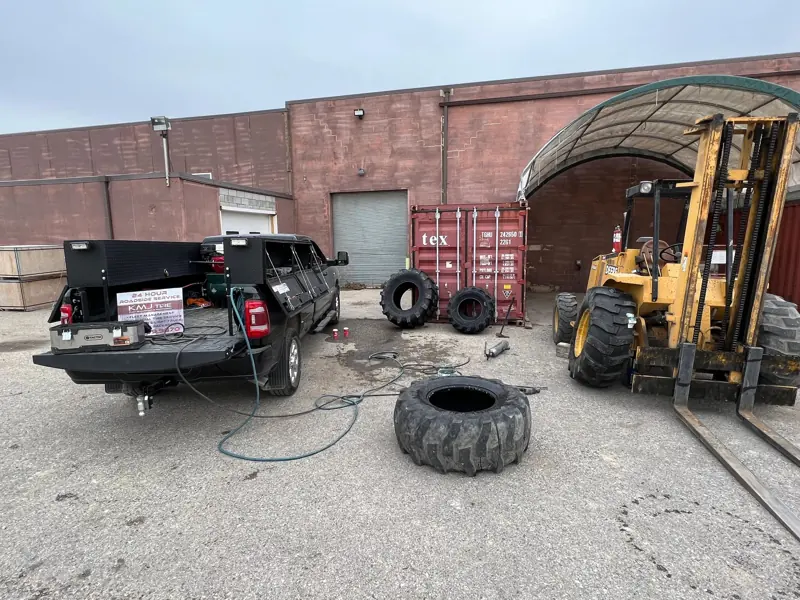
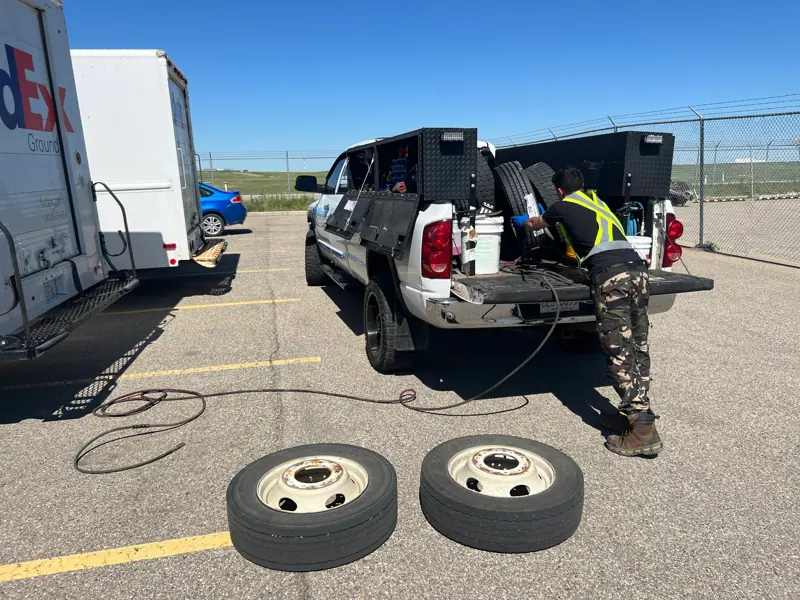
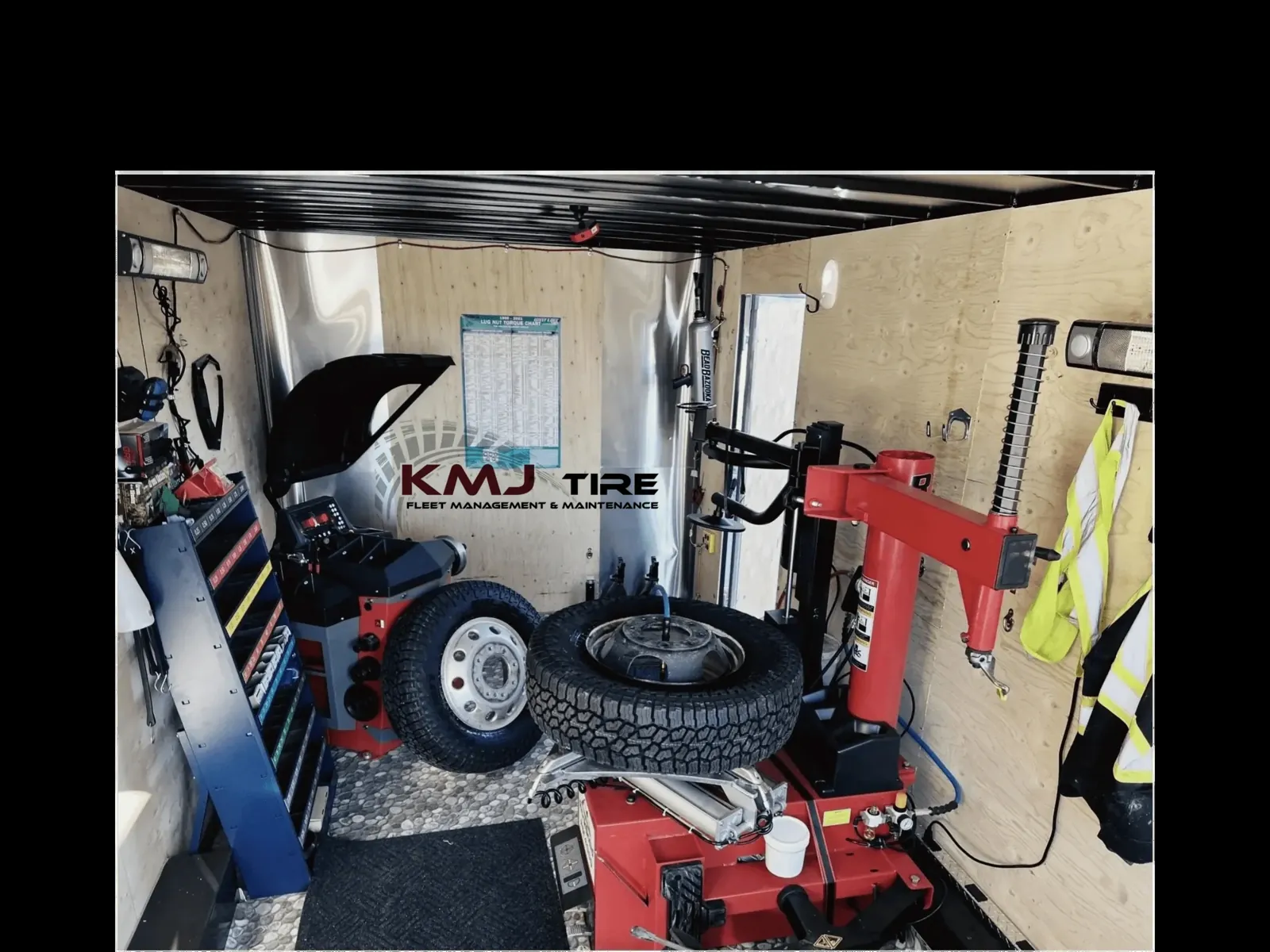
A mobile option may be convenient where the task and location are suitable. Read the mobile tire-service details, then describe the vehicle, tire issue and proposed location accurately. A crowded pickup zone or active traffic lane is not automatically an appropriate worksite. Availability, scope and safe access need confirmation; convenience cannot override the conditions needed to perform the service safely.
13. Decide what happens when a puncture interrupts a trip
The immediate priority is people and location, not preserving a fare. If a tire warning, rapid pressure loss or handling change occurs, respond according to the vehicle manual and road conditions. Move out of danger only as appropriate, avoid abrupt actions where possible, and arrange help from a safe location. A blog cannot assess the shoulder, traffic, weather or tire condition you are facing in that moment.
Make the passenger communication short and factual: the vehicle has a tire concern and the trip cannot continue safely until it is addressed. Follow the applicable platform procedure for interrupted travel. Do not share a diagnosis you do not have, promise an arrival time you cannot verify or ask a passenger to help with roadside lifting. Their luggage and immediate needs can be handled without turning them into part of the repair process.
Repairability is assessed after examining the tire, including the interior where required. USTMA guidance describes limitations for passenger and light-truck puncture repairs, including location and size restrictions and the need for a proper combined repair approach. Manufacturer instructions can be more restrictive. A plug pushed in from outside is not a substitute for the assessment and repair requirements described in that guidance.
Use the Calgary tire-repair information to understand the service discussion, and describe whether the vehicle was driven while low or flat. That history matters even if the tire later holds air. The emergency tire-service information is another reference for available assistance, but verify actual response availability rather than assuming immediate service or that every damaged tire can be repaired.
14. Know your temporary-mobility equipment before you need it
Some vehicles carry a spare, others have a mobility kit, and some use tires with specific limited-mobility features. Find out what your vehicle actually has. Locate the instructions and check the equipment condition according to the manual. A spare hidden under luggage is not ready merely because you remember seeing it years ago. A sealant container may have storage and expiry instructions that need attention.
Temporary equipment normally has restrictions that must be taken from the exact product and vehicle documentation. Do not transfer a speed or distance limit from a different car. Do not assume a run-flat capability applies because the tire looks stiff. Identify the fitted product and understand how the vehicle's monitoring system and operating instructions relate to it. If you cannot establish the permitted next step, seek qualified assistance.
Restoring limited mobility does not automatically mean resuming paid passenger work. The immediate purpose may be reaching an appropriate place for assessment, subject to the equipment's limits and the actual condition. Platform, insurance and local operating requirements may also affect whether the vehicle can carry passengers. Keep the decision conservative and obtain the relevant answer instead of treating a temporary fix as a fresh service approval.
After using a kit or spare, record what was used, when and why. Tell the tire professional about sealant and any distance driven under abnormal conditions. Replace or restore the emergency equipment as the manufacturer directs so the next incident does not reveal an empty kit. This final step is easy to miss once the main tire problem is resolved and the car feels normal again.
15. Organize the handover when two drivers share one car
A shared vehicle needs a shared condition record. Otherwise, one person may notice a slow leak while the other only sees a recently inflated tire. Use a short handover that includes warning lights, unusual symptoms, recent impacts, measured concerns and work already arranged. Make unresolved issues visible before the next driver starts, rather than hiding them in a long conversation thread.
Assign responsibility for the next action. A note saying someone should look at the rear tire creates a gap; a note stating the vehicle is not to be used pending assessment is clearer when that is the appropriate decision. Do not allow a busy schedule to turn an unresolved problem into an assumed approval. Each driver should know where the manual and tire records are stored and how to identify the current set.
Keep the handover separate from passenger records. You do not need a rider's name or exact destination to say that the vehicle struck a pothole during the previous shift. Record the event, observed symptoms and relevant vehicle information. If a formal incident process requires additional details, use the authorized channel for that process rather than scattering personal information through a maintenance notebook.
After service, close the loop with the actual result. Note which tire was repaired or replaced, which positions changed and any further assessment recommended. If the provider gives follow-up instructions, record the exact instruction and who will handle it. Avoid replacing a specific direction with a generic rule remembered from another vehicle. A shared car benefits from one current source of truth rather than two competing recollections.
16. Make warranty and service conversations easier to resolve
Ask about warranty terms before purchase, particularly when the vehicle is used for paid passenger work. Do not assume ordinary consumer examples describe your use. The relevant manufacturer's written terms determine what is covered, what is excluded and what evidence is required. Have the provider identify the applicable policy rather than relying on an informal statement that all tires have the same protection.
Keep proof of purchase and maintenance documentation where you can find it. Record the tire identity, installation mileage and any rotation or inspection work. If a concern develops, preserve factual observations and ask what information the reviewing party needs. A clear photograph and a dated measurement can be useful; an edited image or confident diagnosis without evidence can make the conversation less productive.
Distinguish a manufacturer's product warranty from any separately offered road-hazard coverage or service arrangement. Those are not interchangeable promises. Ask who handles a claim, how eligibility is assessed, which costs may remain yours and whether commercial use changes the terms. Obtain the answers in writing where available. This is practical recordkeeping, not a guarantee that a particular claim will qualify.
If a tire needs replacement before the claim is resolved, discuss safe next steps without assuming the outcome. Keep the removed tire available if the claims process requires inspection, following the provider's instructions. Do not continue driving on a suspect tire merely to preserve a possible credit. The financial question and the vehicle-readiness question need to be handled together, but safety cannot wait for paperwork to become convenient.
17. Prepare a concise request for tire service
A useful service request names the vehicle, current tire specification, concern and timing constraints. Add whether you have a loose tire, a mounted wheel set or a vehicle that cannot safely be driven. Include relevant photos if requested and state what happened before the symptom appeared. Avoid starting with a repair conclusion unless it has already been professionally established.
For example, an invented request could say: the vehicle is used for passenger trips; the left-rear pressure has dropped on two comparable cold checks; there is no confirmed cause; and the car is parked pending advice. That gives the provider a clearer starting point than asking for a quick plug. Another request might concern a planned seasonal change with approved wheel specifications already recorded and all assemblies identified.
Confirm location and scope before arranging mobile work. The service-area information helps establish the geographic conversation, but the precise address and worksite suitability still need confirmation. Explain access limits, parking restrictions and whether the vehicle is in a garage with adequate clearance. Do not promise a building manager that a particular procedure can happen there before the service provider has assessed it.
Keep your requested completion time realistic and explicitly unconfirmed until the provider responds. Tire condition, required parts and inspection findings can change the work involved. Ask what you should bring and whether any authorizations are needed if additional tire work is identified. That reduces avoidable delays without pressuring anyone to skip assessment or claim that a task is simpler than the evidence supports.
18. Build a one-page routine you can actually maintain
Your finished system can fit on one page. At the top, put the approved fitment reference and cold-pressure source. Under that, list the next distance-based or date-based checks from the applicable guidance. Add the current set's installation mileage and a clear space for unresolved concerns. Keep longer receipts and photographs in the supporting folder rather than trying to compress every detail into the daily view.
Before work, use the short condition check and respond to anything abnormal. At planned intervals, measure and document pressure and wear under suitable conditions. After an impact, unexplained loss, warning or new vibration, bring the assessment forward instead of waiting for the next routine date. Before seasonal changes or replacement, review your actual driving pattern and current specifications so last year's decision does not become an unquestioned default.
Review the financial reserve alongside the physical condition record, but keep their meanings separate. A healthy reserve gives you options; it does not declare a tire worn out. A low reserve does not extend a tire's safe service life. If your work pattern changes, update the planning assumptions and service reminders. A second driver, a new vehicle or a different seasonal schedule can all make an old routine less useful.
For further reading between service visits, the KMJ tire education library provides related explanations. The central decision remains straightforward: use the correct tires within the vehicle's limits, notice changes early, and stop treating unresolved concerns as routine operating costs. A dependable rideshare tire plan is a repeatable way to decide when the car is ready, when it needs attention and when the next passenger trip should wait.