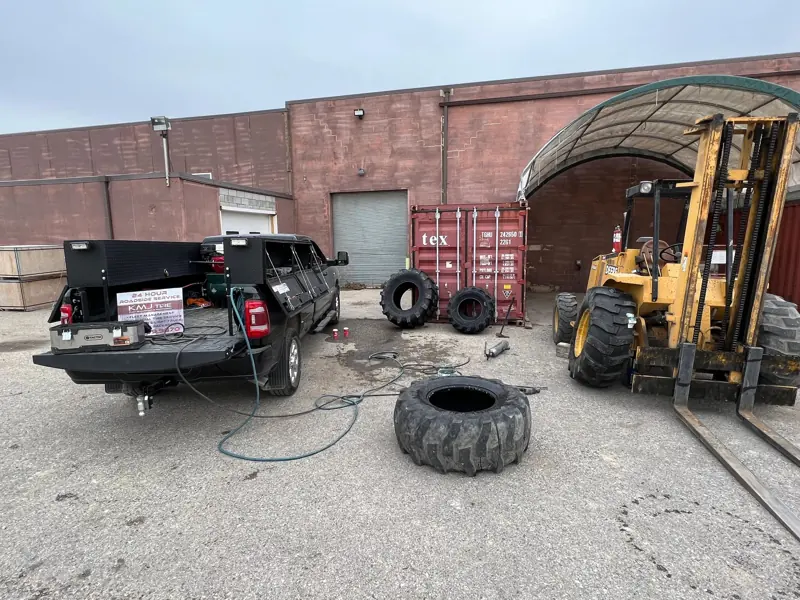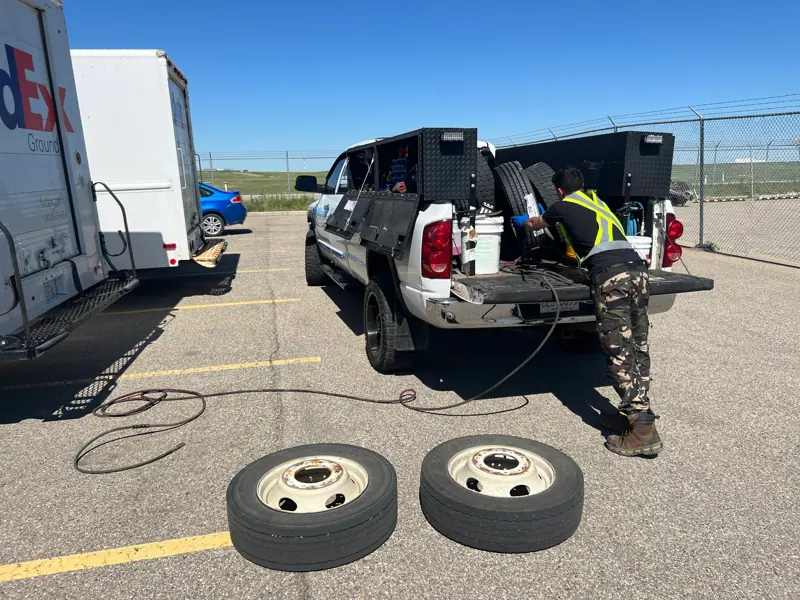
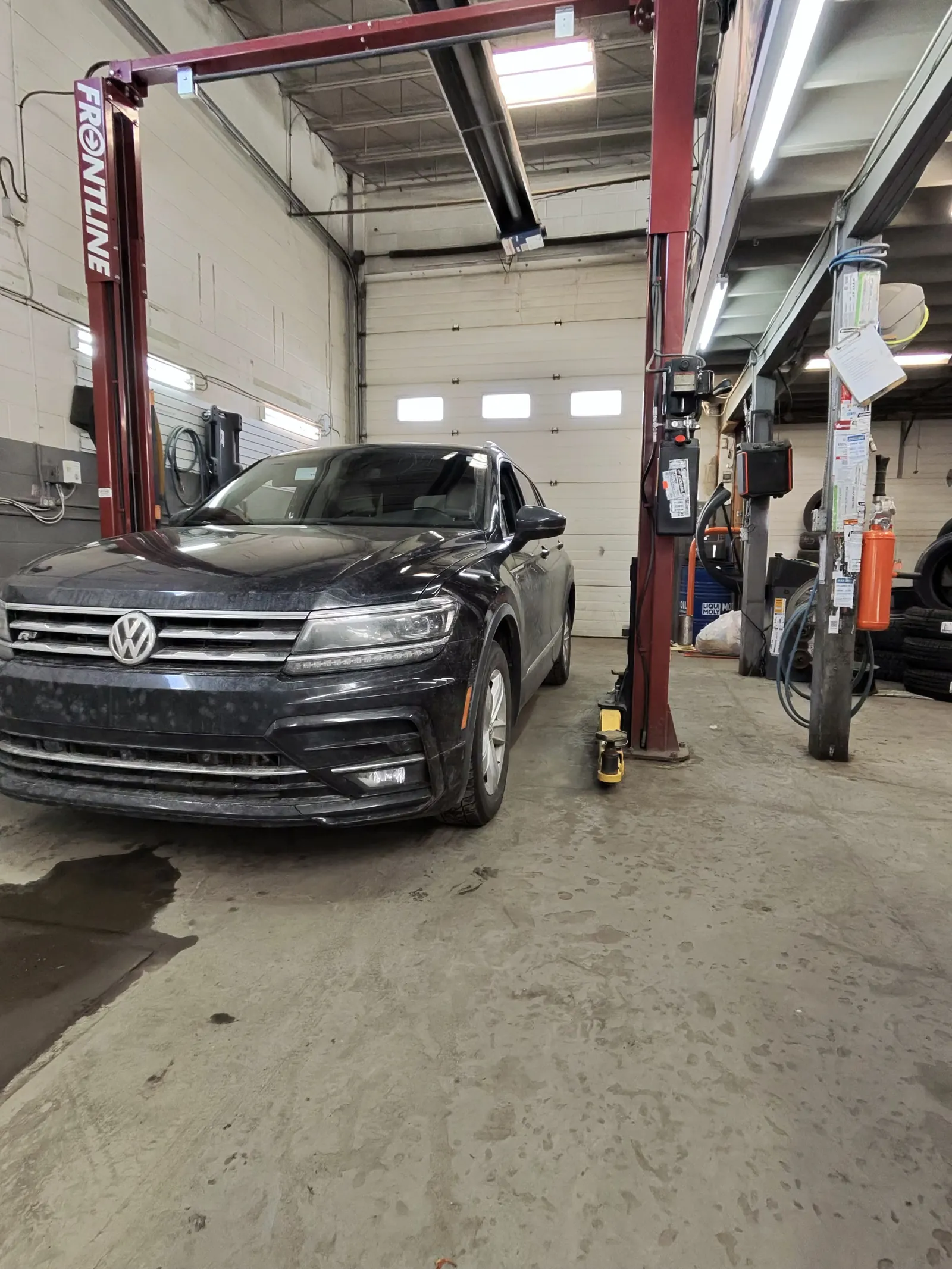
Two vehicles in one driveway do not necessarily need the same tire decision. One might leave before sunrise for an industrial shift while the other makes short afternoon trips. A family crossover may carry several people and their equipment; a smaller car may spend most weekdays at a park-and-ride. Their calendars overlap, but their tire sizes, condition, usage and service requirements remain separate.
The useful household question is not simply which tires to buy. It is how to keep both vehicles ready without confusing their equipment, overlooking the less-used car or making two service visits harder than they need to be. A coordinated plan can reduce avoidable disruption. It cannot make incompatible parts interchangeable or make worn tires suitable for another winter.
This guide builds that plan around two clearly identified vehicles. It uses illustrative households rather than customer stories, makes no assumptions about available inventory or prices, and separates decisions a household can organize from judgments that require a tire professional. Begin with the vehicles you actually have, not the matching sets you hope will fit them.
1. Give each vehicle its own page
Start with a sheet for Vehicle A and a sheet for Vehicle B. Use names everyone recognizes, such as the blue hatchback and the family SUV. Add the year, make, model and relevant trim. Record the current tire size as written on each vehicle, and photograph its tire-information label. If an alternate winter setup is already in use, record that separately instead of assuming it matches the original specification.
Each sheet should also identify the regular driver, the person arranging tire service and the place where the seasonal set is stored. These might be three different people. A household often has plenty of information but keeps it scattered: one person remembers a warning light, another has the previous invoice, and a third knows which storage bags belong to which car.
Keep a space marked unresolved. A missing measurement, uncertain tire history or unreadable wheel marking belongs there. Do not turn an uncertain detail into a confident answer because the two vehicles look similar. The sheet is a way to bring useful evidence together, not a substitute for fitment information.
For a plain-language starting point, use KMJ's guide to reading tire sidewall information. Copy the actual markings before interpreting them. A clear photograph usually communicates more than a remembered fragment such as seventeen-inch winters. Keep the picture attached to the correct vehicle record so it does not become another unidentified image in the family message thread.
2. Map the journeys before choosing the equipment
Write down a normal week for each car. Include departure times, the places it must reach and whether another vehicle is genuinely available if conditions or tire concerns interrupt a trip. A parent who needs the crossover for an early shift cannot also leave it home as the household's backup vehicle. A plan that depends on both uses at once is already broken.
Distinguish necessary trips from flexible ones. School transportation, shift work and fixed medical visits have different scheduling constraints from an errand that can move to another day. This does not change a tire's physical capability. It changes how much advance planning the household needs and how disruptive an unresolved problem would be.
Consider the variety of Calgary travel without pretending to forecast today's roads. A route might combine a residential hill, a major road and a workplace parking area. Another might stay close to home but happen after dark. Record the actual route pattern rather than giving one driver the vague label city use and the other highway use. Those labels can hide important differences.
Then compare needs with a professional. KMJ's winter tire selection information for Calgary provides a starting point for that discussion. Bring separate requirements for the two vehicles. Choosing equipment for the more demanding schedule first may help organize the conversation, but it does not justify leaving the second vehicle with an unsuitable set.
3. Separate household convenience from vehicle compatibility
A second car can provide transportation while the first is receiving tire service. That is a useful form of sharing. Moving tires or wheels between the cars because one set is already out of storage is a different matter and requires proper compatibility verification.
Treat a tire-and-wheel assembly as identified equipment for a particular application until a professional verifies otherwise. Similar appearance, the same wheel diameter or the same vehicle manufacturer is not enough evidence. Tire Rack's explanation of how wheel fitment is checked identifies factors including bolt pattern, centre bore, offset, clearance and load capacity. This guide does not provide a universal interchangeable-wheel formula.
Give every seasonal set a household label that refers to its intended vehicle. If the household changes a car, do not automatically transfer that label to the replacement vehicle. Keep the old vehicle information with the set until the new application is checked. This is particularly important when a purchase or lease change happens between the spring removal and autumn installation.
For the tire side of that discussion, review tire load-index requirements before choosing replacements. The point is not to memorize every number. It is to avoid letting a convenient storage arrangement answer an engineering question. A set that cannot be positively identified should remain an unresolved item, not become the default choice because it is easiest to reach.
4. Compare two complete options, not two labels
Households sometimes begin with a rule such as both cars must get the same brand or the smaller car can use whatever is left. Neither rule starts with the requirements of the individual vehicle. Ask for a complete suitable option for each application, then compare the reasons behind it.
Keep tire category, exact specification, condition and seasonal routine separate on the page. A discussion about all-weather products is different from a discussion about dedicated winter sets. The right comparison also includes what happens to the vehicle outside winter, whether another seasonal set already exists and whether its condition has been assessed.
Use KMJ's all-weather tire information for Calgary drivers and all-season tire selection guide to prepare distinct questions. Do not treat the names as interchangeable. Do not assume two vehicles need identical purchases merely because their drivers live at the same address.
The household can choose to standardize simple habits even when the equipment differs. Both drivers can use the same place for invoices, the same method of reporting concerns and the same calendar for reminders. Standardize the organization; preserve the vehicle-specific decisions. That distinction is useful when one car already has a suitable winter set and the other needs a completely new plan.
5. Take inventory before comparing costs
Count what is actually present. Does Vehicle A have four loose seasonal tires, or four tires already mounted on wheels? Is Vehicle B's set in the garage, at another family member's home or somewhere else? Are all four items identifiable? Make an inventory before deciding how simple either changeover will be.
Record what can be seen and what still needs assessment. An inventory entry might say four mounted assemblies located, vehicle label confirmed, condition assessment pending. That is more honest and useful than writing winter set ready when nobody has examined it since spring. Locate any related paperwork at the same time.
Do not let a neat stack of bags stand in for a condition decision. The U.S. Tire Manufacturers Association's guidance on previously used tires explains that some damage and improper repairs cannot be assessed from the outside and require demounting and professional inspection. Finding the set establishes possession, not fitness for another season.
KMJ's seasonal tire changeover information helps frame the next discussion: identify what equipment exists, explain its configuration and ask what service is appropriate. This reduces the chance of arranging a visit on the mistaken assumption that a loose set is already mounted or that a missing tire is stored with the other three. Inventory first, condition assessment next, service plan after that.
6. Use one household checklist with separate results
A shared checklist is helpful when it prevents omissions. It becomes unhelpful when a checked box for one vehicle is quietly taken as evidence for the other. Write two results next to every item. The family SUV's seasonal set being assessed tells you nothing about the hatchback's set.
Useful checklist headings are identification, condition questions, specification questions, needed service, storage location and next action. Under each heading, add a date and the person responsible. Avoid a single large winter ready box with no explanation of who checked what. The aim is a record another household member can understand without a long telephone conversation.
Record concerns in ordinary language. A driver might report a repeated warning, a recent impact or a recurring need to add air. Note which vehicle, when it happened and whether the symptom has changed. Do not diagnose a cause from the pattern alone. A concise observation is more useful than a confident guess that later gets copied into the service request as fact.
KMJ's practical tire-maintenance guidance can support this routine. The household checklist should remain short enough to use. If it expands into several pages of unexplained abbreviations, simplify it. The best record is the one both drivers can keep accurately, especially during a busy week when neither person wants another administrative task.
7. Do not let low mileage erase the second car
The vehicle used less often can disappear from household planning. Its driver may assume the frequent commuter receives attention because it needs more, while the person arranging service assumes the quieter car must be fine because nobody mentioned it. Both assumptions leave a gap.
Make the second car's actual condition visible rather than comparing mileage alone. Ask whether its seasonal tires have been identified, whether concerns were noted at the last removal and whether the intended driver has raised any new questions. A short trip still requires a suitable, serviceable tire setup. Distance does not resolve a known defect or an unknown specification.
Avoid estimating remaining service life from a photograph or a remembered number of winters. NHTSA's TireWise maintenance and aging guidance describes why tire condition and aging deserve attention alongside tread wear. Use the tire and vehicle manufacturers' guidance and a professional assessment rather than adopting a household-wide replacement birthday.
Place the less-used vehicle on the same planning calendar with its own actions. It might not require the same work or spending as the main commuter. It still needs an explicit decision. A line reading assessed, existing set suitable for the intended application communicates something useful; a blank line communicates only that nobody has finished the question.
8. Prioritize a condition concern before a preference
Separate what needs to be resolved from what would simply be nice to change. A question about damaged tires is not in the same category as a preference for a different-looking wheel. A household comparing two vehicles can easily mix those decisions into one shopping conversation and lose track of which problem matters first.
Use three columns: assess before use, resolve before seasonal service, and optional preference. The first column is for concerns that need professional direction before further driving. The second is for issues such as incomplete equipment identification or missing service information. The third is for nonessential preferences that can be considered after the suitable options are known. A household member should not decide that a concerning condition is safe merely by moving it into a less urgent column.
If a tire has a suspected puncture or recurring air loss, arrange an assessment rather than promising that it can be fixed. KMJ's tire puncture assessment and repair information explains the service category; suitability for repair depends on the actual tire and damage. Do not transfer the problem tire to the less-used car to keep the main vehicle moving.
This ordering can make a budget discussion more honest. First establish what is required for each vehicle. Then compare suitable alternatives. A household that starts with a spending ceiling before understanding a condition problem may build a plan that cannot safely be carried out.
9. Build a two-vehicle comparison with separate totals
Request a complete written description of the proposed tire service for each vehicle. Keep tire specifications, quantity, applicable work and any additional required items distinguishable. Confirm the current total directly; this article does not supply prices, discounts or availability.
Do not divide a combined household total in half and assume each car represents the same expense. The vehicles may require different tire sizes, different equipment or different work. An existing suitable mounted set creates a different starting point from four loose tires or no usable seasonal set at all.
For each alternative, write what it solves and what remains unresolved. An option that looks less expensive may exclude something another option includes. Conversely, a higher total may reflect requirements of the application rather than a meaningful benefit for the other vehicle. Ask for clarification before comparing the numbers.
KMJ's budget-versus-premium tire comparison is useful preparation for this conversation. Use it to form questions, not to assign one household member a prestige category and the other a leftover category. Both vehicles need appropriate tires. Their drivers can have different suitable choices without one person being treated as the less important driver.
Keep any financing question separate from product suitability. A payment arrangement does not establish that a tire specification is correct, and an assumed future promotion should not be the basis of the household's readiness plan.
10. Compare the seasonal routine, not only the purchase
A two-car plan includes more than the next transaction. Think about where each set will be kept, who can move it, how much service time the household can arrange and how the vehicles will be used through the year. These considerations do not replace technical requirements; they help choose among suitable options.
Sketch one year for each car. Mark the points at which a seasonal decision, condition assessment or planned service will need attention. Do not put a fixed tire lifespan into the sketch. Future use and assessed condition will influence later decisions. The calendar is a reminder to review, not a forecast of how long rubber will last.
A household with existing winter assemblies for one vehicle might keep that routine while exploring a different suitable plan for the second. There is no organizational prize for forcing both cars into an identical purchase cycle. If their needs differ, the calendar should show the difference plainly.
When reviewing tire-buying options in Calgary, explain what the household already owns and what it can realistically manage. Include storage and transportation constraints early. Those facts are more useful than selecting equipment first and discovering afterward that nobody can retrieve the second set or leave both vehicles for service on the same morning.
11. Decide whether to stagger the service visits
Two vehicles being serviced on the same day can be convenient, but it can also remove the household's only transportation. Compare a same-day plan with separate visits before choosing. Confirm actual service availability and duration directly rather than treating an estimate from a previous season as a promise.
A staggered plan may let the first finished car provide transportation for the second visit. That only works if the drivers and their destinations make it practical. Draw the sequence: who drives each car, where the seasonal equipment goes, how each person returns home and who retrieves the completed vehicle. A simple timeline often reveals an impossible assumption.
Do not solve a scheduling conflict by continuing to use a vehicle with a concern that requires assessment before driving. Ask for direction about that vehicle separately. Nor should a household delay necessary work solely to make the two invoices happen on the same day.
Use KMJ's online service-request page with accurate details for the intended vehicle, then verify the confirmed arrangement. If discussing two cars in one exchange, label them clearly throughout. A request for the hatchback should not inherit the SUV's tire size, driver name or equipment description because it was copied from the previous message.
12. Consider location as a practical constraint
A household may have one vehicle near home and the other near a workplace across Calgary. The useful service plan accounts for where the vehicles and seasonal sets actually are. It does not assume that the easiest arrangement for one automatically suits the other.
If exploring mobile tire service in Calgary, ask whether the requested work, location and conditions are suitable. Do not assume every task can be done at any curb, parkade or workplace. Provide the relevant information and let the service provider confirm the arrangement. An option listed online is not a guarantee of a particular visit or time.
Review the published KMJ service-area information before building a plan around travel or mobile availability. Explain access constraints without oversharing unrelated household details. The aim is to resolve the practical question of where the work can occur, not to create a detailed public record of when the house is empty.
Sometimes the simplest decision is one planned visit for each vehicle at a confirmed location. Sometimes another supported arrangement better fits the family. Compare complete arrangements rather than choosing from a label such as mobile or in-person before anyone has checked the actual requirements.
13. Keep the two seasonal sets physically distinguishable
When both sets are stored together, identification should survive more than one person's memory. Use durable external labels that identify the intended vehicle and the season or removal date. Keep any wheel-position notes exactly as provided, and do not confuse an old position label with instructions for the next installation.
Separate the two sets clearly. If bags are replaced or the storage area is reorganized, transfer the identification before the items become mixed. Put supporting photos in the correct vehicle folder. A label saying SUV winters is less helpful if the household owns two SUVs or has replaced one since the label was written.
Do not stick a household label over tire markings that a professional needs to read. Do not alter the tire or wheel to make it look newer or easier to identify. Identification is administrative: its purpose is to carry accurate information forward, not to modify the equipment.
Prepare each vehicle's set independently for the confirmed service arrangement. Count it again before departure. Four items from the correct stack are not the same as any four items that look alike. The mistake is avoidable, but only if the household treats identification as part of preparation rather than an explanation to reconstruct after arrival.
14. Plan the equipment movement before lifting anything
Once the service arrangement is confirmed, establish how the seasonal equipment will reach it. A two-car household can accidentally make the larger vehicle the transport solution for every task, even when its driver needs it elsewhere. Decide the sequence before loading.
Ask for help if the equipment is awkward or beyond what someone can comfortably handle. Do not rely on an unwilling family member to lift heavy assemblies simply because the calendar is tight. Check that the chosen transport arrangement is appropriate for the vehicle and that the load can be secured without blocking the driver's view or essential access.
This article is not a cargo-restraint specification. Follow the vehicle manufacturer's loading guidance and get suitable assistance where needed. If there is no appropriate way to transport the set, resolve that before the planned visit rather than arriving with loose, unsecured equipment.
A short preparation list can be enough: correct set identified, movement arranged, related information available, transportation for the driver confirmed. Assign each task to a person. The purpose is not to create a complicated household project. It is to prevent a predictable last-minute scramble from undoing an otherwise sensible two-vehicle tire plan.
15. Keep the driver's observations attached to the car
The person arranging the visit may not be the person who regularly drives the vehicle. Before the handoff, collect a short description of any concern from the regular driver. Record observations, not a guessed diagnosis or a repair request copied from an internet discussion.
For example, a driver might report when a vibration started, whether a warning repeats or that a tire needed air more than once. Include recent relevant events, such as an impact, without deciding what those events damaged. If a concern makes continued driving uncertain, seek professional direction before the trip to service.
KMJ's wheel-balancing service information can help explain one tire-related service, but a vibration is not automatic proof that balancing is the answer. Problems outside tire service belong with an appropriate qualified provider. KMJ's scope is tires and oil changes, not general mechanical work.
Keep Vehicle A's observations out of Vehicle B's request. This sounds obvious until two drivers answer the same message thread and a symptom becomes detached from its vehicle. A clear label and a short factual description are more useful than a long shared conversation that the service provider must untangle.
16. Do not copy one vehicle's pressure target
Sharing a driveway does not give two vehicles the same recommended tire pressure. Keep the applicable information with each car. NHTSA advises using the vehicle manufacturer's recommended cold pressure, typically found on the vehicle label or in its manual, rather than using the tire sidewall's maximum-pressure marking as a routine target. Ask about the correct guidance for an approved alternate setup instead of improvising.
For household organization, put the relevant label photograph where the regular driver can find it. Do not write one memorable number on the garage wall and assume it applies to both vehicles. If the manufacturer specifies different front and rear values or particular conditions, keep those distinctions intact.
Choose a recurring opportunity for each driver to perform the checks appropriate to the vehicle and manufacturer guidance. The household can share a reminder without sharing a specification. A pressure warning or repeated need to add air should lead to the appropriate assessment, not just repeated clearing of the warning.
The important two-car habit is verification at the point of use: which vehicle is this, which information applies, and is there an unresolved concern? The fact that someone checked the other car yesterday does not answer any of those questions for this one.
17. Keep matching decisions within the correct application
Four tires stored in one group may still differ in model, specification or condition. Identify the complete set before assuming it is matched. Do the same for the second vehicle, even when all eight tires were obtained at roughly the same time.
Transport Canada's winter-tire guidance recommends installing winter tires in sets of four and explains the importance of appropriate matching. Michelin's replacement-size guidance also directs drivers to vehicle-approved specifications. Vehicle-specific instructions matter, including intentionally different front and rear sizes on some applications.
A household should therefore resist making one apparently stronger set by collecting tires from two different cars. The relevant question is whether the complete proposed setup is suitable for that particular vehicle. Ask a professional to resolve a mismatch rather than assuming that a pair from the other stack solves it.
Write down the outcome for each vehicle independently. If one requires replacement work and the other does not, record why. That explanation helps the household understand unequal spending without turning the difference into a fairness argument. Fair planning means meeting each vehicle's real requirements, not forcing every line on two invoices to look the same.
18. Work backwards from the first inflexible week
Identify a week when the household has little flexibility: overlapping shifts, several fixed destinations or another obligation that removes the usual backup driver. Use that week as a planning constraint, not as the day to begin discovering what equipment exists.
Before it arrives, resolve identification, obtain condition assessments and confirm the service arrangements that are actually available. Leave room for an unexpected finding. A professional may need more information or may determine that the planned set cannot be used. The household should have an alternative transportation plan that does not depend on ignoring that result.
Separate confirmed events from hoped-for events on the calendar. Equipment has been located is confirmed. A suitable replacement will certainly be available tomorrow is not confirmed unless the provider has actually verified the relevant details. Avoid building several dependent family commitments on the second kind of statement.
For product research, KMJ's tire-selection page for Calgary vehicles can begin a discussion. Verify current specification, availability and total directly. The calendar should reflect those answers, not a product image or an old message.
This backwards approach is especially useful for two cars because a small delay on the first can disrupt the second. Creating a little practical flexibility is more useful than pretending that every stage will finish exactly when expected.
19. Example: the early-shift car and the family crossover
Consider an illustrative household with a compact car used for early shifts and a crossover used for children, errands and occasional trips west. The compact has an identifiable mounted winter set. The crossover's seasonal equipment is stored elsewhere, and the family is not yet sure whether it consists of loose tires or complete assemblies.
A weak plan would describe both vehicles as having winters, request two identical services and assume the crossover can shuttle everyone on the day. The missing details would surface later, when the household has the least flexibility to address them.
A better plan starts by locating the crossover equipment and completing separate condition and specification discussions. The compact's driver describes any concerns from its last winter. The crossover's driver supplies the exact vehicle information and intended use. Neither set is declared ready simply because the other one is assessed.
The household then maps two possible sequences. In the first, the compact receives service while the crossover remains available. In the second, the crossover goes first because its driver's calendar makes that easier. The choice depends on verified service arrangements and any condition issue that changes whether either vehicle should be driven. There is no universal rule that the larger or more expensive car must go first.
If the crossover needs additional equipment, its decision remains separate from the compact's completed work. The household does not move pieces between the sets to preserve its original schedule. It asks for the suitable options and adjusts transportation around the answer.
The benefit is not identical equipment or identical bills. It is that each car has an understood status and the family knows which journeys remain covered while work is being completed. That is a meaningful household result, even when the two vehicle plans look quite different.
20. Example: two adults with overlapping work schedules
Now consider two adults who each need a vehicle for work. Neither can routinely provide a midday ride for the other. They have different tire sizes and both keep seasonal equipment at home. One driver is comfortable organizing the service; the other usually notices changes in the vehicles first.
The household's main constraint is not selecting a common brand. It is finding a feasible service sequence without losing both commuting options. They first complete two separate assessments, then discuss actual available arrangements. They do not reserve an imaginary time window based on how quickly a previous visit happened.
Each person reviews the information for the vehicle they drive. The organizer handles the calendar, but does not have to guess whether the other driver experienced a repeated warning or a vibration. Concerns are passed along before the visit, while the details are still clear.
When comparing suitable options, they maintain separate totals and a combined household view. This allows them to see the overall commitment without disguising differences in required work. They also keep a modest amount of calendar flexibility for an unexpected result. They do not label one vehicle finished until its own service and any follow-up instructions are understood.
If an alternative transportation arrangement is needed, they settle it before the relevant day. If a supported service option can reduce the disruption, they confirm its suitability rather than assuming it is available. The two adults can share the administrative burden even though their schedules and vehicles remain different.
This example is deliberately about coordination, not a promised service duration or a suggested purchase. Its useful lesson is that the person best at arranging a visit and the person best positioned to describe the vehicle can contribute different information without either taking full responsibility for both cars.
21. Review the completed work separately
After service, review the result for the vehicle that was actually worked on. Confirm what was done, which equipment is on it and what instructions or unresolved items remain. Ask for clarification while the details are available. Do not assume the second vehicle will receive the same instructions.
Keep the paperwork distinguishable. A household folder can contain both records, but each document should still identify the correct application. Record where the removed equipment is going and whether any condition notes affect its future use. A concern identified during removal should not vanish when the bag is tied shut.
Follow the service provider's and equipment manufacturers' instructions for any follow-up. Do not copy a wheel-fastener specification from the other car or invent a universal recheck schedule. If a new warning or concerning symptom appears, seek appropriate advice rather than treating the household checklist as proof that nothing could be wrong.
KMJ's Calgary tire-service information can help identify the tire-service discussion to have. Work outside KMJ's scope requires an appropriate provider. A finished tire visit is not a general inspection certificate for every vehicle system.
Finally, tell the other household members the actual status in a short sentence: completed, awaiting a specific answer, or not yet arranged. Avoid a vague all sorted if one car still has an open issue.
22. Design a backup around people, not spare assumptions
A backup plan should describe how people will reach essential destinations if one vehicle becomes unavailable. It should not depend on borrowing unidentified wheels, ignoring a repeated warning or using a tire with an unresolved concern.
Write down a realistic alternative for the most time-sensitive journeys. Depending on the household, that may mean rescheduling a flexible task, arranging a ride in advance or using another appropriate transportation option. Confirm that the option actually works at the required time. An available vehicle without an available driver may not solve the problem.
Keep this discussion separate from emergency roadside decisions. If a vehicle develops a problem during travel, follow the applicable roadside and emergency guidance and seek the appropriate assistance. A household's preferred schedule should never determine whether it continues driving with a suspected serious tire problem.
The practical value of a backup is psychological as well as logistical. When the family already knows another way to handle an essential trip, it is easier to accept an assessment that says the original plan must change. The household can make a considered tire decision without feeling that one delayed errand justifies taking a shortcut.
23. Revisit the plan when the household changes
The plan needs another look when a vehicle is replaced, a driver changes jobs, a commute moves or the household's regular trips become different. Do not wait for the next seasonal reminder if the underlying application has changed.
A new driver taking over one car should receive the correct vehicle information, current concerns and service records. A vehicle sold during the summer should not leave its seasonal set silently assigned to its replacement. If the household reduces to one car, reassess which stored equipment still has a verified use rather than keeping an outdated two-car inventory indefinitely.
Review decisions, not just dates. Did the chosen service sequence work? Was a set difficult to retrieve? Did one driver have information that reached the provider too late? These are practical changes the household can make without pretending to forecast tire wear or rewriting technical specifications.
For further reading, KMJ's Calgary tire education articles cover individual tire questions in more detail. Use the relevant article to prepare a focused discussion about your actual vehicle. The household plan should remain a coordinator for those decisions, not grow into an improvised manual that substitutes for manufacturer information and professional assessment.
24. The two-car plan in one page
Before considering the household ready, check that each vehicle has its own answer to these questions:
- Which exact vehicle and tire application are we discussing?
- What seasonal equipment is present, and where is it?
- What condition or specification questions still need a professional answer?
- What suitable service or replacement option has actually been confirmed?
- How will the equipment and the driver reach the agreed location?
- Which essential journeys need another transportation arrangement?
- What work was completed, and what follow-up remains?
Two complete answers matter more than one tidy household slogan. The family does not need identical tires, identical spending or identical service days to have a coordinated winter plan. It needs suitable equipment for each application, clear decisions about condition, and a realistic way to keep people moving while necessary work is arranged.
Keep the organization simple enough that both drivers can use it. Resolve uncertainty before it becomes a rushed assumption. Then let each vehicle's verified needs, rather than the convenience of a shared driveway, determine its tire plan.