Two tire quotes arrive on your phone. One shows a neat price for four tires. The other lists tires, installation, balancing, supplies and tax. The first number looks better, but you do not yet know whether the two proposals describe the same purchase. Before deciding which one costs less, you need to know what would actually leave with your vehicle.
A useful comparison begins with a written specification, not a price ranking. The exact tire, quantity, installation scope, existing wheel condition, payment terms and exclusions all affect the decision. This guide walks through a consumer comparison worksheet without invented prices or assumed inclusions. The examples are hypothetical purchasing situations, not KMJ customer stories or advertised offers.
KMJ provides tires and oil changes. The linked main-site pages can help you prepare a tire enquiry, but a general service page is not a personalized quote. Confirm the current product, fitment, availability and written total directly before authorizing work. Mechanical concerns belong with an appropriate repair facility; a tire proposal should not be treated as a promise to resolve every vehicle symptom.
1. Write one request that every proposal must answer
Start with a short description of the vehicle and the purchase you want. Include the year, make, model and trim, plus the tire size information from the vehicle label and current tires. If the wheels or vehicle have been modified, say so. A seller needs that context to check suitability rather than merely match a familiar size from a catalogue.
Then describe your actual use in plain language. Perhaps the vehicle carries you across Calgary on weekday mornings, occasionally travels on highways and cannot be left unused when roads are snowy. Another driver might be buying a summer replacement set while already owning separate winter tires. Those are different requests even if the vehicles share a tire size. A concise use description keeps a low price from steering you toward the wrong category.
Put the quantity and desired service in the request. Four loose tires supplied for later installation are not equivalent to four tires installed on your existing wheels. A tire-and-wheel package is a third scope. If you are uncertain which arrangement makes sense, ask for separately labelled alternatives rather than one blended proposal that leaves you guessing.
Keep the original request beside every response. When a proposal changes an assumption, mark the change explicitly. For preparation, KMJ's guide to buying tires in Calgary provides broader shopping context. Your personal worksheet should remain narrower: the vehicle, use, quantity and work being priced. That fixed starting point makes later questions shorter and makes revised proposals easier to recognize.
2. Identify the exact product before comparing totals
A brand name alone does not identify a tire. A proposal should distinguish the model, size and relevant specification, not simply say that it includes four tires from a familiar manufacturer. Product families can contain different categories and fitments. Similar model names can also hide a different generation or specification. Write the exact description as quoted instead of shortening it into an ambiguous label.
Ask the seller to identify the manufacturer part number or another unambiguous product reference when needed. This is particularly useful when two listings appear identical but their descriptions differ. You are not trying to become a catalogue expert. You are giving the seller a concrete way to explain whether both proposals supply the same product or whether one is an alternative worth evaluating separately.
Do not erase an important difference to make the spreadsheet tidy. If one candidate has a different load or speed specification, leave that visible and seek a fitment explanation. The markings are not decorative details that can be averaged away. KMJ's tire sidewall information for selecting a replacement is a useful reference when transcribing what is printed on your current tires.
If you prefer to explore options first, use the Calgary tire selection catalogue as a starting point, then request confirmation of the exact item. A visible product listing does not establish current stock, delivery timing or installed cost. Your comparison row is complete only when the seller has identified what they are proposing for your vehicle and any remaining suitability questions have a clear owner.
3. Keep seasonal categories in separate comparisons
A winter set, an all-weather set and an all-season set are not interchangeable entries in a lowest-total contest. First decide which operating need you are solving. If that decision is still open, compare each category as a separate plan. Otherwise, a cheaper proposal may appear to win merely because it answers a different question from the one you intended to ask.
Transport Canada's guidance on using winter tires explains the peaked-mountain snowflake marking and recommends winter tires in sets of four to support stability and control. The marking addresses defined snow-traction requirements; it does not turn every marked product into the same tire. Do not infer identical ice behaviour, noise or wear from a shared symbol.
For a dedicated cold-season purchase, review winter tire options for Calgary driving and ask for candidates within that intended category. If you are considering a year-round arrangement, the separate page on all-weather tires for Calgary use can help frame the discussion. The reason for keeping those proposals separate is clarity, not a claim that one category suits every household.
A vehicle with a separate winter set may instead need all-season replacement tires in Calgary for its other driving season. Record that existing arrangement. The seller should not have to infer it from the month when you ask. Once the intended category is fixed, cost comparisons become meaningful because each proposal is trying to meet the same seasonal need.
4. Treat fitment as a pass-or-resolve question
Make a suitability column before making a price column. Its entries should be confirmed, unresolved or unsuitable for the proposed use. A proposal with unresolved fitment cannot sensibly outrank a confirmed one just because its initial total is lower. Resolve the specification with the seller and vehicle documentation before considering the financial trade-off.
Pay attention to the vehicle's required load capacity. A similar-looking size or an attractive price is not a reason to accept an inadequately specified tire. KMJ's load-index explanation for tire buyers can help you understand the terminology, while the actual replacement selection must be checked against the vehicle's requirements. Do not substitute a general article for a vehicle-specific decision.
Tell the seller if the front and rear fitments differ, or if you are uncertain whether the current tires match the vehicle label. Photograph readable markings while parked safely. There is no need to crawl beneath a vehicle or move it into an unsafe position for a quote. A missing detail can be collected later under suitable conditions; a guess presented as a fact is harder to correct.
If a proposal includes wheels, ask for the wheel specification and compatibility confirmation as part of that separate package. Tire size alone does not settle wheel fitment. Modified vehicles, unusual combinations and unresolved clearance questions need qualified assessment. Declining to rank an incomplete proposal is not indecision. It prevents a financial comparison from silently approving a technical choice that nobody has actually checked.
5. Define what installation means on each document
The word installation is too broad to carry an entire comparison. Ask what work the quoted line includes and which assumptions it makes about your existing tires and wheels. A loose tire mounted to a wheel is a different task from exchanging complete mounted assemblies. A proposal should describe the actual work, not leave you to infer it from a promotional heading.
If you already own winter tires mounted on compatible wheels, say that in the initial request. If the tires are loose, state that instead. KMJ's seasonal tire change service information provides a relevant starting point for that distinction. Your written response should then confirm the scope for your own equipment, including any condition-related limitations that cannot be settled remotely.
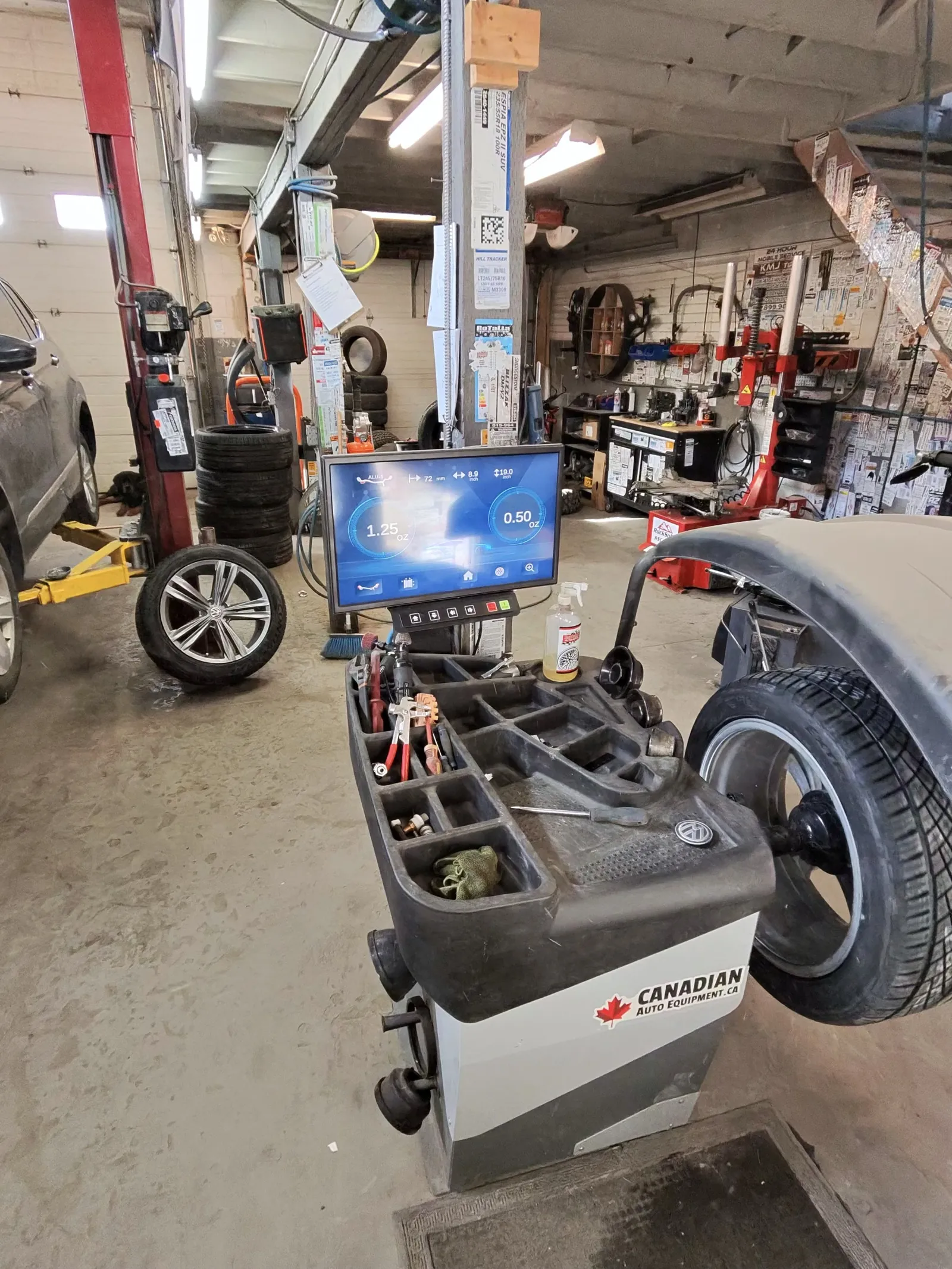
Check balancing as its own inclusion rather than assuming it from a single broad word. KMJ's wheel balancing service details explain the tire-service topic, but the comparison still needs a yes, no or clarification beside the proposed work. An omission is a question to resolve, not proof of bad intent. Different document templates put the same information in different places.
Ask how any additional work would be proposed and authorized if inspection reveals a problem. You should be able to distinguish the agreed base scope from a potential change. Do not insert an invented allowance and call the result a firm total. A clearly labelled unresolved item is more honest and more useful than a reassuring number that neither party has agreed to.
6. Separate valves, sensors and existing hardware
Small components can be easy to miss when a proposal focuses on four large tires. Ask whether valve-related parts or service are included, excluded or dependent on inspection. Record the answer in the same terms the seller uses. Do not assume that every vehicle uses the same valve arrangement or that a line labelled supplies covers every possible component.
If your vehicle has tire-pressure monitoring equipment, tell the seller about any existing warning and whether you are adding another wheel set. Ask which sensor-related steps apply to your vehicle and what is included in the proposed scope. This is a request for clarification, not a reason to assume that new sensors are always required or that existing equipment can always be reused.
Wheel-lock hardware deserves a practical note as well. Record whether you have the key and where it will be available when the work begins. If something is missing or damaged, disclose that before relying on a completion estimate. Do not authorize an undefined hardware charge simply to make the original quote appear complete; ask for the proposed solution and its cost once the condition is understood.
A good comparison can contain a conditional line. For example, it may say that a valve-related item awaits inspection and requires a separate explanation before authorization. The important distinction is between a condition you can resolve in advance and one that genuinely requires seeing the equipment. Keeping those categories separate reduces surprise without pretending that every tire service can be fully specified from a text message.
7. Read the total as a sequence of additions
Build the financial comparison from the written document rather than from memory. Begin with the product subtotal for the stated quantity. Add the included or separately priced services and any applicable charges shown by the seller. Then identify taxes and the final amount due. If the document omits a component, leave it marked unconfirmed until you receive a response.
There is no need to invent example dollar amounts to understand the arithmetic. Your worksheet can use words: product subtotal, service subtotal, other stated charges, tax and confirmed total. The same sequence works whether a seller bundles several components or lists them individually. What matters is that every entry can be traced to the proposal and that the final number covers the agreed scope.
Distinguish a cost already included in a bundle from an additional charge. Counting an included installation amount twice can make a fair proposal look expensive. Leaving out a separately listed item can make another look cheaper. Ask the seller to reconcile the sum if it does not match your reading, and retain the clarified document rather than relying on an informal explanation you may later misremember.
Rebates, conditional credits or financing terms, if actually offered in a current written proposal, belong in separate notes. Do not subtract a possible future benefit from the amount you must initially pay without showing that distinction. This article does not advertise any such program. The decision should remain understandable even if a conditional benefit does not apply to you or requires an action you choose not to take.
8. Compare collection, disposal and service location
Decide what happens to the tires being removed. You might want to retain a usable seasonal set, or you might intend to have worn tires handled through the seller's available disposal arrangement. State your preference and ask how the proposal treats it. Do not let a vague disposal line accidentally stand in for a decision to discard property you expected to keep.
If you retain tires or wheels, think about how they will get home. The comparison should describe whether you are taking loose tires, complete assemblies or nothing additional away. This is a logistics question rather than a reason to choose a tire model. Planning the handover beforehand avoids discovering at collection that the vehicle already contains passengers and equipment with no suitable room for the removed set.
For work away from a fixed premises, review KMJ's mobile tire service information and ask whether your specific task and location are suitable. Do not infer acceptance from a service description alone. The proposal should identify the agreed location and any relevant conditions, because a mobile-service plan and a premises-based plan may solve the same tire need in different ways.
Check the Calgary-area service coverage information before relying on a travel assumption. A location inside a broad map still needs practical confirmation for the proposed work. Write down any location-related charge or limitation provided by the seller. Compare the agreed arrangements, not an imagined convenience benefit that has not been offered for your address or vehicle.
9. Keep availability separate from permission to proceed
A quote tells you what is proposed; it does not necessarily reserve a product or confirm a completion time. Ask what is currently confirmed and what remains an estimate. This is especially important when the proposal depends on a particular product arriving or when you have requested more than one alternative. A tidy PDF is not, by itself, a reservation.
Record the issue date and any stated validity period. If no expiry is shown, ask whether the quoted terms still apply before accepting later. Do not invent urgency when none has been given. Equally, do not assume that a price or availability statement remains unchanged indefinitely. A brief written reconfirmation is more reliable than deciding based on an old screenshot whose context has disappeared.
Ask what happens if the specified tire is unavailable. A substitute should be identified and evaluated on its own suitability, scope and cost. The original brand name is not blanket permission to supply any model from that manufacturer. A clear preference such as requiring approval before substitution makes the purchasing decision easier to control without creating an argument after the fact.
Separate the date you would like the work completed from the date actually accepted by the service provider. If you need the vehicle for a planned trip, state that constraint without assuming it can be met. Your comparison can include confirmed timing and unresolved timing as distinct fields. Those entries often matter more to a household than a small difference between otherwise equivalent proposals.
10. Read warranty language as conditions, not a score
A long warranty headline can dominate attention, but it is not a complete description of value. Ask for the current written terms applicable to the exact product. Identify who provides the coverage, which events it addresses and what you would need to do to make a claim. Different kinds of coverage should not be combined into one imaginary promise that every future tire expense is covered.
A treadwear provision, a workmanship provision and a road-hazard arrangement, if present, address different questions. Do not assume that one implies the others. Likewise, a kilometre figure in a document is not a prediction of the distance you personally will obtain from a tire. Read exclusions, maintenance requirements and the method of any adjustment before assigning that headline much weight.
Ask which records should be kept. The invoice, exact product identification, installation date and relevant maintenance records may be useful, but the governing terms determine actual requirements. Save the applicable document with the purchase information rather than bookmarking a generic page that may later change. This is an administrative habit, not a claim that any particular warranty will accept a future request.
When comparing budget and premium tire choices, keep coverage beside the product characteristics instead of using it as a substitute for them. A more expensive candidate should have a reason that matters to your use. A less expensive candidate still needs suitable specifications. Neither the price tier nor a warranty headline removes the need to check the actual product and written conditions.
11. Separate replacement decisions from repair decisions
Sometimes a request for four new tires begins with one damaged tire. Before comparing replacement proposals, clarify the problem you are trying to solve. If a tire may be repairable, professional assessment determines the options. Do not treat a photograph, an internet rule or the existence of tread as proof that a repair is suitable.
KMJ's Calgary tire repair information can help you frame that enquiry. A repair proposal and a replacement-set proposal are not equivalent products, so place them in different branches of the decision. The first question is which options are appropriate for the actual condition and vehicle. Only then should you compare the cost and practical consequences of the suitable alternatives.
Avoid asking a replacement quote to explain symptoms outside its scope. Pulling, unusual vibration or other changes may require assessment beyond tires. Replacing a set does not promise to correct unrelated mechanical issues, and this guide does not imply that KMJ performs mechanical repair. Tell the relevant service provider what you noticed, and use an appropriate repair facility when the concern is mechanical.
If the tire is visibly damaged or the vehicle is behaving unsafely, do not continue driving merely to collect more prices. Arrange appropriate assistance and assessment. The purchasing worksheet is useful when you can make a considered decision; it is not roadside clearance. You can still request a written explanation of the proposed work without turning an urgent safety concern into a contest between incomplete remote estimates.
12. Build a comparison sheet that tolerates missing answers
Use one column per proposal and one row per decision item. Start with vehicle and intended use, then exact product, quantity, suitability, work scope, component assumptions, total, timing and terms. Add a source reference beside important answers. That can be a document date, a page number or the date of a written clarification. You should be able to explain where each entry came from.
Choose simple status labels: included, excluded, confirmed, conditional and unanswered. An empty cell is too easy to misread as zero cost or no concern. Unanswered means that the comparison is not finished. Conditional means that you know the condition but do not yet know its outcome. Those are different states and should remain different when you discuss the choice with another household member.
Do not assign numerical scores before deciding which requirements are essential. Suitable fitment, the correct category and an understood total are not small bonuses that can be outweighed by a pleasant colour scheme on a quote. Once the necessary conditions are satisfied, you can compare preferences such as the agreed service location, timing or documented product characteristics relevant to your use.
Keep notes concise enough to review on a phone. The comparison is a decision aid, not an attempt to copy every paragraph from each document. Retain the original documents separately. For ongoing tire-care background, the Be Tire Smart guidance for owners provides useful context, but your quote sheet should focus on what this purchase includes and what still needs an answer.
13. Work through an exact-product example
Imagine two written proposals for the same identified tire in the same quantity. Proposal A gives a product subtotal and says installation is extra. Proposal B gives an installed total with balancing explicitly included. There is no basis yet to declare A cheaper or B better. The two documents stop at different points in the purchase.
The next action is to ask A for the complete amount for the same installation scope, while checking the other inclusions in B. You are not asking either seller to copy the other's business model. You are asking each to describe the cost of the outcome you intend to buy. Once both have answered, place taxes and other stated charges on the same basis.
Suppose one response then identifies a valve-related item as conditional on inspection. Keep that condition visible instead of silently turning it into a fixed amount. Ask when the condition can be resolved and how any added work would be authorized. The comparison may now show one confirmed base total and one conditional component rather than a single falsely precise ranking.
This example demonstrates why the smallest first number is not always the lowest agreed purchase cost. It does not show that bundled pricing is always preferable either. A detailed unbundled proposal can be perfectly understandable once all components are stated. Your aim is to make the two outcomes comparable, then choose based on the actual scope and terms rather than the layout of the document.
14. Work through an alternative-product example
Consider a driver who receives one proposal for a dedicated winter model and another for a year-round all-weather model. Both sellers may have responded in good faith to a broad request for tires suitable for Calgary. Nevertheless, the proposals describe different operating plans. The driver should pause the price comparison and clarify whether a separate seasonal set is part of the intended arrangement.
If separate winter use is the chosen plan, ask both sellers for suitable candidates within that category. If a year-round plan remains under consideration, evaluate it separately against the driver's needs. The decision is not settled by whichever initial proposal has fewer line items. Category, suitability and intended use must be resolved before a meaningful total can be compared.
Now imagine that both revised proposals meet the same use requirement but recommend different models. Keep their exact identities and any documented differences visible. Ask what makes each candidate relevant to your stated driving, rather than demanding a universal ranking of brands. A useful answer connects the proposed product to a requirement you actually have; vague adjectives alone do not establish the benefit.
The final choice may reasonably differ between drivers. Someone who already owns compatible seasonal equipment has a different starting point from someone building a complete arrangement. This is why a good quote request includes what you own, not merely what you hope to buy. The comparison becomes more accurate when those existing assets are treated as facts rather than guessed from a vehicle registration or a brief conversation.
15. Plan future costs without pretending to predict them
The initial total is important, but it may not describe the full practical commitment. If one plan uses a separate seasonal set and another does not, consider the future handling, storage and changeover arrangements that each would require. Use actual current information where available and label future estimates clearly. Do not present an uncertain multi-year projection as guaranteed savings.
Avoid dividing a tire price by an advertised kilometre figure and calling the result your cost per kilometre. That calculation assumes you will achieve the figure, use the tire until that exact point and incur no other relevant expense. Those assumptions may not match reality. A transparent list of expected responsibilities is often more useful than a precise-looking ratio built on unsupported inputs.
Consider your own logistics in ordinary terms. Do you have an appropriate place for a second set? Can you transport it safely? Who will arrange the seasonal work? These questions do not require assigning a dollar value to every hour of your time. They identify whether the plan is workable for your household, which is a separate concern from whether the product itself is suitable.
If your circumstances may change, record that uncertainty instead of forcing a prediction. You might expect to keep the vehicle for an unknown period or move to a home with different storage options. Compare the proposals on today's known needs, then identify the assumptions that would change the decision. This approach gives you a defensible choice without promising a financial outcome that nobody can verify in advance.
16. Send one focused clarification message
After reviewing the documents, collect the unanswered items into one message. Start by identifying the proposal and vehicle, then list only the points that affect your decision. Ask for the exact product reference, the complete total for the stated scope and clarification of any conditional components. A compact set of questions is easier to answer accurately than several scattered messages with changing assumptions.
A useful wording is: please confirm whether this proposal covers the specified tires in the stated quantity, the described installation and balancing, applicable components, any other charges and tax. Then identify your particular unresolved issue. This is a template for obtaining facts, not a script demanding a discount or claiming that a competitor has offered something they have not.
If the response changes the product, quantity or scope, request an updated written proposal. Do not attach the new answer mentally to an old total and assume the combination is valid. A revised document should make the change visible. Keep the earlier version for context, but clearly mark which version is the one you are considering so another household member does not authorize the wrong arrangement.
For information about the business behind these resources, see KMJ's local Calgary tire service information. Use it to orient your enquiry, then obtain a response specific to your purchase. General website content and a personal quote have different jobs: one explains the service, while the other records the product, work and terms being proposed to you.
17. Make acceptance specific and keep a record
When you choose a proposal, identify the exact version you are accepting. Include the vehicle, tire description, quantity and agreed service scope rather than sending an isolated approval that could refer to several alternatives. If any component remains conditional, state how it will be resolved and what requires further authorization. Clear acceptance protects the shared understanding of the work.
Confirm the practical arrangements separately. That includes the service location, agreed timing, the equipment you are bringing and any wheel-lock key needed. KMJ's online tire-service booking page is a route for arranging service, but submitting a request should not be confused with every detail already being confirmed. Retain the actual confirmation and clarify anything that remains pending.
At handover, compare the invoice and supplied product information with the accepted proposal. If something differs, ask for an explanation before assuming either that the change is harmless or that it is improper. A corrected description may be a simple administrative matter; a substituted product or added scope needs a substantive explanation. The point is to resolve the difference while both parties can address it.
Save the final invoice, applicable product terms and any service instructions together. Those records are useful for later care and enquiries, and they also close the loop on the original comparison. You no longer have three competing documents and a vague memory of a conversation. You have a record of what you selected, what was supplied and which instructions apply to the tires now on your vehicle.
18. Questions that often confuse the comparison
Does a more detailed proposal mean the seller will charge more? Not necessarily. Detail describes the scope; it does not determine the final amount. A short document may summarize a complete bundle, while a longer one may break down the same work. Ask for the inclusions and compare the agreed totals. Judge the clarity of the answer separately from the amount itself, because those are two different qualities.
Can you compare a verbal figure with a written quote? You can use a verbal figure as a starting point, but write down what you believe it covers and request confirmation. Without that step, the quantity, product or installation assumption may be different. A remembered number is especially easy to detach from its original conditions after several conversations. Confirming the details is more useful than debating which figure you heard first.
Should you reject every proposal with an inspection condition? No. Some questions genuinely depend on the condition of the equipment. What matters is whether the condition is explained, whether you know how it will be resolved and whether additional work requires a further decision. An honest condition can be more useful than an unconditional-looking statement based on information the seller does not actually have. Keep the base scope clear while the remaining fact is established.
Is a larger product range evidence that a particular model is available? It is not confirmation of your requested item. A catalogue describes choices, whereas a current response establishes what can be supplied under the proposed terms. Check the exact model and size rather than treating a general brand listing as a reservation. If a substitute is suggested, return to the specification and scope comparison instead of assuming the change has no consequence.
Can you buy tires from one source and have them installed elsewhere? That is a separate arrangement to discuss with the intended installer before purchasing. Ask whether the work will be accepted, what documentation is needed and which responsibilities remain with the product seller. Do not presume either acceptance or refusal. Compare the complete agreed arrangement, including any relevant handling or return conditions, rather than combining unrelated advertised figures into a total nobody has offered.
What if the least expensive suitable option has less convenient timing? Decide whether the timing is a preference or a requirement. If the vehicle cannot meet an essential obligation under that plan, the proposal may not be workable for you even though its product is suitable. Explain the constraint honestly, and ask what can actually be confirmed. Avoid converting a preferred date into a promise that the seller never made.
How should two household members review the options together? Share the same versions of the proposals and the short comparison sheet. Have one person read back the product and work scope while the other checks the stated total and conditions. This catches misunderstandings without requiring both people to repeat every enquiry. If you disagree, identify the specific requirement behind the disagreement rather than arguing about an isolated number.
When is it reasonable to stop collecting more quotes? When you have enough suitable, clearly described options to make a decision within your needs, more documents may add little. There is no universal required count. If every additional proposal changes the intended category or introduces unanswered assumptions, first improve the original request. The quality of the comparison depends more on consistent information than on the number of screenshots in your message history.
19. A final review before choosing
Read each proposal once more without looking at its total. Can you identify the exact product, explain why its specification and category suit the vehicle, and describe the work being purchased? If not, return to the missing answer. A price cannot make an unclear proposal clear, and a familiar brand cannot fill in an omitted service scope.
Next, review the financial rows. Every amount should come from a current written statement, and the overall total should distinguish confirmed charges from unresolved conditions. Check that you have not counted a bundled item twice or treated an excluded item as included. Make sure the timing and availability notes describe what is actually confirmed rather than what you hope will happen.
Finally, consider the practical plan: where the work takes place, what you bring, what happens to removed tires and how future responsibilities fit your household. Related educational topics are available in the Calgary tire buying and care article library, but more reading is not always the next useful step. When one specific fact is missing, a focused written question can resolve more than another hour of broad browsing.
The strongest tire quote comparison ends with an understandable choice, not necessarily the shortest document or smallest opening number. You should be able to explain the selected tire, the agreed work, the amount due and the remaining conditions in a few sentences. That is enough structure to make a considered purchase while leaving technical fitment, inspection findings and product-specific terms with the people and documents qualified to establish them.