The first delivery of a shift rarely tells you what the last one will demand. A small hatchback can leave home carrying two insulated bags, collect a larger grocery order, cross the city on a faster road, and finish in a dark residential lane with a steep driveway. A tire decision based only on the distance from home to the first pickup misses most of that working day.
For Calgary delivery drivers, the useful starting point is the work itself: where the vehicle goes, what it carries, how often it stops, and what happens when it cannot safely continue. This guide builds a tire plan around those realities. It is for people using passenger cars, crossovers and light pickups for local deliveries, not a commercial truck specification manual. Vehicle and tire manufacturer instructions still control fitment, inflation, loading and maintenance decisions.
The examples below are hypothetical planning exercises, not customer stories or promises about income. None assumes that a tire makes an unsafe road safe. KMJ provides tire services and oil changes; mechanical concerns belong with an appropriate qualified provider. The aim is a practical working routine that protects people first and makes interruptions easier to manage when a delivery deadline is pressing.
Start with a working route, not a job title
Two people described as delivery drivers can need quite different tire conversations. One delivers lunches within a compact neighbourhood during daylight. Another carries groceries between outer communities and apartment towers through the evening. A third adds weekend parcel routes to an ordinary weekday commute. Their vehicles may share a tire size, but the exposure, loading and opportunity to postpone a trip are not identical.
Write down a representative week before comparing products. Record approximate distance, the proportion of faster-road travel, typical shift length, residential streets, industrial pickup locations, and whether routes include hills or unpaved access. You do not need a tracking app or customer addresses. A few honest descriptions are enough: mostly central apartments, frequent southwest slopes, or repeated industrial-yard pickups. These details help explain what the tire must support without pretending to predict every road condition.
Identify the least forgiving part of the route. It may be an unplowed residential block near the end of the shift rather than the major road used for most kilometres. A route planner can prefer the fastest road while overlooking the final turn into a lane. The distance travelled on that surface can be short, but the ability to stop, turn and leave again still matters. Do not evaluate winter suitability by the easiest portion of the journey.
Keep work demands separate from choices you can make. A scheduled pickup does not remove your option to decline an unsafe approach. If your business arrangement penalizes delays, understand the reporting process before you need it. Having a short explanation ready helps: the vehicle has a tire concern, the route is paused, and a new arrival time cannot yet be confirmed. A clear operational boundary is more useful than promising to make up time later.
The Calgary tire buying guide is a useful starting point for translating that route description into a product discussion. Bring your actual vehicle information and intended use. A generic recommendation for another driver is not a substitute for checking your own vehicle, even if you both deliver for the same platform.
Separate the vehicle specification from the cargo plan
The tire currently installed is evidence, not automatic proof of the correct specification. Previous owners can change wheels, and a vehicle used for deliveries may have had several sets over its life. Begin with the tire information label and the owner's manual. Record the full specified size and any front-to-rear differences, then compare those requirements with the markings on the installed tires.
A sidewall contains more than the three familiar size numbers. Load index, speed rating and construction details can matter to a replacement decision. Photograph the complete markings while parked safely, with enough light that letters are readable. Do not assume that two products with the same nominal width and rim diameter are equivalent. KMJ's guide to tire sidewall information can help you prepare the information needed for that discussion.
Cargo changes the vehicle's load, not its certified limits. Bags, parcel tubs, drinks, shopping bins, the driver, a passenger and equipment all contribute. A higher-capacity tire does not increase the vehicle's permitted payload or axle ratings. Use the vehicle's loading instructions and labels rather than treating an empty rear seat as proof that more weight is acceptable. Heavy cargo can reach a limit long before the vehicle looks full.
Groceries are a useful example because volume can be misleading. A large bag of paper products may weigh less than a compact order of canned goods and bottled drinks. If you repeatedly accept dense loads, obtain a realistic weight estimate instead of counting bags. Keep cargo secure according to the vehicle instructions, maintain visibility, and avoid arrangements that interfere with controls or access. Tire selection cannot compensate for an unsecured load.
The tire load index explanation provides background for understanding the markings. The practical question remains specific: does the proposed tire meet the vehicle manufacturer's requirements for this vehicle and its permitted use? If the answer needs a technical lookup, wait for that lookup. Do not convert an uncertain specification into a confident purchase because the next shift starts soon.
Choose for the season you actually work through
Delivery work can reduce the flexibility that makes a marginal seasonal plan seem acceptable. A private driver might leave the car parked during a snowstorm. A person relying on evening orders may feel financial pressure to work at the same time. That difference belongs in the tire decision, but it does not mean that working through every storm is sensible or required.
Transport Canada's guidance on using winter tires describes the mountain-and-snowflake symbol, cold-weather performance and the importance of installing winter tires as a set of four. The symbol represents defined snow-traction requirements, not a guarantee of grip on every icy intersection. Road speed, following distance, surface condition and driver decisions remain essential even with suitable winter tires.
If you expect to continue delivering through Calgary winter conditions, discuss winter tire choices for Calgary routes in that context. Explain whether the work includes residential hills, early starts, late returns or frequent highway sections. Do not reduce the conversation to whether the car has all-wheel drive. Getting moving and controlling a stop are different demands, and the tires remain the contact with the road.
For someone with more freedom to suspend work, all-weather tire options in Calgary may be part of the comparison. Describe that flexibility accurately. Saying that you can avoid poor conditions is meaningful only if you are willing and able to turn down a route when conditions worsen. Do not build the plan around flexibility that disappears whenever demand increases.
An all-season tire comparison for Calgary driving belongs in a different seasonal discussion, especially for vehicles that will not be used in winter conditions. Product category names alone do not resolve suitability. Check the actual model, intended use and markings. There is no universal delivery tire that removes the need to match the vehicle and the season, and no tire choice justifies driving beyond available traction.
Build a pressure routine around a parked vehicle
Delivery shifts create a measurement problem: once the vehicle has been circulating between pickups, the tires are no longer in the same condition as before the day's driving. Pressure readings taken after repeated trips are not directly interchangeable with a cold reading. Use the vehicle manufacturer's cold-inflation procedure and specified pressures. The sidewall maximum is not a general target for ordinary driving.
Choose a recurring opportunity when the vehicle has been parked for the required period. Before loading the first order may work better than a break midway through the shift. Keep an accurate gauge accessible and check all road tires, following the manual's requirements for the spare if the vehicle has one. Front and rear targets can differ. Record actual values rather than writing only that everything looked fine.
Do not bleed a warm tire down to a cold target simply because its reading is higher after driving. Consult the manufacturer's instructions if you are unsure how to interpret the reading. If a tire appears significantly low, is losing air or shows damage, treat that as a concern requiring appropriate action rather than waiting for the next scheduled cold check. A measurement routine must not become a reason to ignore an immediate problem.
A delivery log can be very small: date, odometer, whether the measurement was cold, and readings by wheel position. If one position needs repeated inflation, the pattern deserves assessment. Weather can affect pressure, but a recurring difference at the same tire should not be casually blamed on temperature. Record what happened and arrange a tire assessment without assuming the cause is a valve, a puncture or a wheel issue.
Use the practical tire-care information for Calgary drivers as a reminder of the basic checks, not as a replacement for vehicle-specific instructions. Tire-pressure monitoring is a warning system, not a reason to stop checking. Know what your vehicle's warning behaviour means, and do not dismiss a warning merely because the tires looked normal during the previous delivery.
Count work kilometres separately from calendar time
A car that delivers several evenings each week can accumulate distance in a way its owner does not notice. The vehicle may still feel like a personal car because it spends the rest of the week commuting and running errands. Maintenance planning based on an old annual-distance estimate can therefore become inaccurate. Track the odometer, not just the number of months since the last tire service.
Start with two readings a few weeks apart and note how much delivery work occurred between them. Separate personal and work distance if it helps your records, but remember that the tires experience both. A quiet week is not a reliable basis for forecasting a busy month. Update the estimate after a meaningful change in routes, hours or vehicle sharing rather than treating the first number as permanent.
Follow the vehicle and tire manufacturers' inspection and rotation guidance. Some fitments have directional patterns, different front and rear sizes, or other restrictions. A rotation is not simply a matter of moving each wheel to any convenient corner. Keep the record of what was done and why. If the wear is unusual, obtain an assessment instead of using rotation to hide the pattern until replacement.
Tread observations should include more than one point and more than one tire. Measure consistently across appropriate grooves and locations, keeping the units clear. A single favourable reading does not describe the entire set. If you cannot safely see an area, record that limitation and have it inspected properly. Never crawl under an unsupported vehicle or reach into an unsafe position to complete a log.
Treat a forecast as a planning aid, not a retirement guarantee. Wear rate can change with loading, roads, inflation, driving and vehicle condition. A tire that looked adequate at the beginning of a busy period can need attention sooner than expected. Scheduling a review before a demanding season is more reliable than announcing that a set has a fixed number of delivery shifts left.
Make the curbside stop part of the plan
Delivery driving includes repeated transitions between moving traffic, parking spaces and pedestrian areas. The tire exposure is not just the road between stops. Tight turns near concrete edges, snow-covered curbs and crowded loading areas create opportunities for contact. A short pause to choose a suitable legal stopping place can be more valuable than a small reduction in walking distance.
Avoid treating a curb as a parking guide. Slow, deliberate positioning and adequate clearance reduce the chance of contact, but no technique makes a sharp impact harmless. Snow can obscure the edge, and a driveway entrance can be narrower than it appears from a map. If an approach looks unsuitable, find another lawful option or clarify delivery arrangements while safely parked.
An impact deserves attention even when the delivery is nearly complete. Pull into a safe location and observe the tire and wheel from a safe position. A bulge, exposed material, significant cut, rapid pressure loss or changed vehicle behaviour warrants stopping use and obtaining appropriate assistance. The absence of an obvious mark does not prove that everything is undamaged after a substantial hit.
Describe the event rather than guessing the repair. Useful details include which corner was involved, approximate circumstances, whether air pressure changed, and any new vibration or pull. Do not carry out a high-speed test to reproduce a symptom. If the vehicle's behaviour suggests a mechanical concern, use a qualified mechanical provider; KMJ's role is tire service and oil changes, not broader vehicle repairs.
Industrial pickups introduce a different challenge: debris may be difficult to see in dim light, and the shortest path through a yard may not be the designated access route. Follow site directions and do not improvise shortcuts across work areas. If you observe an object embedded in a tire, do not pull it out to investigate during a delivery. Arrange safe assessment and explain what you saw.
Decide in advance when a route stops
The most important interruption decision should not be negotiated with yourself while an order is waiting. Write a brief stop rule before the shift. A visibly flat tire, severe damage, sudden pressure loss or a serious change in handling means the route is paused while you get safely stopped and arrange help. A delivery commitment is not a reason to continue on a tire that may be unsafe.
For a warning without an obvious flat, follow the owner's manual and evaluate the situation from a safe location. Warning lights can have different meanings and behaviours across vehicles. Do not assume that another driver's advice applies to yours. If you cannot establish that continuing is appropriate, obtain professional guidance and use another way to complete or return the order within the relevant delivery rules.
Know the vehicle's emergency equipment before carrying customer goods. Some vehicles have a temporary spare, others have a sealant system, and some use run-flat arrangements with specific restrictions. These systems are not interchangeable. Follow the instructions for your exact equipment, including limits and conditions, and check that required components are present. Do not learn the jack location for the first time beside fast traffic.
A roadside wheel change is not automatically the safest response. Surface, lighting, traffic exposure, weather, equipment and your ability all matter. Use appropriate roadside assistance when the location or task is unsafe. A temporary mobility solution also does not necessarily permit the rest of a delivery shift. Its manufacturer's restrictions determine what happens next, not the number of orders still assigned.
Read the Calgary tire repair service information before a problem occurs so you understand that assessment is part of the process. Not every puncture is repairable, and external appearance alone cannot establish repair eligibility. Tell the service provider about any driving while underinflated or flat and any sealant used. Those facts matter more than describing the object as a small nail.
Separate roadside assistance from mobile tire service
A mobile tire service enquiry and an emergency roadside request are different things. The location, vehicle condition, equipment needed and available access all affect whether a service can be performed. Do not assume that a listing for mobile work promises immediate dispatch, roadside recovery or service at any hour. Confirm the actual arrangement before making plans around it.
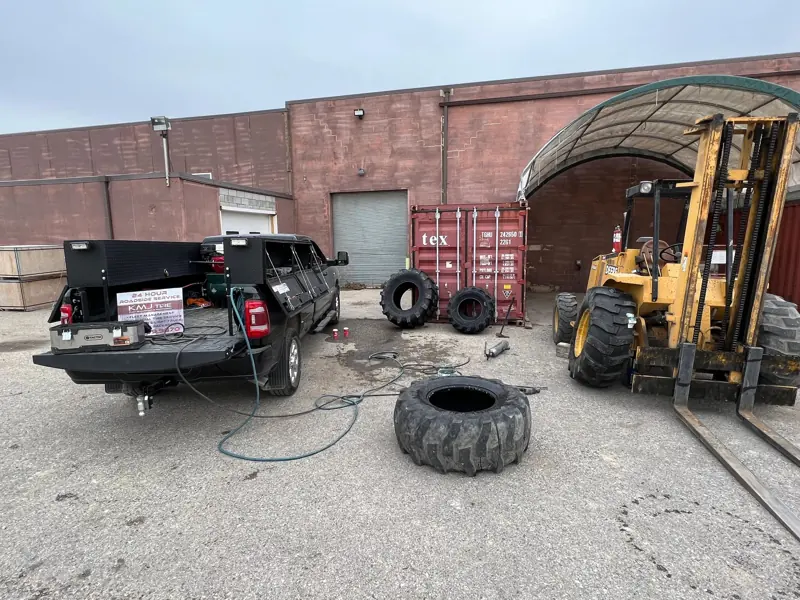
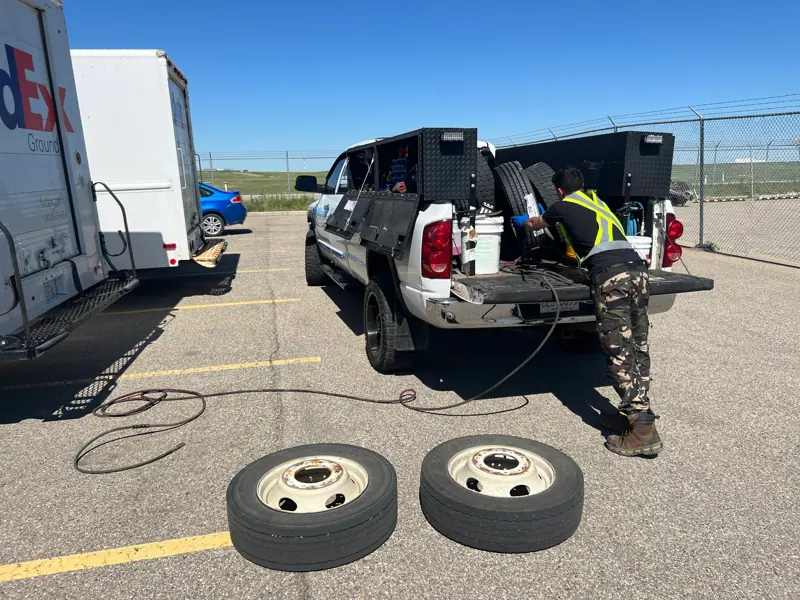
The Calgary mobile tire service page gives a starting point for discussing the tire work you need. Explain whether the vehicle is safely parked, whether the tire holds air, and what access is available. A narrow underground parking bay, a sloped driveway and an exposed roadside shoulder present different practical questions. The provider needs an accurate description, not simply a map pin.
Check the KMJ tire-service area information when work takes you beyond your usual neighbourhood. Being able to accept a delivery in a location does not establish service coverage there. Ask about the specific location and timing; do not infer availability from a broad description. Keep a separate roadside-assistance option in your plan for situations that require recovery rather than planned tire work.
Consider what happens to the cargo while the vehicle is unavailable. Delivery-platform or business procedures may specify who to notify, whether another driver can take over, and how to handle an undelivered order. Do not transfer goods or disclose customer details to a stranger merely to clear the queue. The tire problem and the order-handling problem both need a responsible response.
A simple message template reduces confusion: vehicle safely stopped, tire concern under assessment, current order affected, further timing unknown. Share only the necessary location and order information with the proper recipient. This is not about composing a polished apology at the roadside. It is about avoiding promises that pressure you to drive before the vehicle is ready.
Evaluate cost using your own records
A tire purchase is a business expense for some drivers, but that does not make the cheapest advertised number the best comparison. Start with suitable products that meet the vehicle requirements. Then compare the complete scope of each written estimate, asking which services and applicable charges are included. A low figure with missing work cannot be compared fairly with a complete one.
The budget versus premium tire guide can help frame differences without treating price as a performance specification. Decide which qualities matter for the routes you actually drive. Do not assume a more expensive model is automatically right, or that a less expensive model is automatically unsuitable. The exact product, fitment, season and evidence should lead the discussion.
If you use a cost-per-kilometre calculation, label every assumption. Divide the relevant tire-related cost by a conservative distance estimate, then show a lower-distance scenario. That exercise can reveal whether an attractive result depends entirely on an optimistic lifespan. It is not a guarantee of wear, a promise of revenue, or a reason to keep using a tire after it should be removed.
Treat downtime similarly. Use your own records to estimate what a missed shift actually costs, after considering expenses you do not incur while parked. Do not use a promotional earnings figure as if it were your normal net result. Even a careful estimate should not assign a price to taking a safety risk. Its purpose is to justify sensible planning, not to argue for finishing a route on questionable equipment.
Set aside money as distance accumulates if that fits your budgeting method. The amount should come from actual estimates and your finances, not an invented universal allowance. Review it when work volume changes. A reserve that was adequate for occasional weekend deliveries may no longer match daily use, and a sudden replacement should not depend on accepting another unsafe shift first.
Ask about delivery use before relying on warranty terms
A treadwear statement is not a universal promise that every owner will receive the same outcome. Product warranties have terms, documentation requirements and exclusions. Commercial or delivery use may be treated differently depending on the manufacturer and product. Read the actual policy and ask for a written explanation relevant to your use before making a purchase decision around a coverage claim.
Describe what you do in plain language. Personal vehicle used for paid food delivery is more informative than simply saying personal car. If you also transport parcels or groceries, explain that too. Do not assume the absence of a business logo on the door determines the policy. The question is how the specific warranty defines use, not how the vehicle looks.
Keep the purchase invoice, product identity, installation information and maintenance records together. Record odometer readings and retain evidence of required maintenance. If an issue develops, preserve what you know about its timing and conditions. These records help support an accurate discussion, but they do not guarantee that a claim will be accepted or that damage will be covered.
Distinguish manufacturer coverage from retailer services, road-hazard arrangements and your own vehicle insurance. Similar words can describe different products with different conditions. Ask who administers a claim, what evidence is required, and what costs remain your responsibility. Do not infer free replacement, immediate availability or reimbursement for missed work unless the actual written terms say so.
Insurance and delivery-platform requirements deserve their own check with the relevant provider. This guide does not determine coverage, licensing or business obligations. Tire suitability cannot resolve an insurance exclusion, just as an insurance policy cannot make an unsuitable tire appropriate. Keep those decisions separate so that a reassuring answer in one area does not hide an unresolved question in another.
Schedule tire work without promising away the buffer
Choose a service window with room for an assessment to change the plan. A routine seasonal change can reveal that a tire needs replacement or that a required component is missing. Avoid accepting an order for the minute you expect to leave. Completion time should be confirmed through the actual service process, not assumed from a previous visit with a different vehicle.
For seasonal work, review Calgary seasonal tire change services and explain whether your second set is already mounted on wheels. Identify anything unusual about the vehicle or the set. Keep the wheel-lock key accessible if one is needed, remove unnecessary cargo, and provide enough space to access the relevant equipment safely. Preparation saves confusion without guaranteeing a fixed turnaround.
Use online tire-service scheduling to request the work through the published channel, then confirm details that matter to your shift. Ask what information to bring and how you will receive an update if additional tire work is recommended. A request is not permission to assume every possible service, location or time is available.
If a vibration prompted the visit, give a factual description. The wheel balancing information for Calgary drivers explains a tire-related service that may be relevant, but a vibration does not establish its cause. Do not order a balance as a substitute for appropriate assessment, and do not attribute every steering or chassis symptom to the tires.
After collection, read the invoice and any follow-up instructions before returning to work. Clarify manufacturer or service-provider recheck requirements, including wheel-fastener follow-up where specified. Do not copy a universal torque figure from the internet. Keep the instructions with the vehicle record so that a busy shift does not erase the next required step.
Example: an evening grocery driver with changing loads
Imagine a driver using a compact crossover for several evening grocery blocks each week. Most kilometres are on paved city roads, but the final approaches include sloped residential streets. The driver sometimes accepts a large order without a good sense of its weight. The first planning improvement is not a new tire model; it is documenting the vehicle's limits and the actual loading pattern.
The driver photographs the tire label, records the installed specifications and reviews the manual. Dense orders are considered by realistic weight rather than bag count. Cargo is secured without obstructing the driver's view. If an order cannot be carried within the vehicle's limits, the solution is to change the delivery arrangement, not to add pressure beyond the specified guidance or buy a tire advertised as heavy duty.
Next comes seasonal exposure. The driver cannot reliably choose only dry evening conditions, so winter performance becomes a central part of the product discussion. The route description includes hills and late residential stops rather than only the major roads. A plan to pause during unsafe conditions remains necessary, because a suitable winter set does not remove the risk from every icy driveway.
Finally, the driver chooses a cold-pressure check before loading, keeps an odometer-based maintenance record, and blocks off time for tire assessment ahead of a busier period. A separate note explains the process for an interrupted grocery order. These changes work together: loading, tires, route decisions and business communication each have a defined role, without asking one of them to solve all the others.
Example: a lunch courier adding parcel work
Consider a driver who previously delivered meals for short midday sessions and now adds longer parcel routes twice a week. The existing routine was built around light cargo and relatively little distance. The new work changes both assumptions. Keeping the same calendar reminder for tire checks without reviewing use would overlook the main change in the vehicle's working life.
For the first few weeks, the driver records odometer readings, approximate load characteristics and the types of access roads encountered. No customer information is needed in the tire log. The record reveals whether the change is mainly distance, load, road exposure or all three. That evidence supports a better discussion than saying the car is driven a little more often.
The driver reviews maintenance guidance for the exact tire and vehicle combination and adjusts reminders accordingly. Frequent stops also make curbside positioning part of the routine. A damaged tire after an impact is not treated as an inconvenience to revisit after the route. The driver knows how to pause assignments and arrange help, including the limitations of the vehicle's emergency equipment.
When replacement becomes necessary, the comparison begins with suitable specifications and use rather than simply rebuying the previous product. The driver discloses paid delivery use when asking about warranty terms. A product that was acceptable for an earlier pattern might still be suitable, but that conclusion is checked rather than assumed. The business has changed; the tire plan should at least be reviewed.
Keep a one-page delivery tire record
A useful record is short enough that you will maintain it. Put vehicle identity, specified tire information, current product details and the last service reading at the top. Below that, leave space for cold-pressure readings, tread observations, unusual events and follow-up instructions. Use wheel positions consistently so that a recurring concern can be traced without guessing which tire was discussed last time.
Separate observations from conclusions. Write that the left rear reading fell between two checks, not that the valve is defective unless that has been established. Write that a vibration began after an impact, not that the wheel must be bent. This distinction makes the record more useful to a service provider and reduces the chance that an early guess controls the whole conversation.
Add a compact interruption section: where the emergency equipment instructions are stored, which assistance arrangement you use, and how to pause current assignments. Avoid putting passwords, customer data or sensitive account information in the same document. A paper copy can be useful if your phone is unavailable, but it should contain only what is necessary for the vehicle and response plan.
Review the page when you change vehicles, tires, work type or seasonal schedule. Archive older records instead of overwriting them if they are needed for maintenance or warranty history. The point is not to create paperwork for its own sake. It is to ensure that the next decision starts from the actual condition and use of the vehicle, not a vague memory from a quieter month.
Protect the handoff when someone else uses the vehicle
A delivery vehicle may also carry a partner to work or serve as the household car between shifts. That makes a simple handoff valuable. A tire concern discovered during paid work should not remain buried in an app message or a private note. Tell the next driver what happened, what was checked, and whether the vehicle is waiting for assessment. Do not leave an unsafe vehicle available with only a vague warning to be careful.
Agree who maintains the tire record. Shared responsibility can work, but an unnamed responsibility often means nobody notices that a follow-up is overdue. One person can maintain the document while each driver contributes observations. The record should distinguish a completed task from a reminder. An entry saying pressure check due is not evidence that anyone measured the tires.
If a different person will take the vehicle for service, give them the factual history and the authority limits for approving work. They should know which tire lost air, whether the vehicle was driven after the warning, and whether sealant was used. Passing on those facts is more useful than sending them with a suspected repair already decided. Ask the service provider to explain any finding that changes the agreed tire work.
Keep the next shift visible when planning the handoff, but do not let it become a promise that the vehicle will be ready. Arrange a fallback for the household journey as well as the delivery work. Otherwise a paused route can simply transfer pressure to another driver who needs the car for a different purpose. The same condition-based decision applies regardless of who holds the keys.
Review the plan after an interruption
Once a tire problem is resolved, take a few minutes to review the response while the sequence is fresh. Ask whether the warning was understood, whether a safe stopping place was easy to find, and whether the assistance details were accessible. This is a practical review of the process, not an attempt to diagnose a tire retrospectively from memory.
Look for one change that would make the next response easier. Perhaps the wheel-lock key was buried under cargo, the emergency instructions were unavailable without mobile data, or the person handling an order did not know the route had stopped. Fix that specific issue. A short, concrete improvement is more likely to survive a busy week than a long list of intentions.
Update financial assumptions only with real information. Record the actual tire-related expense and the work time affected, keeping estimates separate from confirmed amounts. Do not turn a single incident into a prediction that every future tire will fail at the same distance. The lesson may concern communication or equipment access rather than product choice.
Finally, carry forward any required follow-up. A completed repair or replacement does not erase the manufacturer's maintenance requirements or the provider's recheck instructions. Put the next action into the same record used for pressure and wear observations. That closes the interruption properly and returns the vehicle to a maintained routine rather than simply marking the order as delivered.
Turn the plan into a specific tire conversation
Before comparing products, gather four things: your vehicle specifications, the installed tire information, a realistic route-and-load description, and any current concerns. Those inputs allow a focused conversation about suitability. Browse tire options for Calgary vehicles with those requirements in hand, while confirming current availability and fitment directly rather than assuming a listing guarantees either.
Use local Calgary tire service information to find the appropriate published next step. Explain that the vehicle is used for deliveries and identify the season and routes involved. Ask for a suitable tire recommendation and a clear scope of work. Keep mechanical concerns with an appropriate qualified provider; KMJ's services are tires and oil changes.
The strongest delivery tire plan is not complicated. It matches the vehicle, respects its load limits, uses a realistic seasonal strategy, checks condition before work, and gives you a clear response when a route must stop. Customer deadlines and earnings pressure will still exist. A prepared plan means those pressures do not get to make the safety decision for you.